3 days in Purnululu National Park: Exploring Bungle Bungles

Explore Purnululu National Park with this 3-day itinerary — hike the iconic Bungle Bungle domes, Cathedral Gorge, Echidna Chasm, scenic lookouts and travel tips

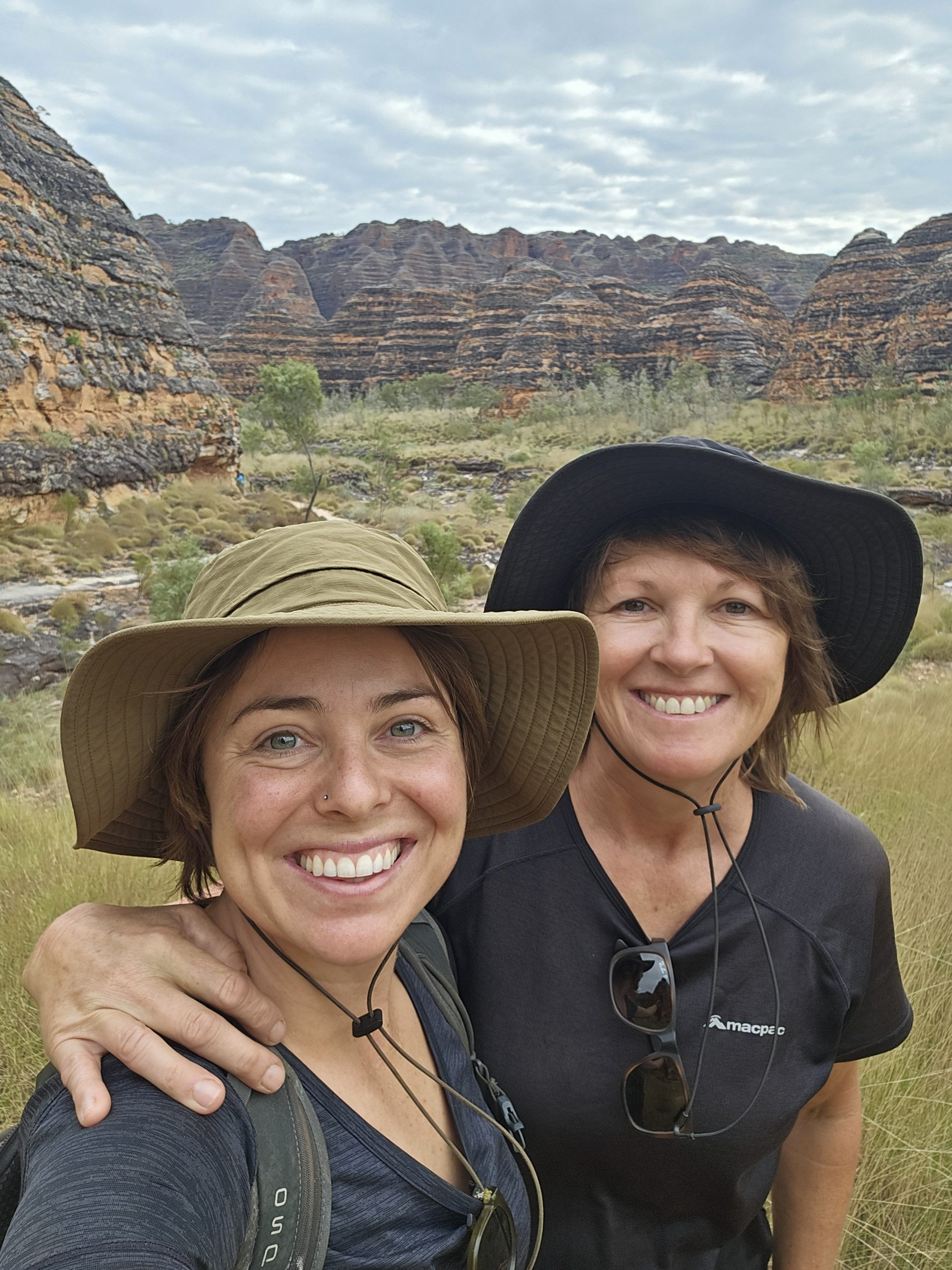
Man, are we stoked we braved the formidable road into Purnululu National Park in Western Australia’s vast Kimberley region — despite the many cautionary tales.

We tackled the World Heritage-listed site over three epic days in August 2024, after finishing a ripper three-week adventure on ‘the Gibb’.

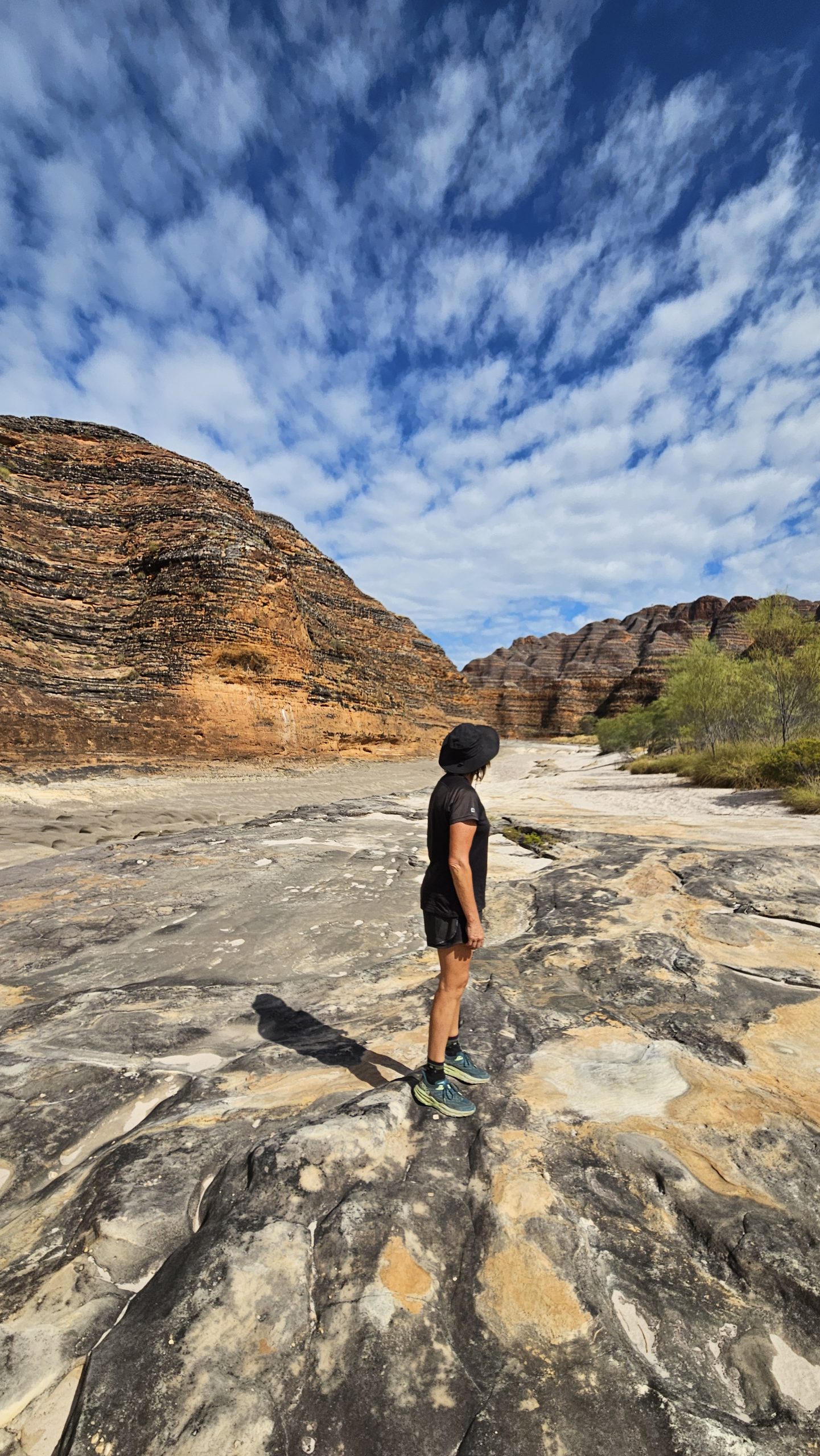
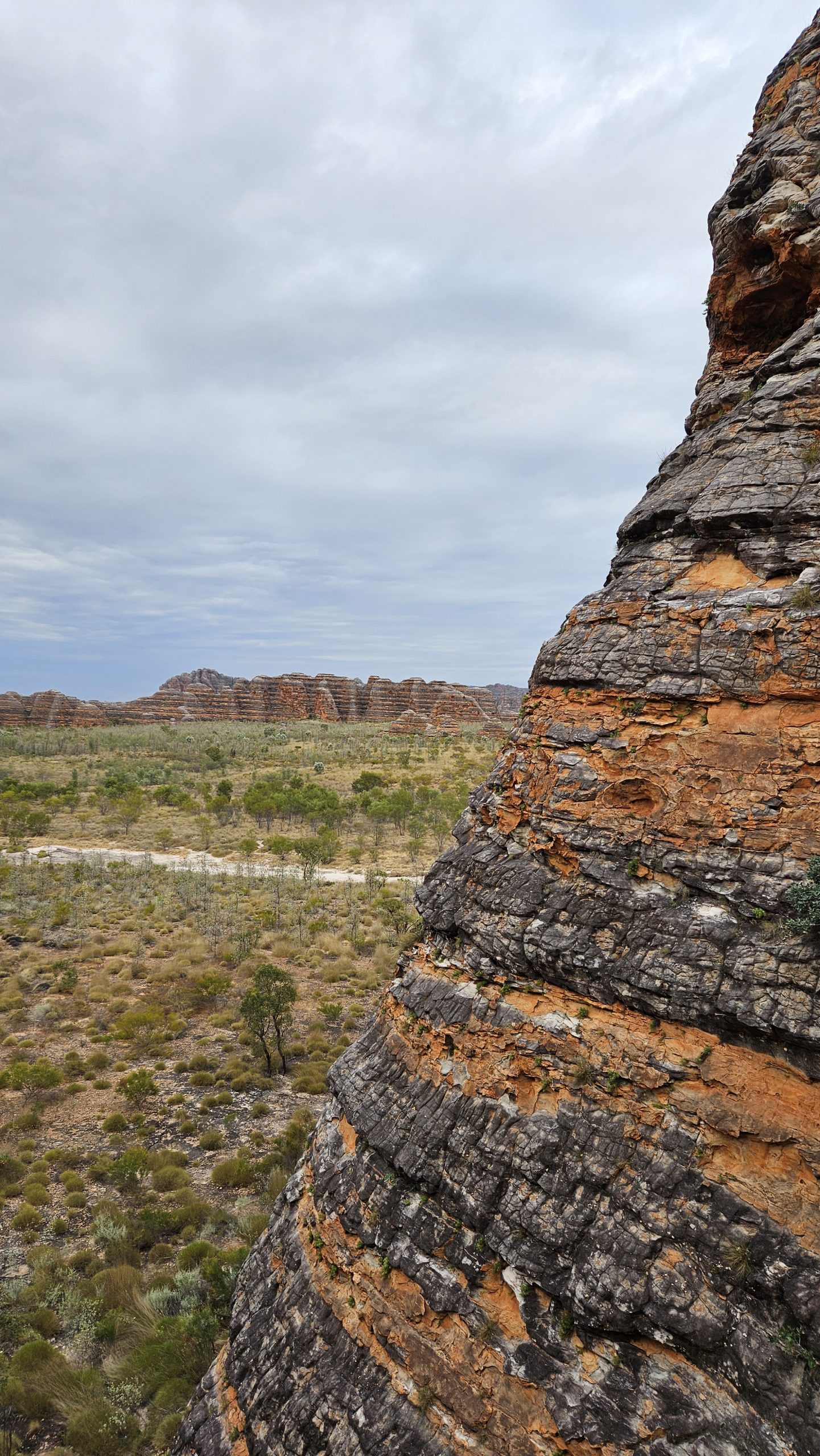
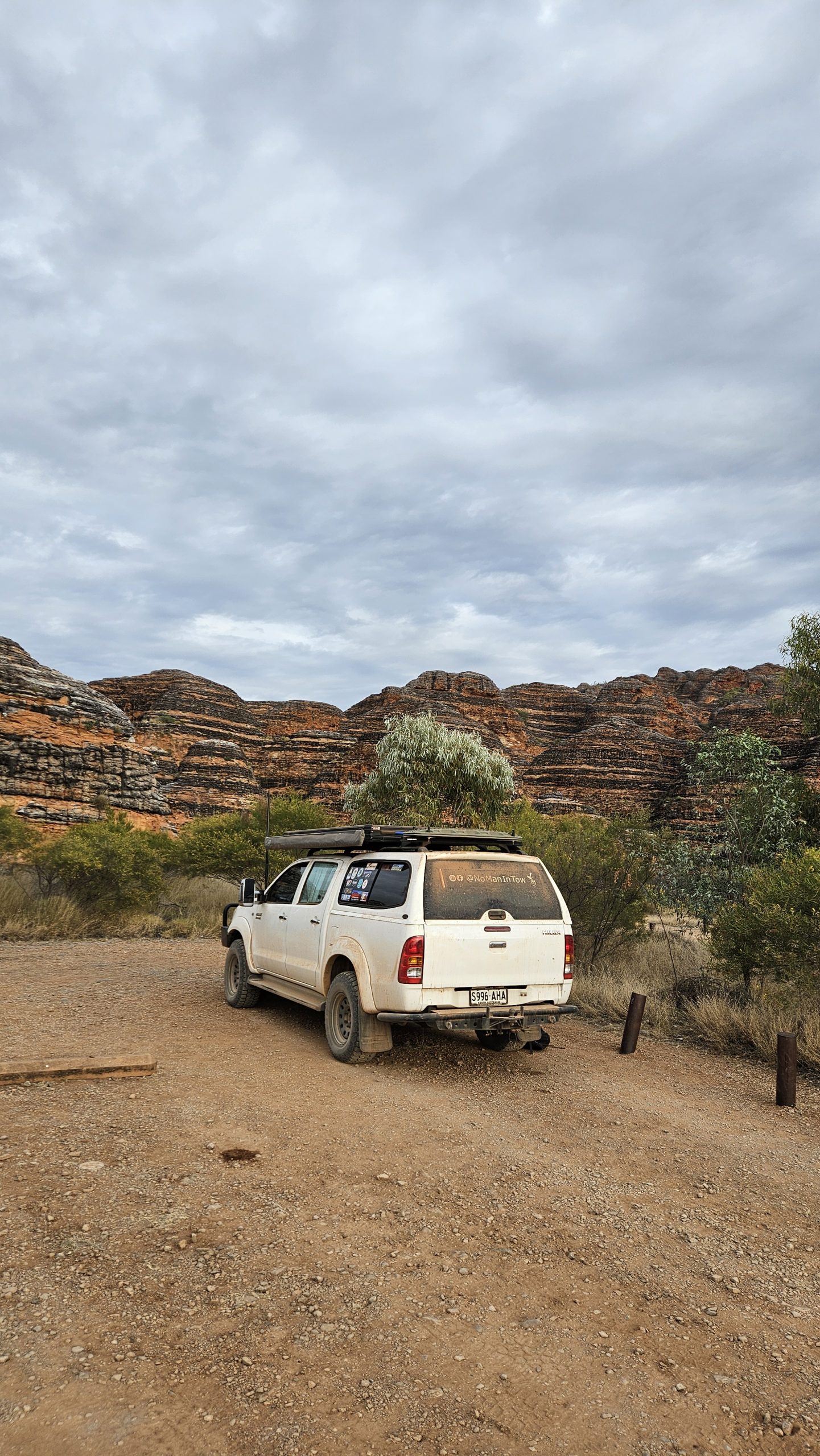
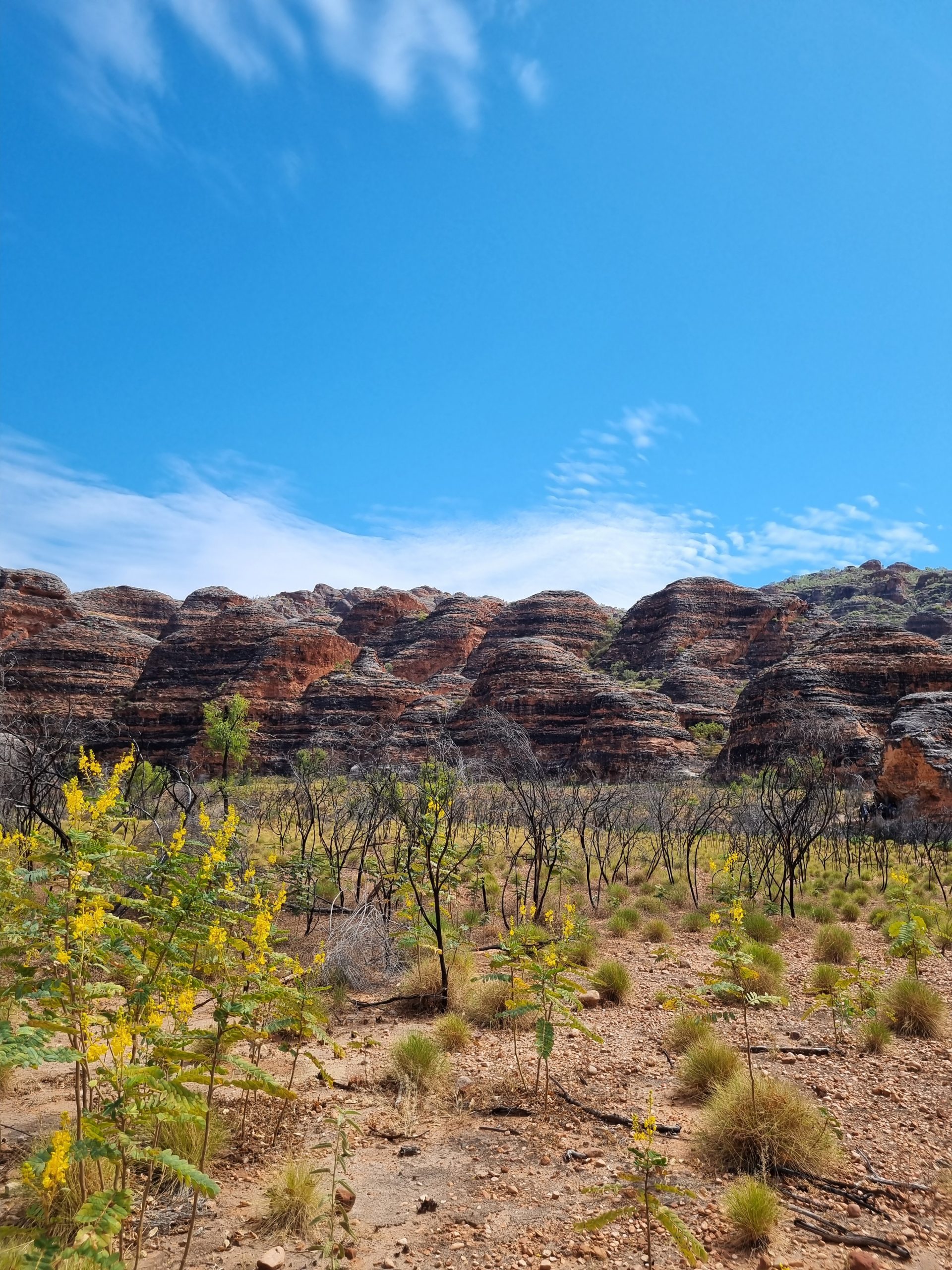
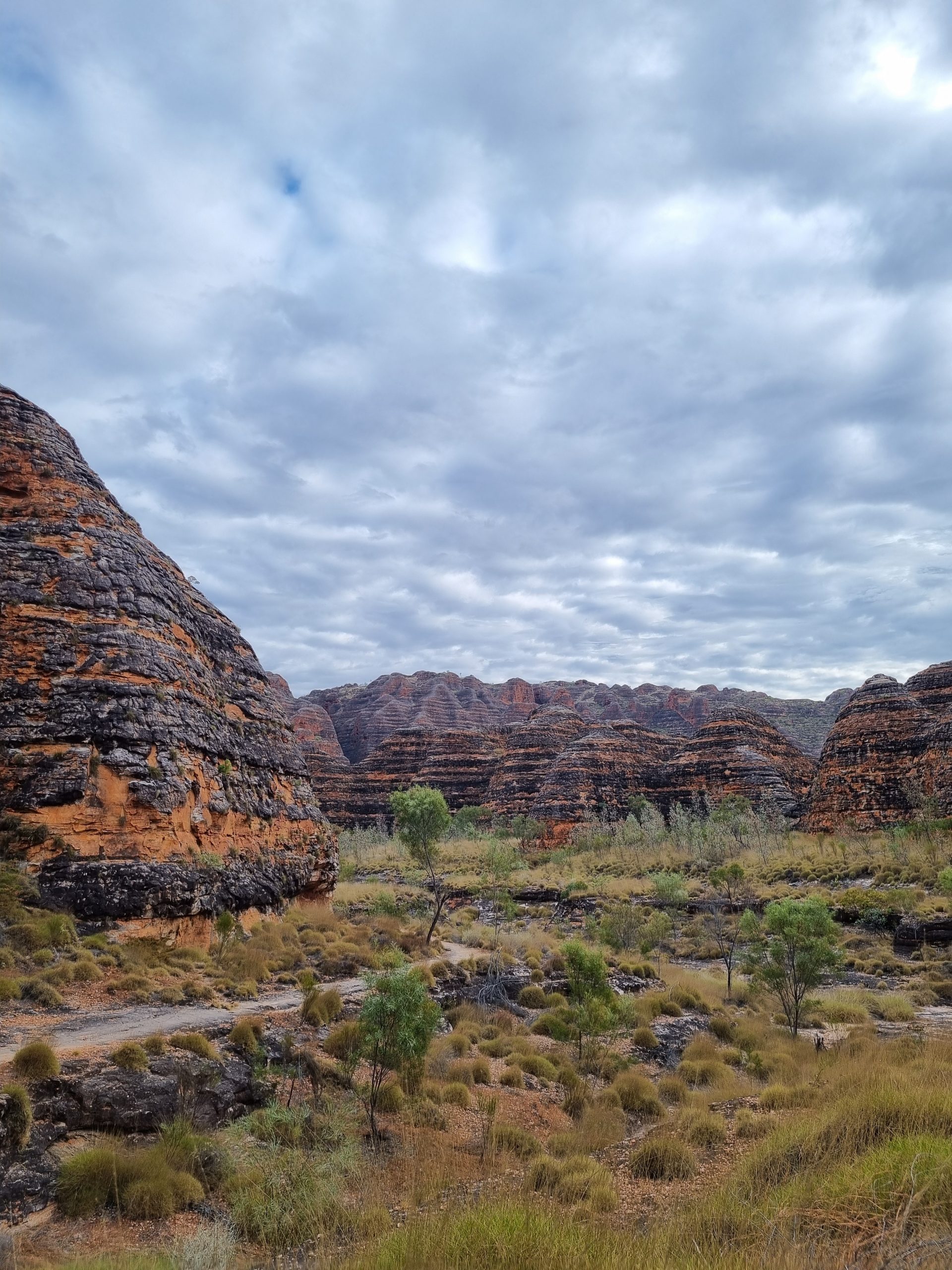
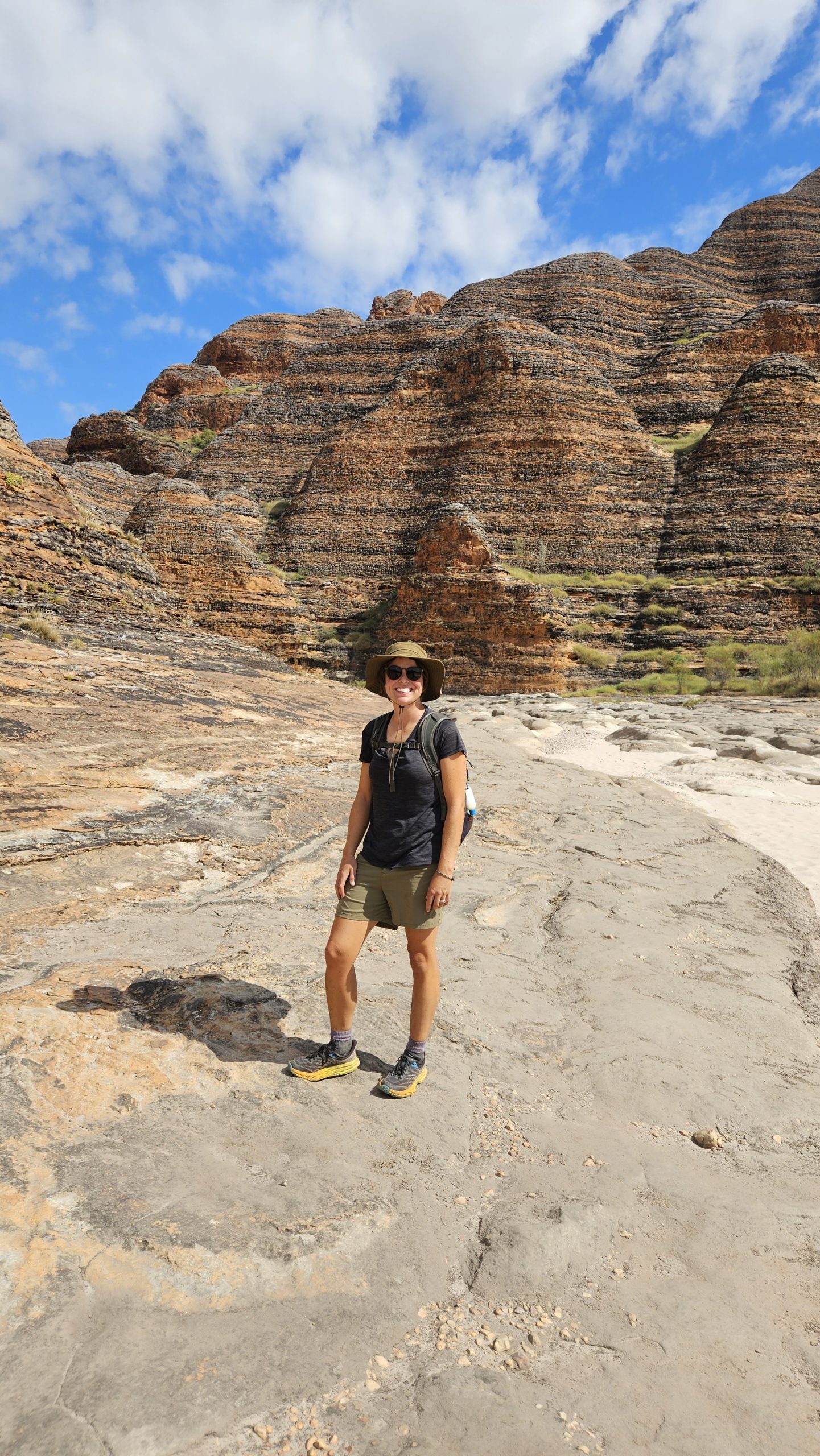
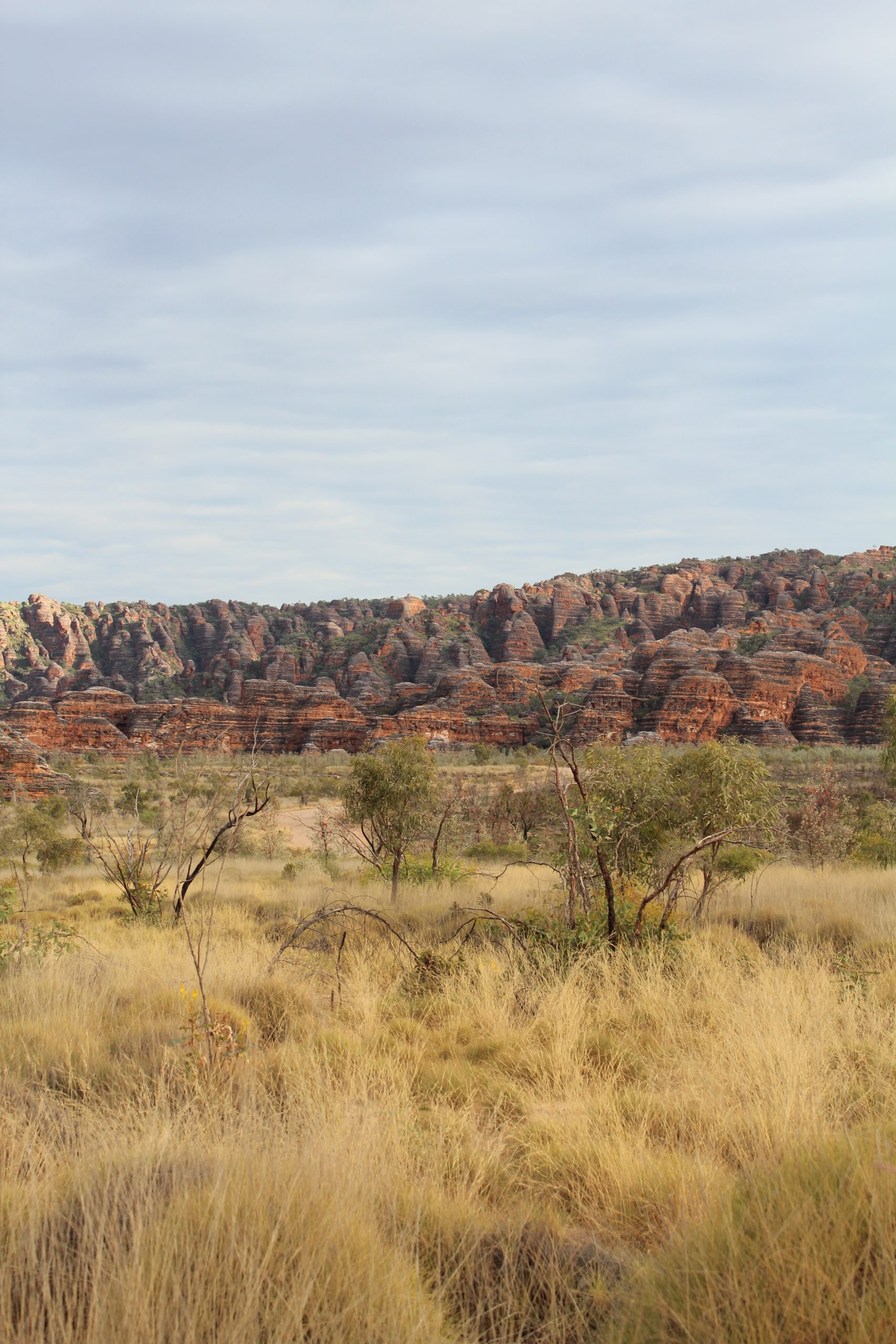
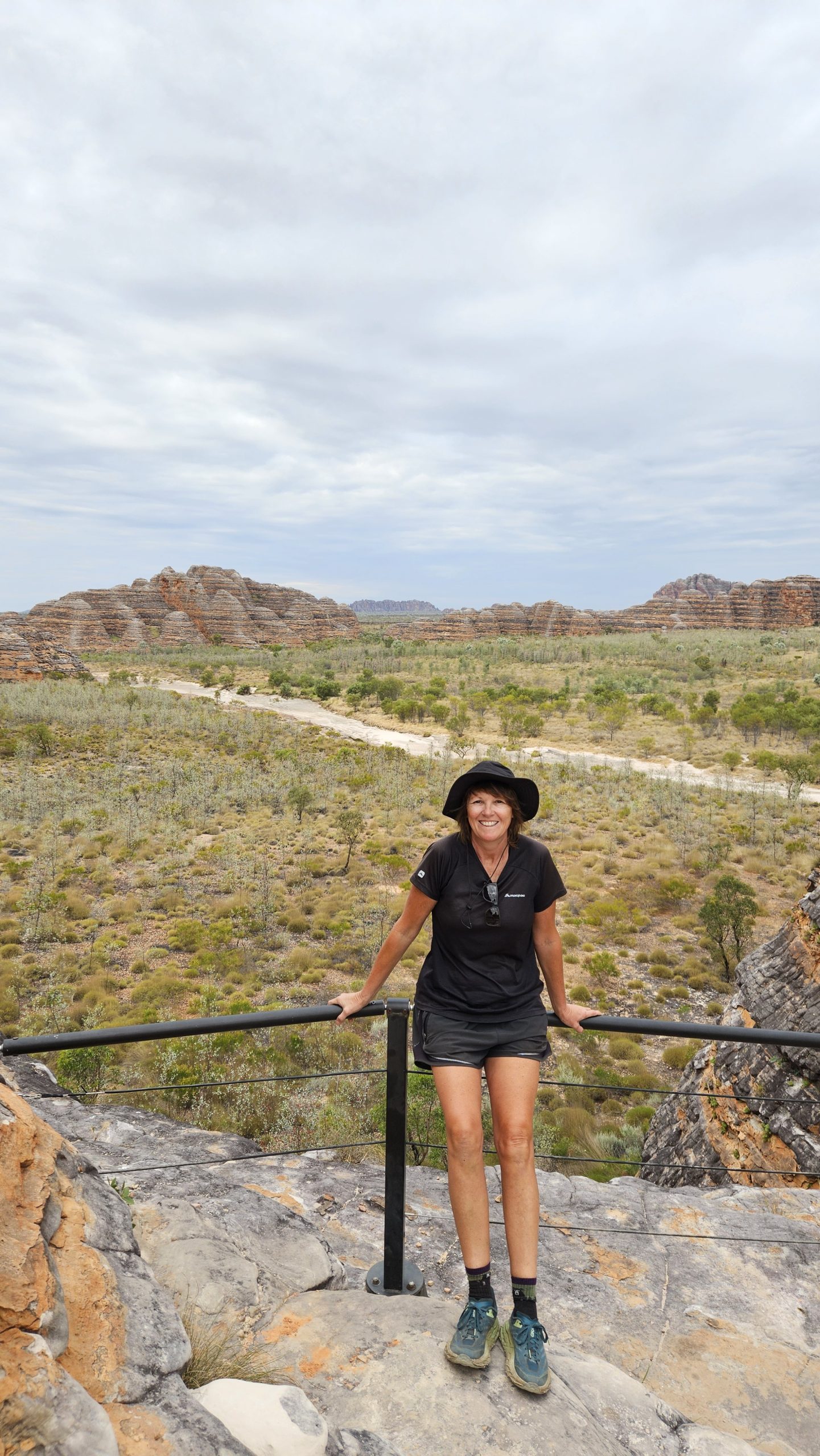
Purnululu National Park is best known for its iconic Bungle Bungle Range, featuring deeply cut gorges and towering beehive-like sandstone domes that jut from the earth.

Their orange and black stripes glow in the afternoon sun, creating a mind-blowing sight.

Spanning 239,723 hectares, Purnululu is home to many other rock formations that deliver serious ‘wow’ factor.

We clocked up 30km on foot exploring this incredible 360-million-year-old landscape — one many people choose to experience by helicopter.

We loved getting up close and personal with the domes and gorges.

Our favourite spots included:

  • Cathedral Gorge (southern section)
  • Whip Snake Gorge (southern section)
  • Echidna Chasm
  • Mini Palms Gorge

Table of Contents

Good to know

Purnululu National Park is essentially separated into two parts: the north and the south.

It’s a 47km (80-minute) drive from the southern end to the northern end, and there are a total of 14 trails on offer.

We recommend spending a full day exploring each section, with walking trails totalling 13km in the south and 17km in the north.

We tackled both sections in half a day, which was definitely an ambitious (and somewhat exhausting) undertaking.

We spent a night in both the northern and southern camps so we could get cracking early to beat the heat.

When to visit Purnululu National Park

Purnululu National Park is open seasonally, typically from April or May until late November, depending on weather and road conditions.

The best time to visit is during the dry season (May to September), when daytime temperatures are more comfortable for hiking and the access road is usually in better shape.

June to August offers cooler mornings and evenings — perfect for big walking days — while September and October bring warmer temperatures and fewer crowds.

Getting to Purnululu National Park

Purnululu National Park is located 300km south of Kununurra and 150km north-east of Halls Creek.

We visited from Wyndham, where we restocked supplies and got our rig in order after finishing a three-week Gibb River Road adventure.

Wyndham is a small township situated 260km north and offers a lovely caravan park and a good general store.

The 53km road in from National Highway 1 is pretty treacherous. It took us just under two hours to drive each way.

Where to stay

Outside of the park

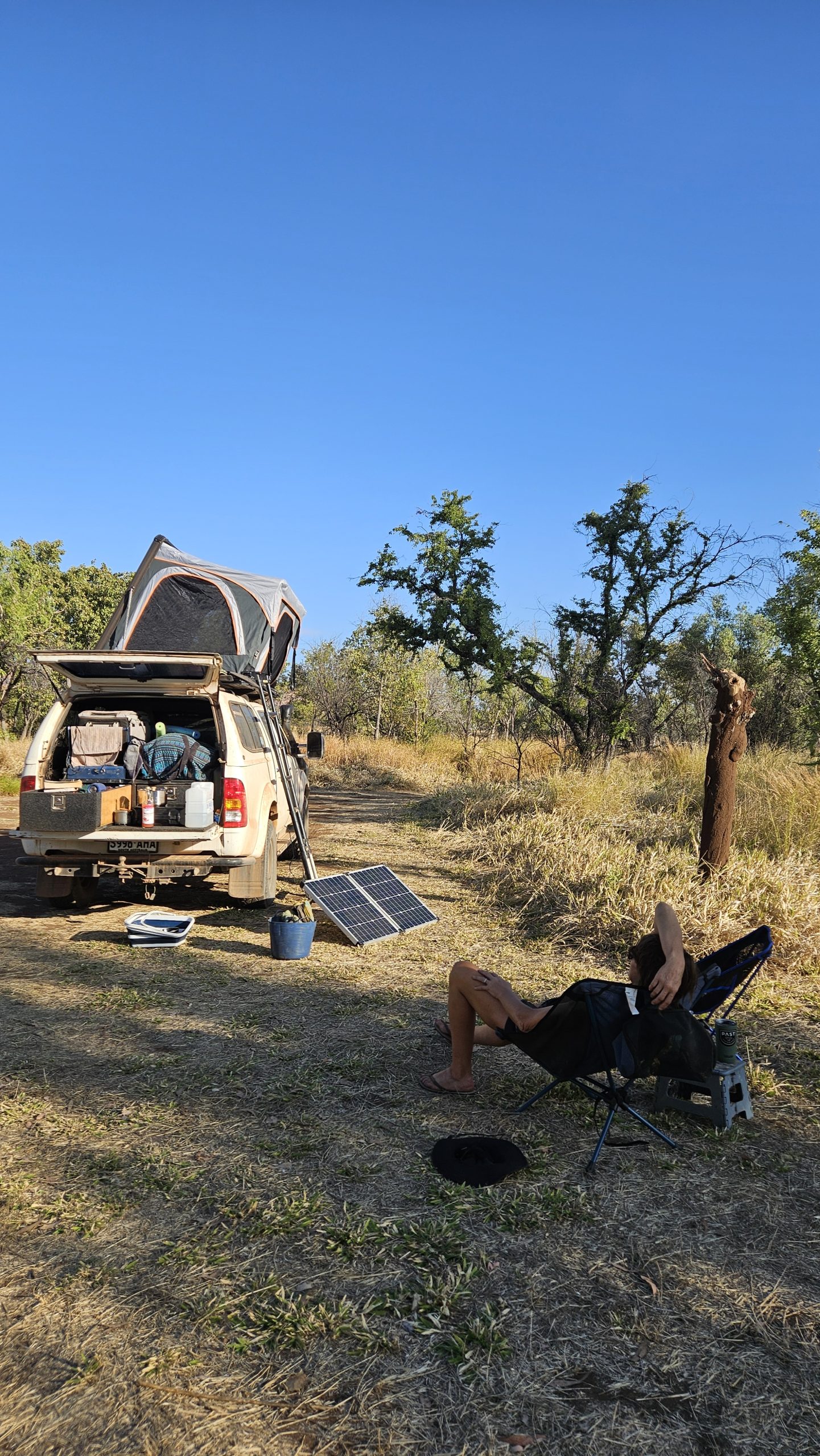
Although single-axle vans are permitted in Purnululu, we’re glad we left ours at the Spring Creek Rest Area and opted for our rooftop tent for this adventure.

The free rest area is located on the highway adjacent to the turn-off. Many people use the parking bay as a base to camp and tackle Purnululu as day trips.

We felt comfortable leaving our van unattended there for two nights, as 20 or so other rigs were set up.

At the time, the Bungle Bungle Caravan Park near the national park’s main entrance was not operating. It re-opened in May 2025 and provides another great option for those wanting to explore the park on day trips.

Inside of the park

There are two main campgrounds inside Purnululu National Park — Walardi Campground in the southern section and Kurrajong Campground in the northern section. Both are unpowered bush camps, so you’ll need to be fully self-sufficient.

Walardi Campground (Southern Section)

Walardi Campground is the most convenient base for exploring the park’s southern highlights, including Cathedral Gorge, The Domes, Piccaninny Creek and Whipsnake Gorge. It’s located about 12km south of the visitor centre and has around 100 unpowered sites. Facilities are basic but well maintained, with pit toilets and picnic tables. Generator use is permitted in designated areas between 8am and 9pm. Sites are suitable for tents, camper trailers and some caravans (conditions permitting), though the access road can be rough. If you’re planning to hike the southern trails at sunrise or sunset, Walardi is the ideal place to stay.

Kurrajong Campground (Northern Section)

Kurrajong Campground is located near the northern end of the park, close to Echidna Chasm and Mini Palms Gorge. It’s a smaller, quieter campground with a more remote feel than Walardi. Like Walardi, it offers unpowered sites and basic facilities, including pit toilets and picnic tables. There is minimal shade, so be prepared for hot afternoons, particularly later in the dry season. Staying at Kurrajong makes it easy to access the northern walks early in the morning — especially important for Echidna Chasm, which is best visited around midday when sunlight filters down into the narrow gorge.

A few things to know

  • Campsites should be booked online in advance during peak season.
  • There is no fuel available inside the park.
  • Bring plenty of water — there is no drinking water supplied at the campgrounds.
  • Mobile reception is virtually non-existent.

Day 1 (afternoon) Spring Creek Rest Area → Walardi Campground | 5 hr | 325 km

Highlights

  • The drive in is an adventure in itself, with multiple water crossings and spectacular scenery. Lower your tyre pressure, switch on your UHF and enjoy the ride!
  • Sunset at the popular Kungkalanayi Lookout, where we watched the Bungle Bungle Range’s western face as it turned a fiery red under the fading sun.


Van drop-off at Spring Creek Rest Area

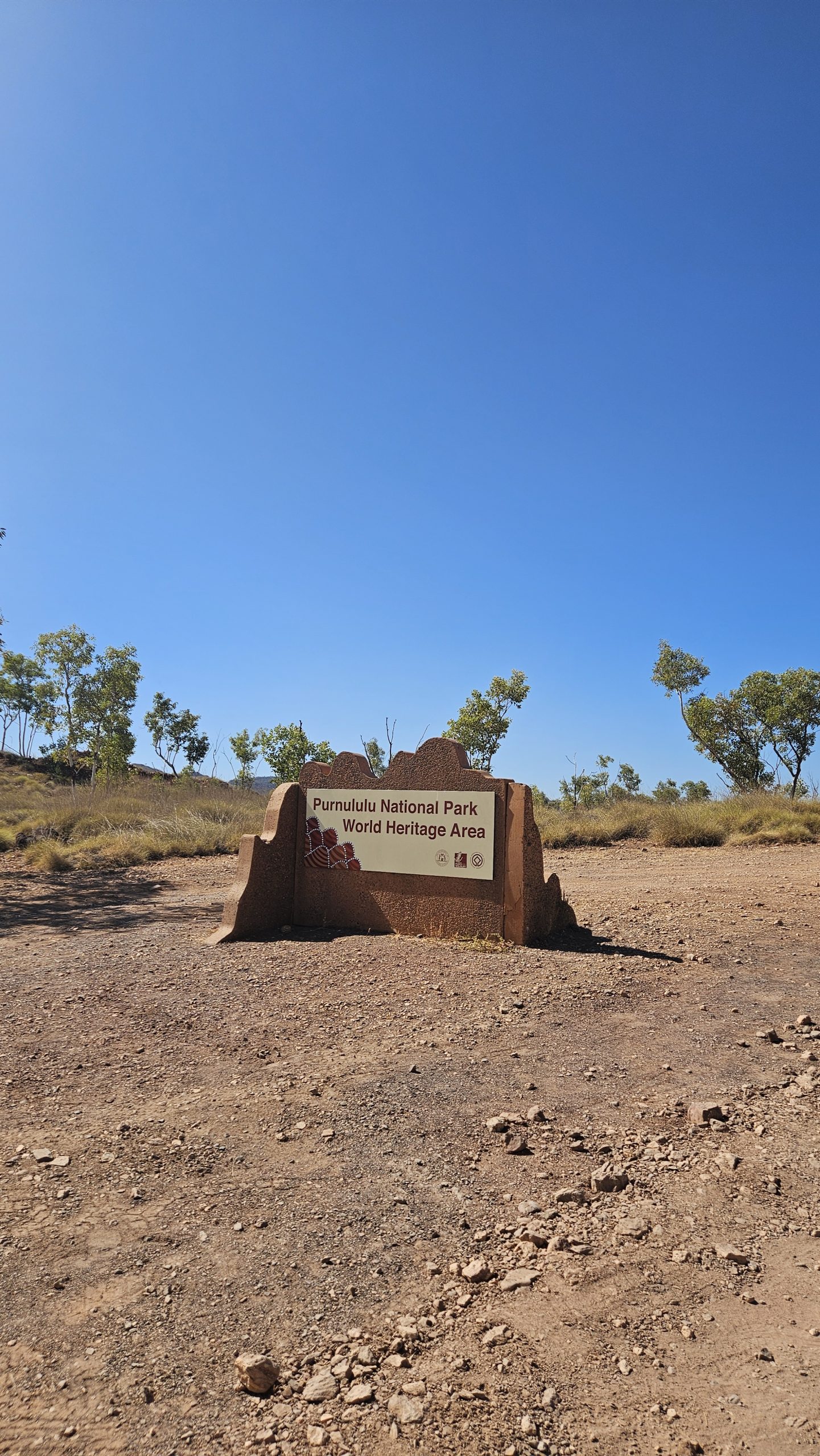
After a 260km drive from Wyndham – WA’s most northerly township – we dropped our van at the Spring Creek Rest Area. While single-axle vans are permitted in the park, we decided to stick with our rooftop tent, having heard many stories about people who’d fallen victim to the notorious road. Located on National Highway 1 and just 500m from the Purnunulu entrance, the rest area serves as a popular base to unhook, tackle the Bungle Bungles as a day trip and spend the night. The free camp is located beside Spring Creek and offers toilet facilities, covered tables and seat areas, but minimal shade. We hit the road into Purnululu just before midday, after unhooking our rig and packing up the last of our gear.

The journey in and visitor centre stop-off

It took us just under two hours to drive into Purnululu National Park. It was slow going, with rutted and rocky roads, and half a dozen or so water crossings, but the scenery was absolutely stunning. At Purnunulu, this 4WD journey is definitely all part of the adventure. We stopped off at the
Purnululu Visitor Centre on our way in to book a campsite and seek advice from the local Rangers about the best way to tackle the trails. You can also access free wi-fi here.

Walardi Campground setup and sunset

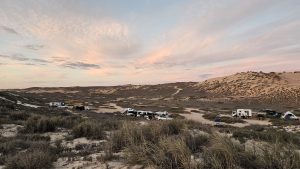
By late afternoon, we rolled into the Walardi Campground and set up camp. Walardi Campground is 12km south of the visitor centre, and is the closest camp to the Domes, Cathedral Gorge, Whip Snake Gorge and Piccaninny Creek. Next, we headed a short walk to the Kungkalanayi Lookout for sunset. The lookout offers panoramic views of the Bungle Bungle Range’s western face as it turns a fiery red at sunset.

Tips

  • Be sure to air down your tyres and take it easy on the road in.
  • Stop off at the visitor centre to access up-to-date information about trails, free wi-fi and ice cream.
  • Don’t miss sunset at the Kungkalanayi Lookout – it’s a popular location for tour buses, so you won’t be alone and there’ll be a good vibe.

Day 2 (morning): Walardi Campground → Piccaninny Creek Car Park | 40 min | 17 km

We packed up camp at Walardi and arrived at the Piccaninny Creek car park at around 7am, ready for a big day of hiking in the park’s southern section. Our first point of call was the Piccaninny Creek Lookout Walk. From there, we continued on to The Window and Whipsnake Gorge — the furthest point aside from the multi-day Piccaninny Gorge Trek. We then retraced our steps, heading back towards the car park to visit Cathedral Gorge and complete The Domes Walk. It took us just under four hours to walk the trails, moving at a decent pace.

Highlights:

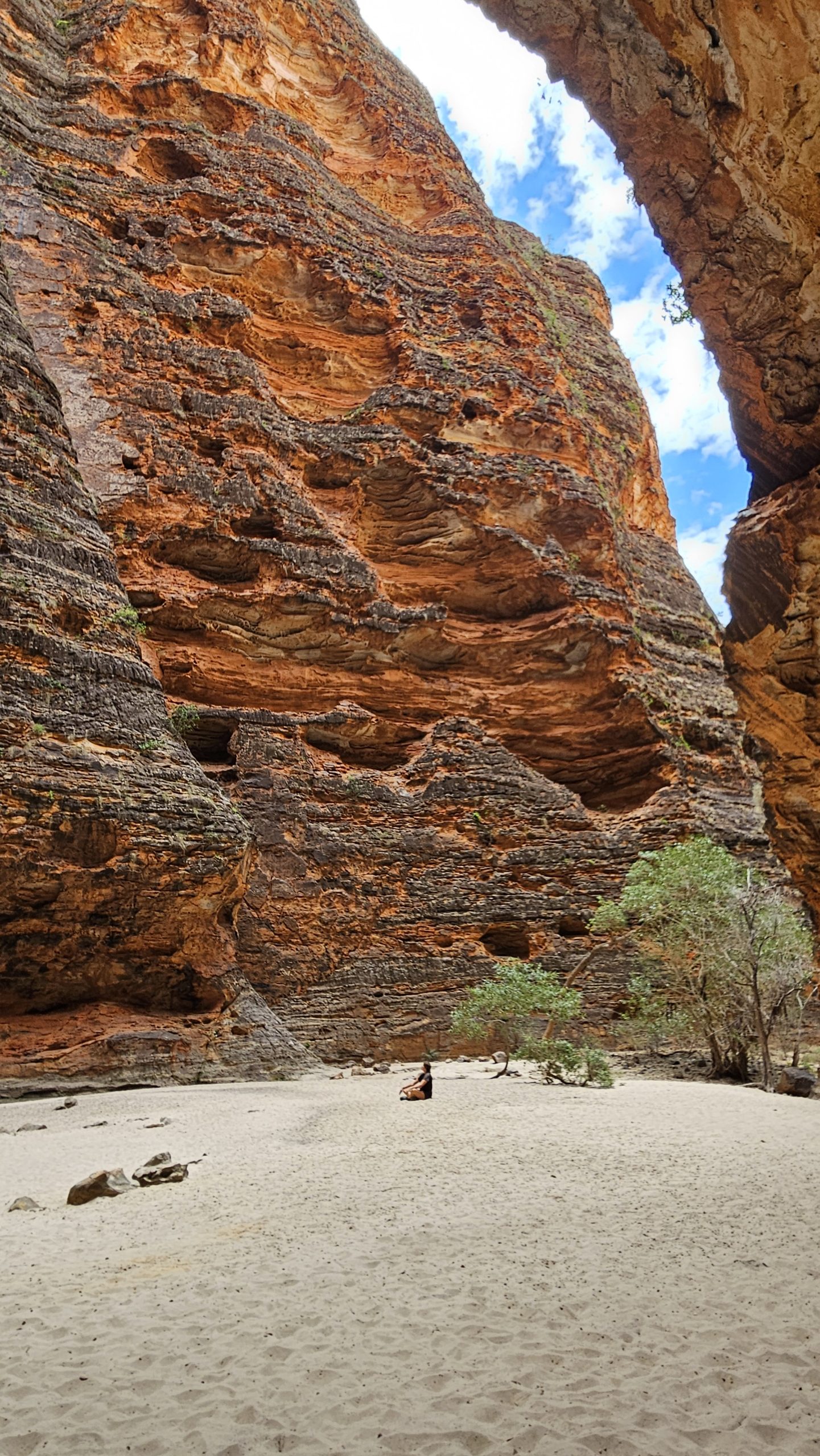
  • Cathedral Gorge – Sit with your feet in the sand and marvel at the towering walls that create this natural amphitheatre.
  • Whipsnake Gorge – Wander through a shady, fern-filled gorge ending at a peaceful rockpool.
  • The Domes – Weave through these iconic beehive-shaped domes and take in views of the surrounding range along several trails.


Piccaninny Creek Lookout

The Piccaninny Creek Lookout Walk starts roughly 20 minutes from the car park. It’s an easy Grade 3, 2.8km return walk that follows the rocky creek bed before rising gently to a lookout with unreal views across the striped domes of the Bungle Bungles. Set aside 30 minutes to an hour to complete. It’s an epic sunrise spot if you’re willing to get up early.

The Window

The Window is a 2km, Grade 4 return walk that leads to a natural opening eroded through one of the domes, perfectly framing beautiful views of the Bungle Bungle Range. The viewing point is about 20 minutes beyond the Piccaninny Creek Lookout, making it an easy addition to your walk. Allow around an hour and, if you can, visit in the softer light of early morning or late afternoon when the stripes really start to glow.

Whipsnake Gorge

Following an ancient creek bed, the Grade 4 Whipsnake Gorge track weaves past dozens of domes into the narrow, shady gorge, where you’ll likely have the place all to yourself. The gorge is picturesque, lined with ferns, figs and brittle gums, and finishes at a quiet rockpool — a cool, peaceful contrast to the open creek flats.
The turn-off to Whipsnake Gorge is 400 metres past The Window, making it a 5km return trail from this point. From the car park, the full track is 10km return.

Cathedral Gorge

A relatively easy 2km return walk leads you into a massive natural amphitheatre, complete with a permanent waterhole and incredible acoustics. Towering walls rise all around, creating an awe-inspiring space that feels ancient and serene — perfect for pausing, listening and taking it all in.
Or, if you wish, belt out a tune to test your vocal cords and experience the brilliant acoustics.

The Domes Walk

A Grade 2 trail and the easiest walk in the area, this 1km loop path is packed with the famous ‘beehive’ domes. The trail gives you a close-up look at these ancient orange-and-black striped rock formations, while a short side track leads to a small natural amphitheatre — a peaceful spot to stop and take in the scenery. Allow 30 minutes.

Tips

  • Walardi Campground is the most convenient campground for visiting The Domes, Cathedral Gorge, Whipsnake Gorge and Piccaninny Creek.
  • Camp at Walardi the night before so you can get cracking early and beat the heat.
  • If you have time up your sleeve and you’re an experienced hiker, the 30km, Grade 5 Piccaninny Gorge Trail multi-day hike has your name on it.
Day 2 (afternoon): Piccaninny Creek Car Park → Kurrajong Campground | 1 hr | 34 km

Highlight

  • Relaxing out at Kurrajong Campground and relishing its chilled bush camping vibes


Drive to Kurrajong Campground 

After wrapping up our walks in the southern section, we bee-lined it north to the Kurrajong Campground. This camp is located in the northern section of the park. To get there, drive from the Piccaninny Creek car park area back towards the Visitor Centre, then continue north to reach Kurrajong Campground near the northern end of the range. Kurrajong is a large campground with 100 unpowered campsites, pit toilets and picnic tables. It is the quieter of the two camps.

Tips

  • The Kurrajong camping area has three separate areas: quiet, generators allowed, and an area for tour groups only.
  • Kurrajong has its own sunset lookout and offers great views of the Bungle Bungle Range.
  • Kurrajong has a more peaceful vibe than Walardi Campground (which tends to get busier due to being near The Domes).

Day 3 (morning): Kurrajong Campground → Echidna Chasm car park | 20 min | 13 km

We started hiking just before 8am, setting off from the Echidna Chasm car park towards Homestead Valley — the furthest point — then working our way back via Mini Palms to Echidna Chasm.

These locations are linked via the 7.2km return, Grade 3 Escarpment Trail. It’s a 2.6km walk to the turn-off to Mini Palms and a further 1km to the turn-off to Homestead Valley.

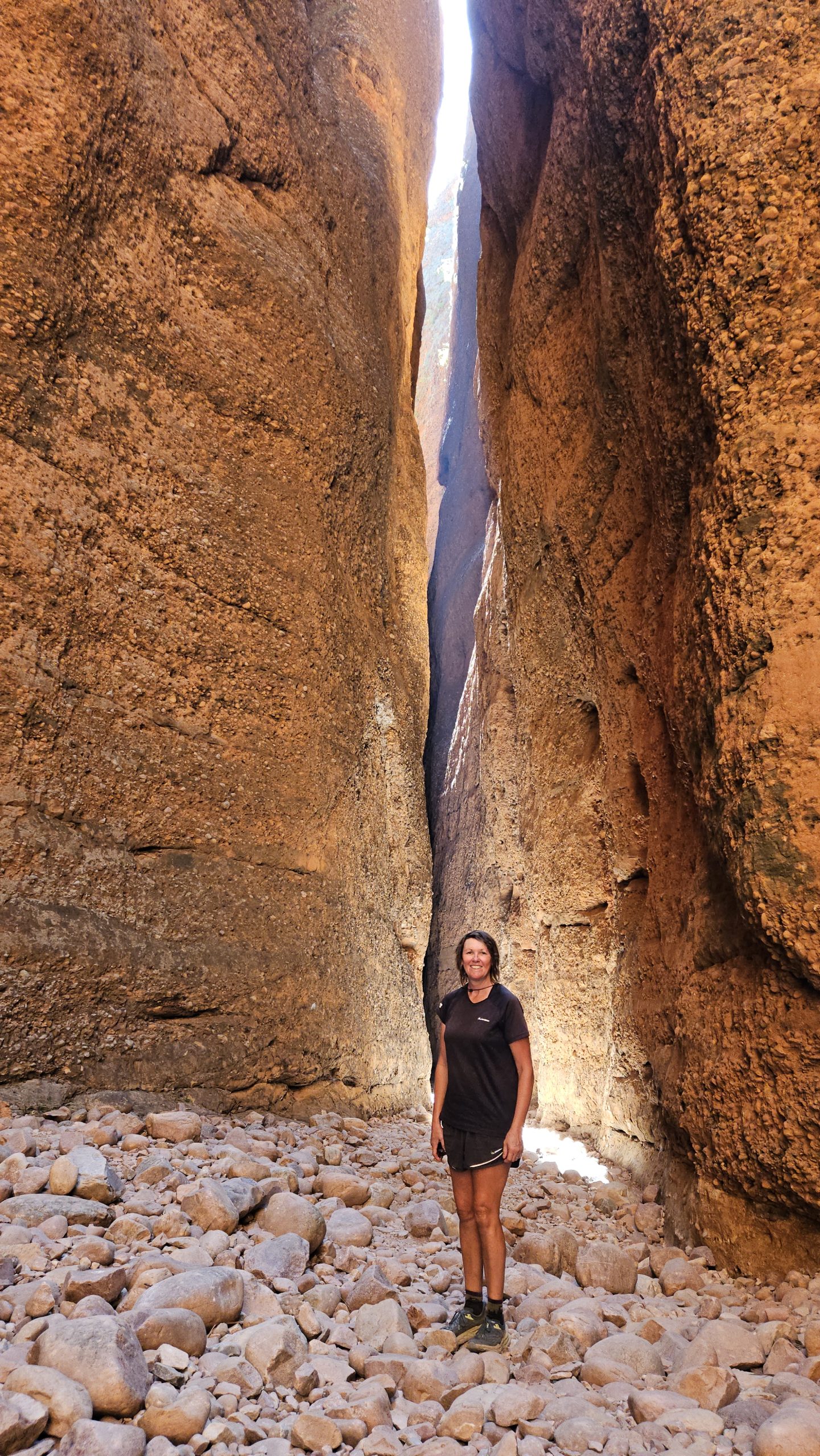
The most notable attraction in the park’s northern section is Echidna Chasm, which comes alive in the midday sun. We timed our walk to make the most of this unique spectacle.

Homestead Valley

We followed the Escarpment Trail to Homestead Valley — the furthest point from the Echidna Chasm car park. While Homestead Valley is just 4.4km return from The Bloodwoods car park, we’d opted for the much longer 11.6km return trail from Echidna to experience the Escarpment Trail. The Class 4 Homestead Valley track cuts across open woodlands before following a dry creek bed that carves deep into the gorge. The trail ends at a shaded rest area looking out over Homestead Valley. We arrived at the valley at around 9.30am, after a 1.5-hour trek.

Mini Palms

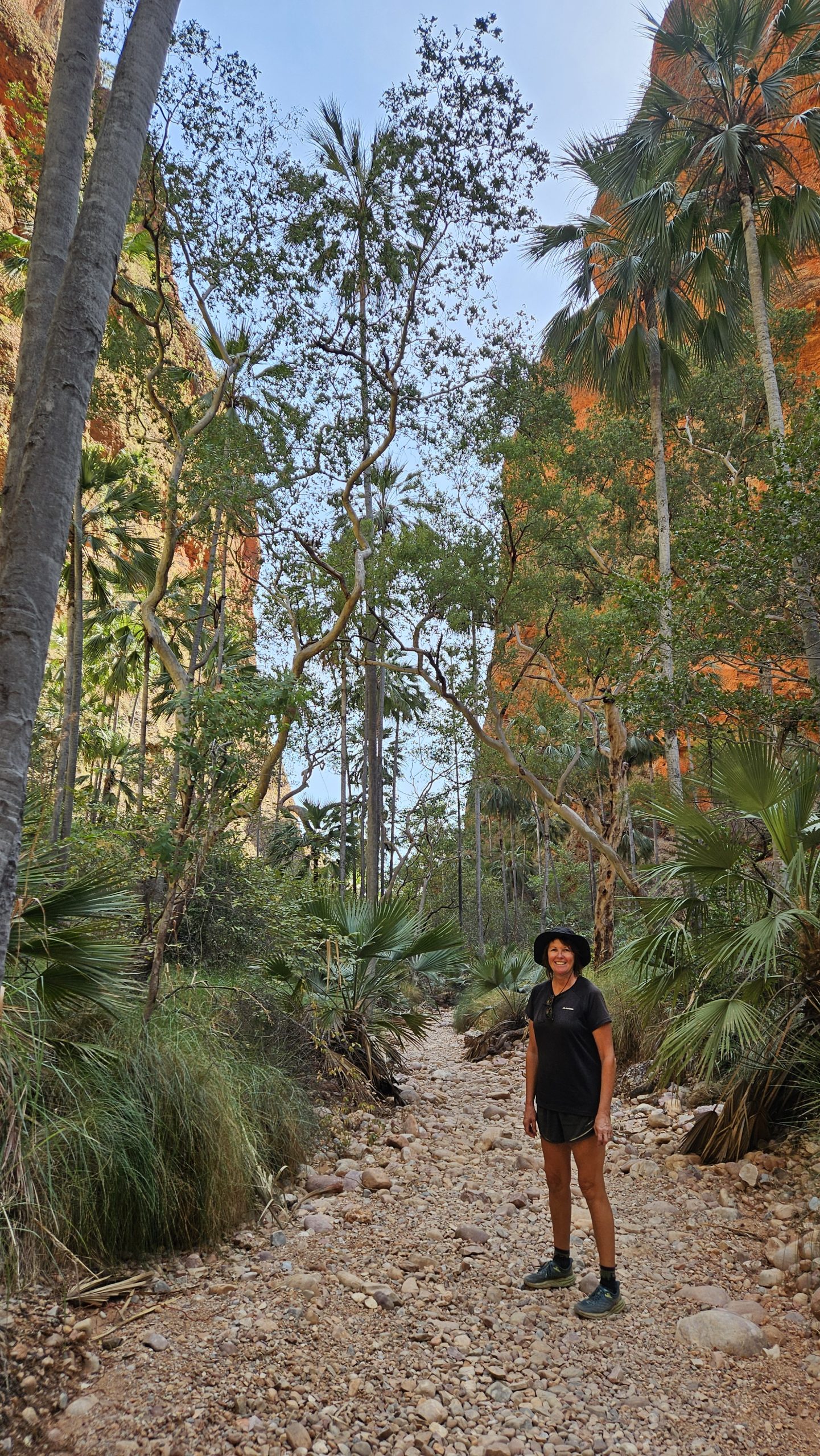
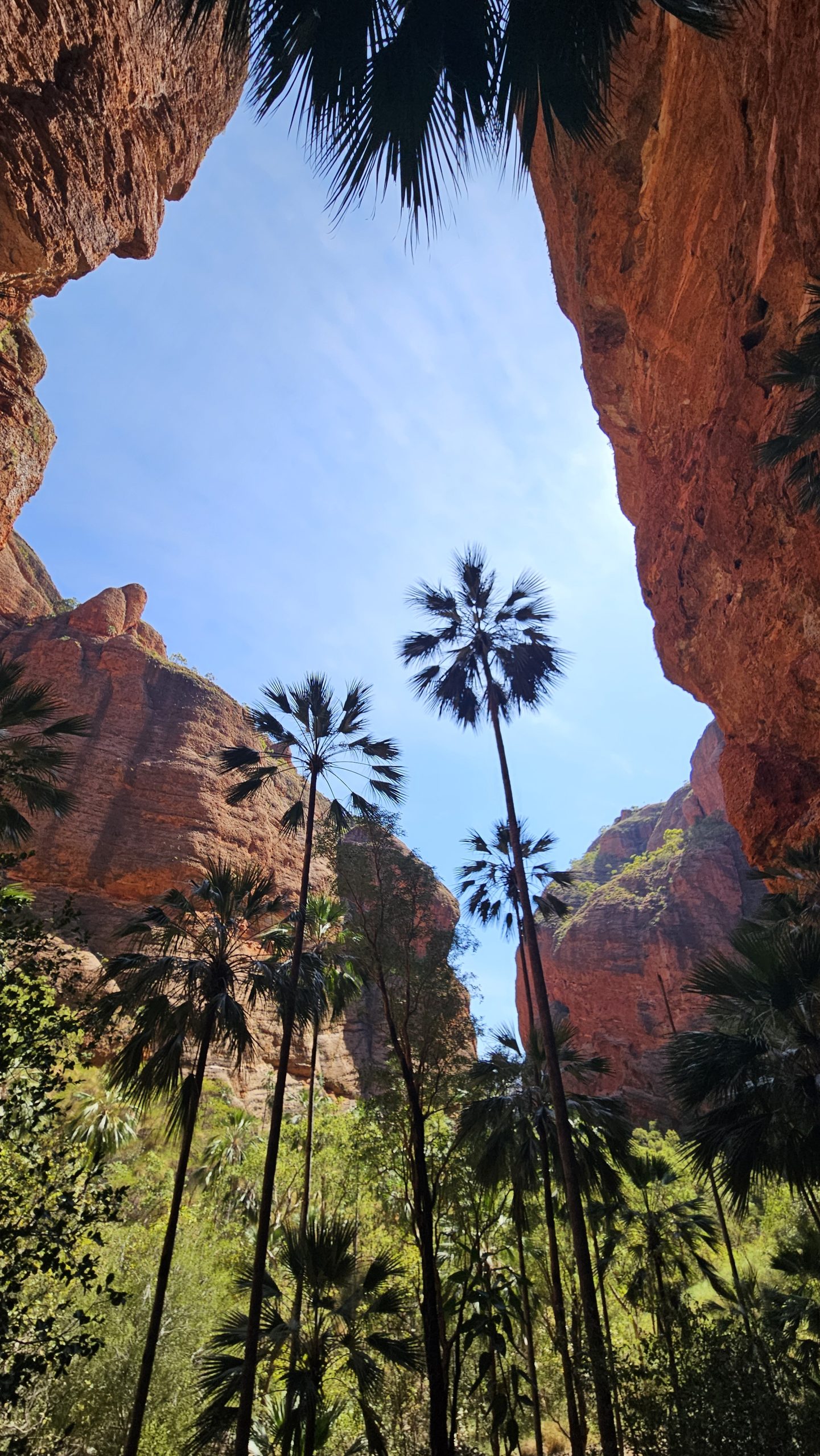
From Homestead Valley, we headed to Mini Palms — about a 45-minute walk. To get there from The Bloodwoods, it’s a 4.4km return walk, or 7.4km return from Echidna. The Mini Palms trail is a moderately challenging Grade 4 walk with some steep slopes and large fallen rocks to negotiate. It’s a spectacular location, with soaring cliffs, Livistona palms, two viewing platforms and a natural amphitheatre. With the countdown well and truly on, we raced back from Mini Palms to Echidna Chasm to ensure we didn’t miss the pre-midday spectacle.

Echidna Chasm

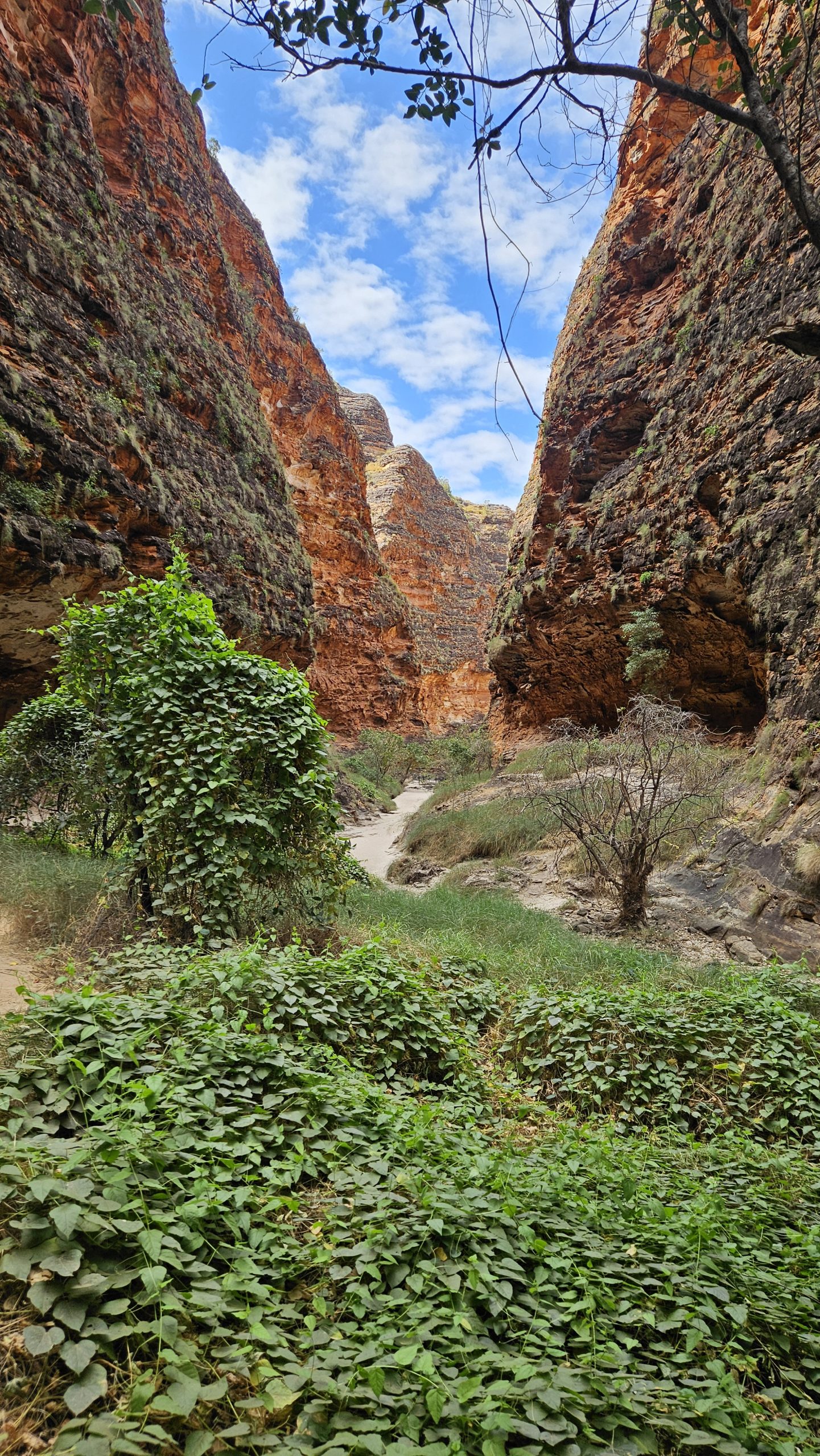
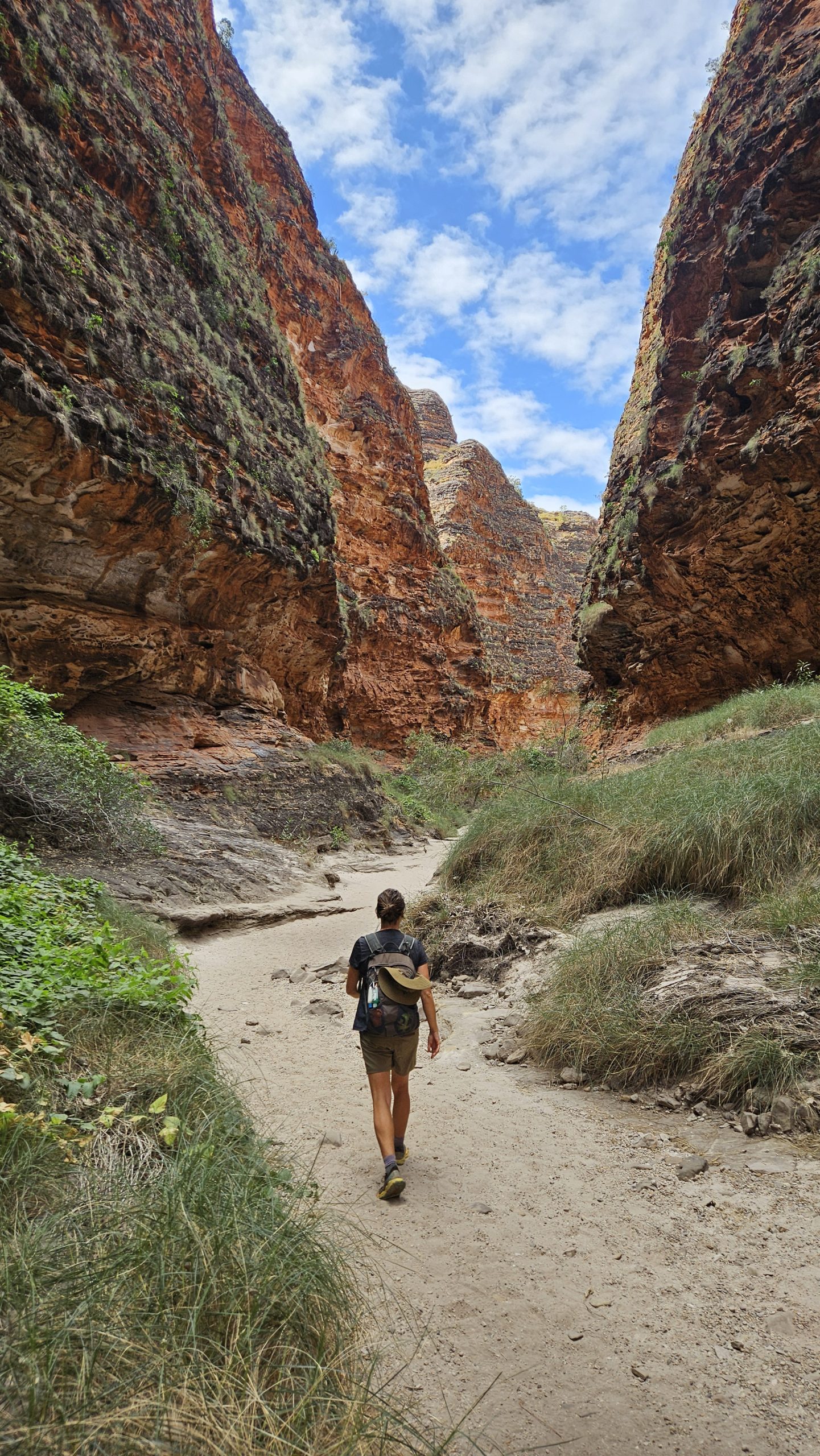
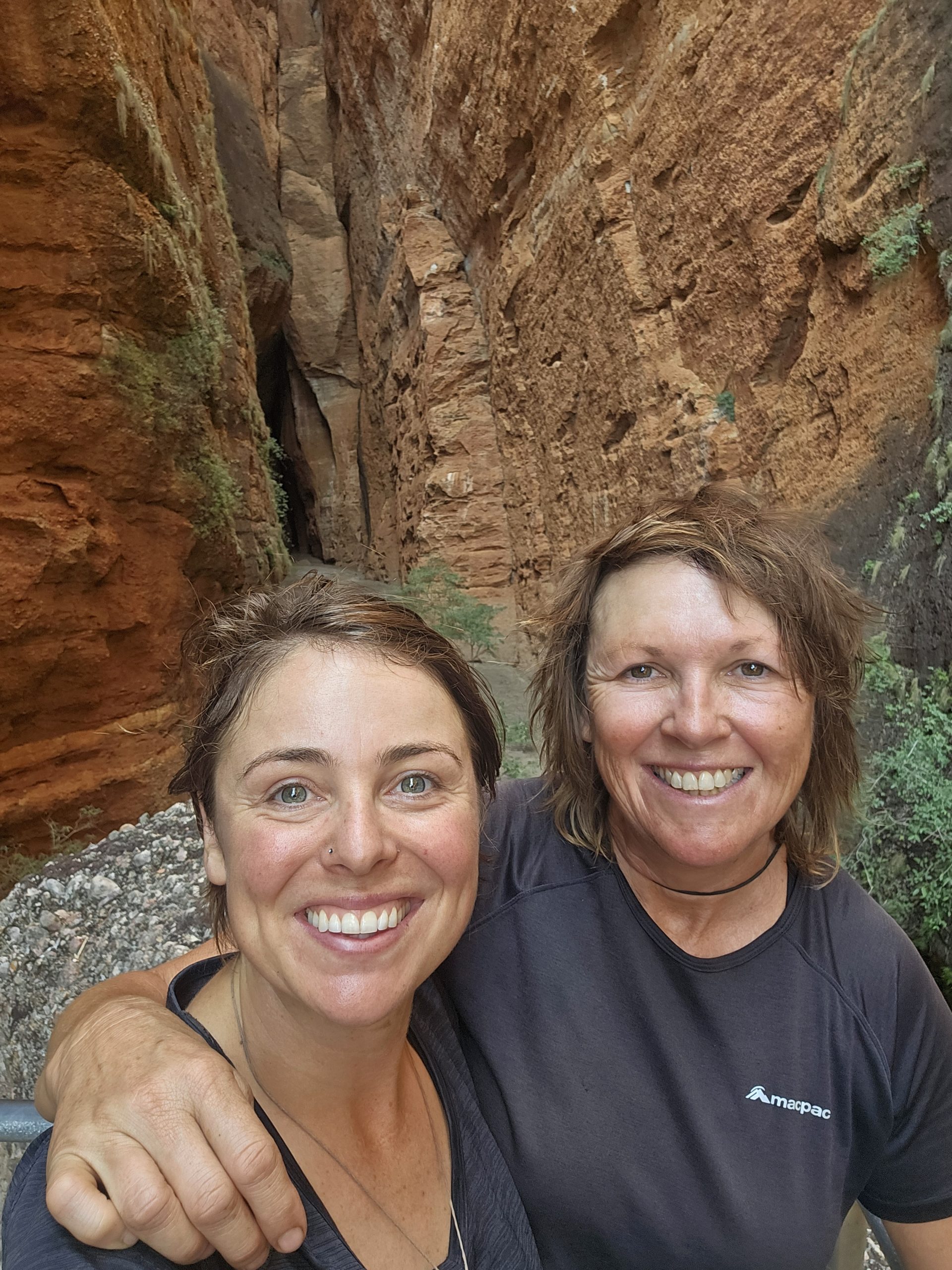
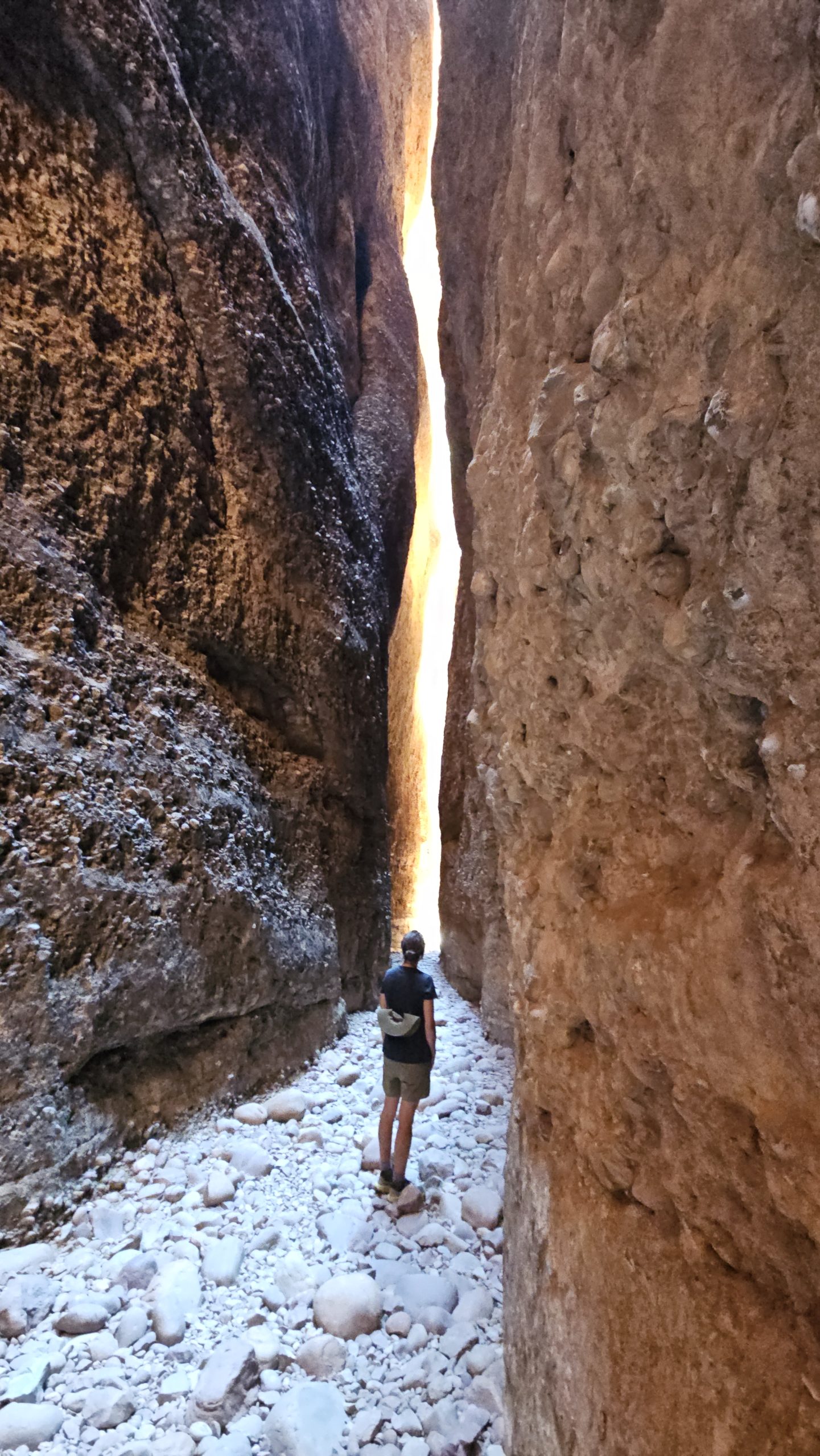
The most popular time to visit Echidna Chasm is just before midday, when the sun shines vertically into the 200m-tall chasm and lights up its walls. It’s a Class 4, 2km return walk from the Echidna car park, with a short but challenging climb near the end. Allow 45 minutes to an hour. We arrived, rosy-cheeked, at 11.45am. As we were very close to midday, most people had already taken their selfies, and we were able to jump straight in for a few epic pics. We then followed the chasm as deep as it would go, clambering over big boulders.

Tips

  • There are two car parks in the northern section of Purnululu National Park: the Echidna Chasm car park and The Bloodwoods car park.
  • We opted to hike the full length of the Escarpment Trail instead of tackling Mini Palms and Homestead Valley from The Bloodwoods car park. You won’t miss much if you choose not to hike the 2.6km Escarpment Trail stretch between Echidna and Bloodwoods.
  • Make sure you time your visit to catch the Echidna Chasm light show. It really is an impressive sight. We nearly missed it due to our ambitious (and slightly misguided) decision to walk to Homestead Valley beforehand.

Day 3 (afternoon): Echidna Chasm car park → Spring Creek Rest Area | 2 hr | 70 km

Osmand Lookout

We topped off a big morning on the trail with a stop-off at Osmand Lookout. This short Grade 3 walk leaves from the Echidna car park and takes you to an elevated ridge with panoramic views of the neighbouring Osmand Range. Allow 10 minutes.

The journey out

By 1pm, we were done and dusted and back on the gnarly road out of Purnululu. We spent the night at the Spring Creek roadside rest area after an arduous two-hour journey out of the Bungle Bungles. It’s not much more than a bitumen slab and a drop toilet, but we felt relieved to make it back into the safe arms of the highway.

Share:

More posts

Want to roam with us?

Sign up to receive our latest travel stories, tips, tricks and destination guides.

Want to roam with us?

Sign up to receive our latest travel stories, tips, tricks and destination guides.

We honour the ancient cultures of the First Nations peoples whose land we travel.

Copyright © Franky Roams | 2026 | All Rights Reserved