Our complete guide to working on the road
When travel savings run low, working on the road can keep the adventure rolling — and give you time to truly explore places like a local.

There is nowhere else in Australia like Cape York.
When the bitumen gave way to dirt and we entered this iconic Far North Queensland destination in 2024, it felt like we’d drifted into another world.
Here, red dirt highways disappear into the horizon, crocodiles roam crystal-clear waterways, mangoes dangle from trees, notorious 4WD tracks summon the adventurous, and ancient Aboriginal and Torres Strait Islander cultures thrive.
We ventured to Pajinka — the northernmost point of mainland Australia — in October, as the heat and humidity intensified and the wet season loomed. It was nearing the end of the tourist season, and the roads and campgrounds were quiet.
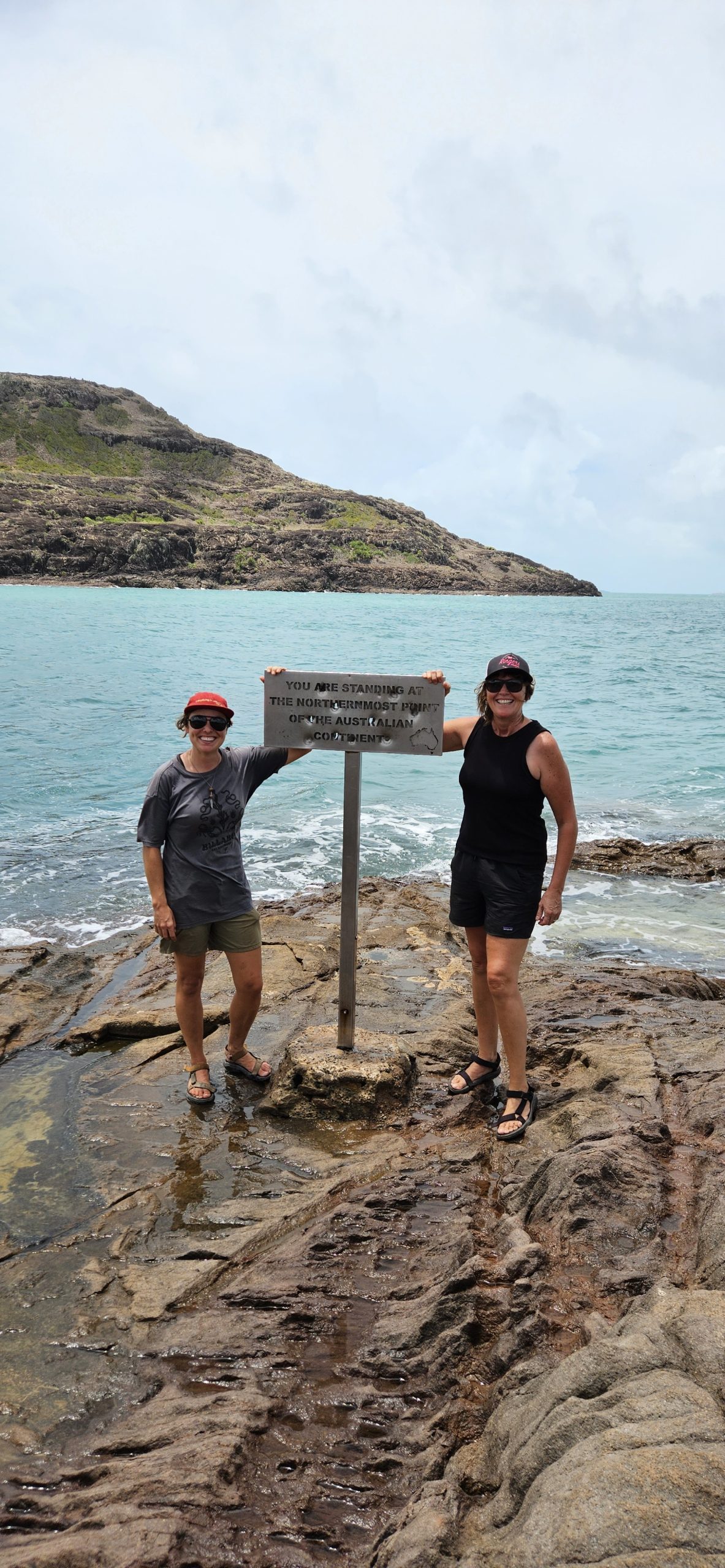
Over 19 days and 2,200 kilometres, we journeyed to ‘The Tip’ and back. Far from just a photo opportunity with the infamous sign reading — “You are standing at the northernmost point of the Australian continent” — it served up one of our most thrilling adventures.
From stunning waterfalls, quirky outback pubs, and longhorns roaming the main street, to gruesome crocodile tales, heart-stopping 4WD adventures, island-like beaches, nightly fires, and all-you-can-eat wild mangoes — it was epic.
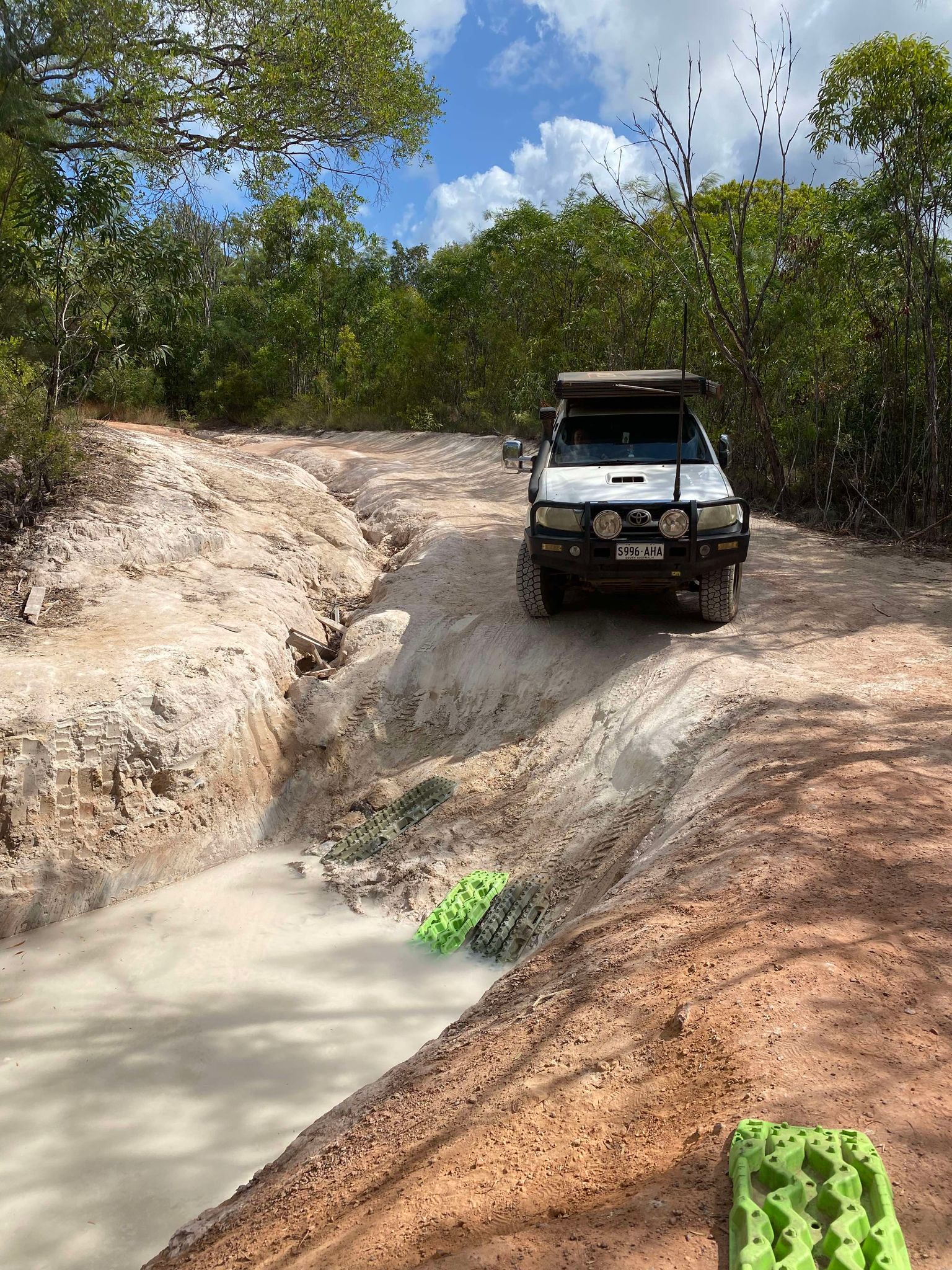
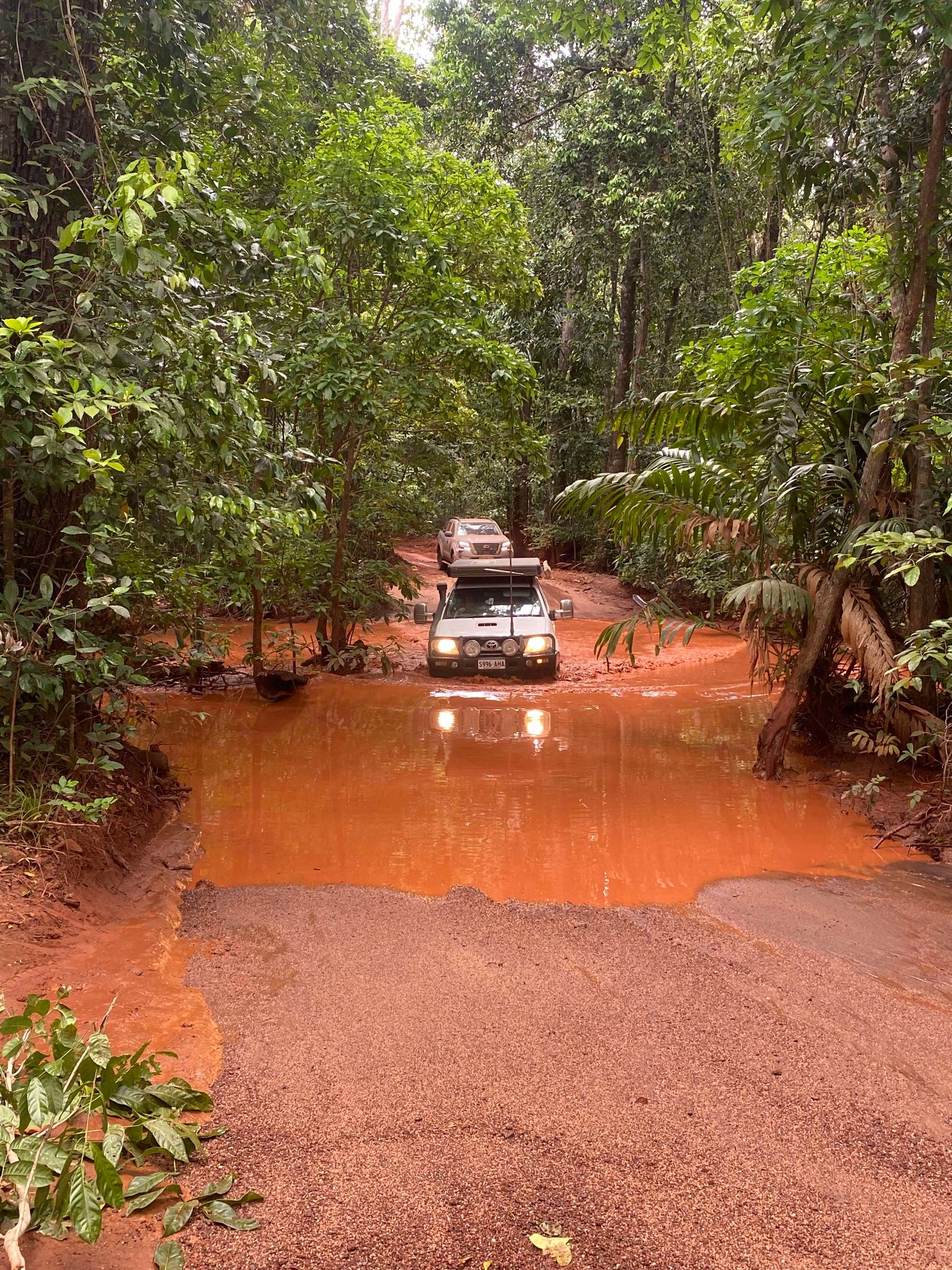
We formed a crew at Bramwell Junction and jumped on and off the notorious Telegraph Track, maneuvering our 2010 Hilux down intense nose dives, through knee-deep water crossings, and over severely rutted tracks.
We hadn’t intended to tackle the OT at all, but man, are we stoked we gave it a crack. It just added to our Cape York adventure.
Cape York is an incredible bucket-list trip for anyone chasing true outback adventure.
Here are some of our top spots:
If you’re planning a Cape York adventure, but aren’t sure how to tackle it — this guide is for you!
A reliable 4WD, plenty of fuel, and careful planning are essential — this is true remote outback territory.
It’s not only for hardcore 4WDers
Far North Queensland’s Cape York Peninsula is best known for its iconic Telegraph Track. This legendary, unmaintained 4WD route is a challenging off-road pilgrimage, famous for deep and treacherous creek crossings, steep banks, mud-filled tracks, and remote wilderness camps.
Stretching 150 km from Bramwell Junction to the Jardine River, this track is for experienced off-roaders in high-clearance, fully-equipped 4WDs (recovery gear, snorkel, and winch), travelling with a crew of similarly adventure-ready folks.
If this doesn’t sound like your cup of tea, don’t worry — there’s more than one way to reach Pajinka.
While the Telegraph Track served as the only access road to the Cape for over a century, the Peninsula Development Road (PDR) was completed in 1986 to provide a more reliable, weather-resistant transport link.
When we set out on our adventure, this was the road we planned to take. What we didn’t realise at the time is that there are multiple points to enter and exit the Telegraph Track from both the Peninsula Development Road (PDR) and Bamaga Road.
We ended up tackling 60 intense kilometres of the OT — and it was unforgettable.
It’s remote, but pretty well serviced
While the region is extremely remote, with rugged outback roads, it is serviced enough for prepared travellers.
There are fuel stations along the way in towns like Coen, Archer River and Bamaga, but they’re far apart and can run out, so carrying extra jerry cans is essential.
Cooktown serves as the southern supply point for the Cape, and the twin towns of Bamaga and Seisia serve the north. These towns offer fuel, grocery stores and other essentials, and are separated by an 850 km drive. Services inbetween include:
The more remote, the higher the prices. Especially for takeaway alcohol and fuel.
The best time to visit Cape York is during the dry season, from May to October. During these months, the weather is cooler, roads are more accessible, and river crossings are safer.
Days are warm but not scorching (around 25–32 °C), nights are cool, and rainfall is minimal.
The wet season (November to April) is hot and humid, with heavy rain, flooding, and washed-out tracks that make many parts of Cape York impassable. Many caravan parks and campgrounds close during this period.
We visited at the end of the tourist season in October. The roads and camps were quieter, and it was warm but not stifling. Travelling at this time made the adventure feel even more magical — far better without the crowds.
Location of Cape York
Cape York is the northernmost point of mainland Australia, in far north Queensland.
It’s a remote and rugged region, famous for wild beaches, outback tracks, and untouched wilderness — the ultimate destination for adventurous travellers.
Cape York is roughly 1,500 km north of Cairns by road. Pajinka, at the Cape’s northern tip, is where the Peninsula meets the Torres Strait — a stunning, windswept spot as remote as it gets.
Most travellers start from Cairns and head north via a mix of sealed and unsealed roads. Depending on your route and stops, driving to Pajinka typically takes around five days.
We started from the Atherton Tablelands, leaving our caravan in storage and opting to use our rooftop tent for this adventure.
Roads to the Tip
The main route to Cape York includes the following roads:
Pajinka, or ‘The Tip’, is reached via local access tracks from Bamaga.
We reached Cape York and Pajinka via an epic mix of the notorious Telegraph Track and rugged PDR and Bamaga Roads, which only added to the sense of remote, outback adventure.
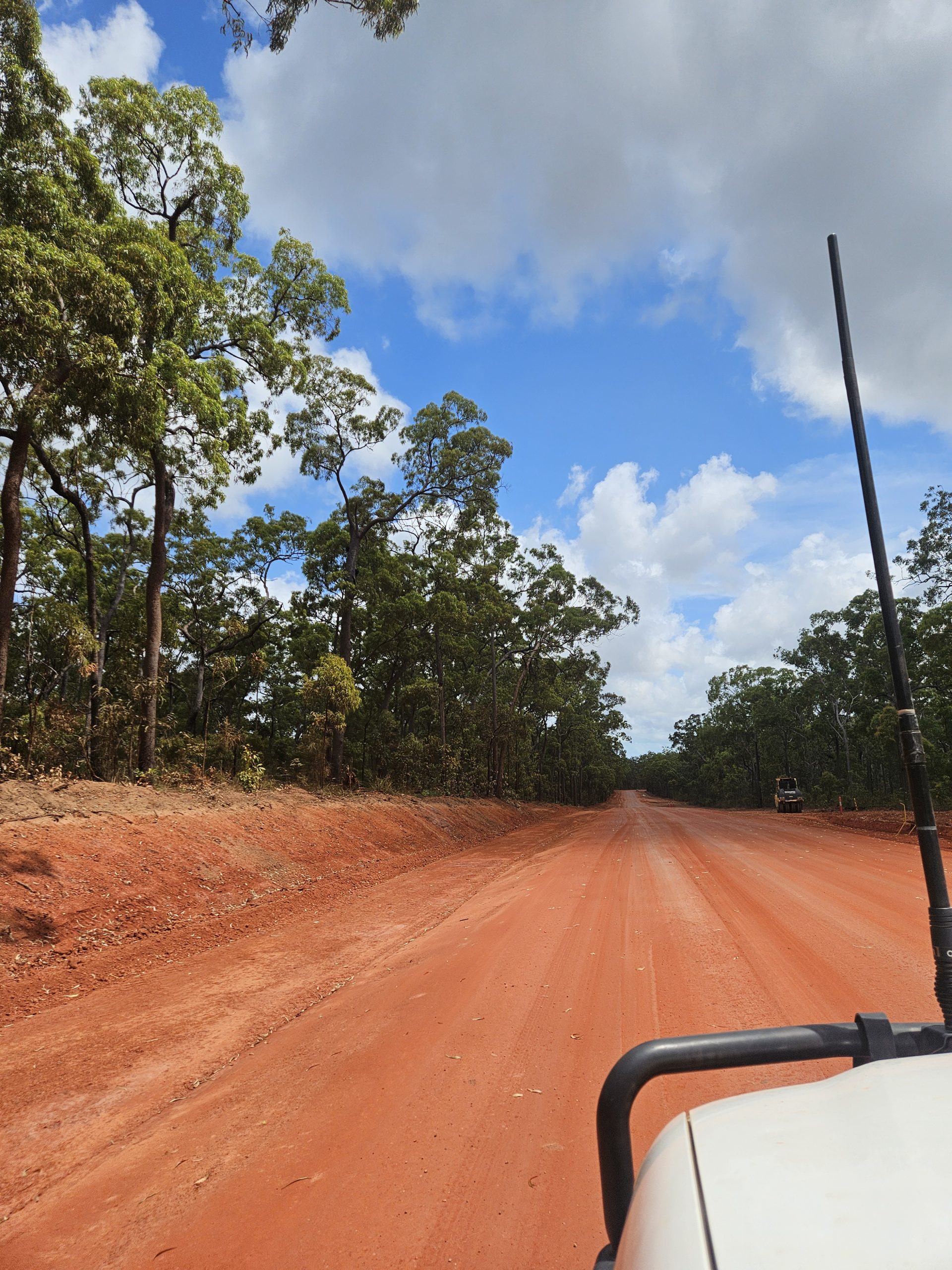
While the PDR and Bamaga Roads have nothing on the OT in terms of challenge, they’re still notorious for severe corrugations, deep red dust, and a mix of bitumen and dirt sections.
Along the way, travellers should plan for fuel stops, vehicle maintenance, and occasional river crossings — Cape York is remote, and preparation is key. For many, the journey itself is as memorable as the destination.
Jardine River Ferry
The Jardine River Ferry is the only way to cross the Jardine River on Cape York.
Check the operating times when planning your trip. As at 20 February 2026, the times are:
Crossing can take some time during busy periods, so arrive with time to spare. There is a hefty vehicle fee — $160 for a car, $250 if towing — but it’s an iconic part of the Cape York journey so just take it ion your stride.
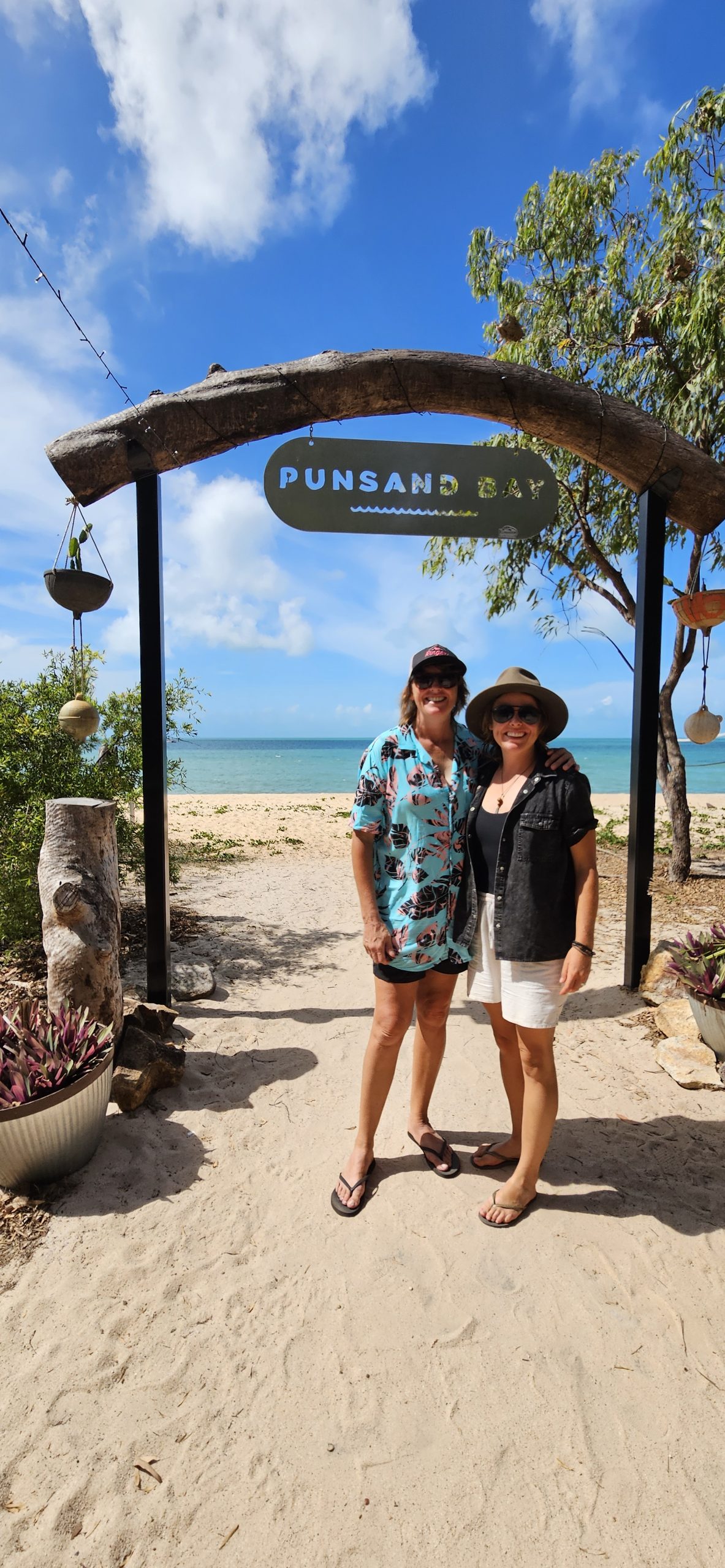
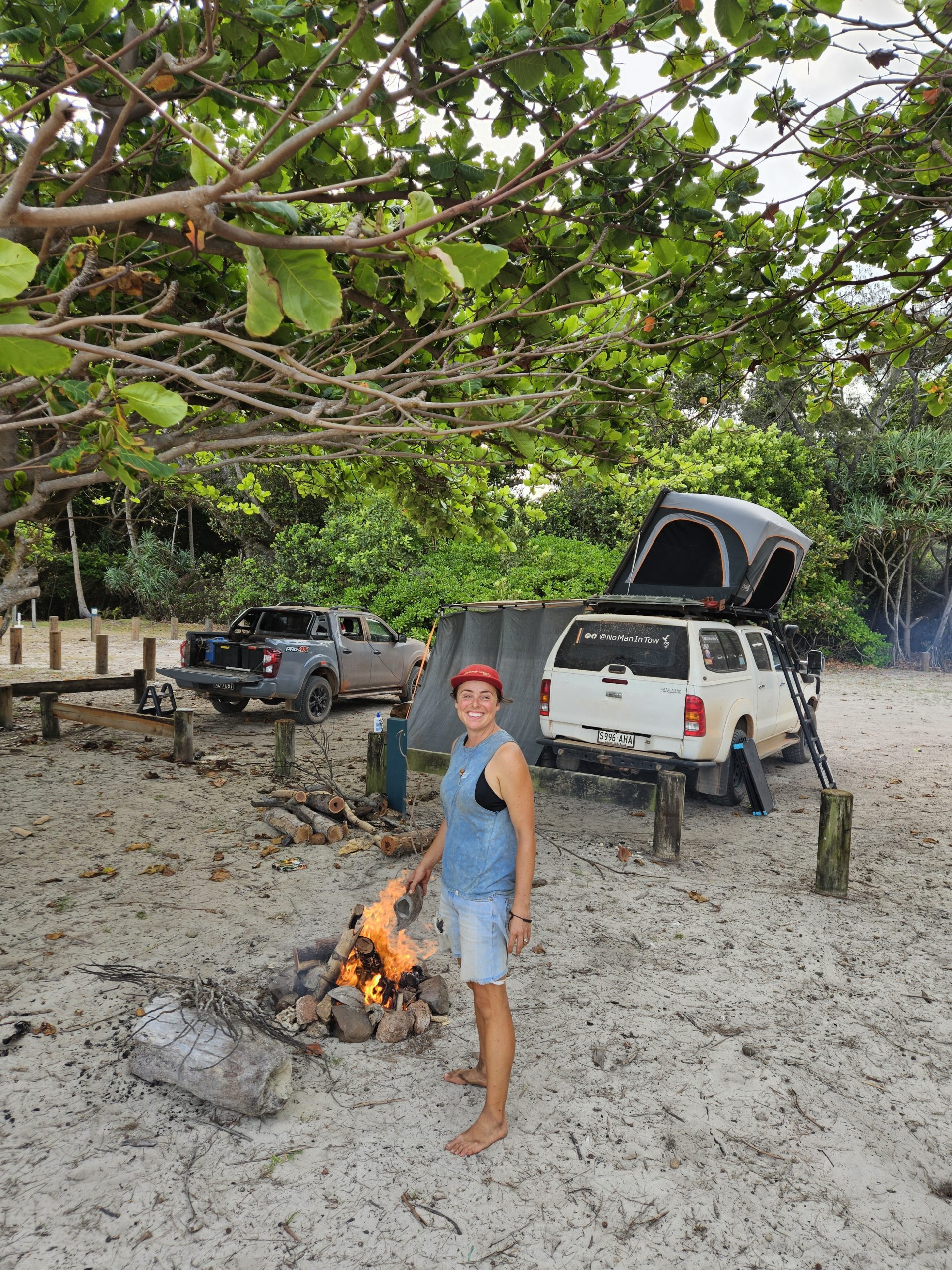
There are the places we camped at. From free coastal bush camps to ocean-front holiday parks – queue the DJ – we were seriously impressed by just about everywhere we stayed. Fair to say, Cape York is home to some of the country’s best beach camps.
Punsand Bay Cape York Camping
Punsand Bay is unlike anywhere we’ve been on our two laps of Australia, and is definitely a location worth adding to your bucket-list. It was the perfect place to chill after an adventure-packed week on our way up to The Tip. We said goodbye to rough roads and g’day to serious island vibes.
Location: Approximately 5 km southwest of ‘The Tip’ (Pajinka)
Cost: Upwards of $30 pp pn
Facilities: Punsand Bay has it all. Picture beachfront camping, a swimming pool with ocean views, the Corrugation Bar, live music, amazing pizzas and friendly staff, plus the usual amenities and powered and unpowered sites.
Downside: What’s not to love? The fees add up, but it’s totally worth it. Book early to snag a spot.
Roonga Point Campground
Cape York kept delivering at Roonga Point. We took in the most incredible sunset from this secluded and beautiful free camp. Roonga Point is located along a bay with some shady areas and is accessible to tents, camper trailers and off-road caravans.
Location: Around 20 km southwest of ‘The Tip’ (Pajinka)
Cost: Free (included in the Jardine River Ferry fee)
Facilities: Bushes to pee behind. It’s a self-sufficient, 4WD-access-only site offering rustic, unpowered beachfront camping.
Downside: A few seasonal midgies (pack your spray)
Loyalty Beach Campground
Arriving at Loyalty Beach Campground felt like we’d jumped off a boat and onto the shores of a remote island. It had total island vibes, with white sandy beaches, water like glass and the islands of the Torres Strait lining the horizon. We’re stoked we timed our stay to enjoy Loyalty’s famous fish and chips night held on Sundays. Picture a DJ spinning tunes, the setting sun reflected in the ocean and tables filled with happy locals and travellers. Magic!
Location: Approximately 4 km from Bamaga, heading towards Seisia
Cost: Upwards of $17 pp pn ($8 per child)
Facilities: Loyalty offers absolute beachfront camping, powered and unpowered sites,the usual amenities, a well-stocked kiosk, and a bar spinning tunes and swerving up scrumptious fish and chips on Sundays.
Downside: Nothing.
Kennedy River Rest Area
More suited as an overnight stopover, this roadside camping area has views over a gentle bend in the Kennedy River. It’s located beside the main road, making it more suited to overnight stops than extended stays.
Location: 33km north of Laura
Cost: Free
Facilities: There are no facilities, or mobile phone coverage. The camping area is suitable for tent camping beside your car, camper trailers and caravans.
Downside: Large crocodiles are frequently seen here—so be croc wise.
Coen River Camp
A peaceful riverside spot perfect for a night or two, Coen River Camp sits beside a clear, shallow waterway, offering a chance to relax after a long day on the road. The setting is scenic and quiet, ideal for cooling dips and wildlife spotting.
Location: 1.5 km south of Coen township
Cost: Free
Facilities: No facilities or mobile coverage. Suitable for tent camping, rooftop tents, camper trailers, and caravans.
Downside: Crocodiles inhabit the river, so always stay alert and swim only in safe areas.
Mutee Heads Campground
Mutee Heads is a remote and unforgettable coastal camp. Perched on a rugged headland above the Arafura Sea, it delivers sweeping ocean views, wild beauty and true solitude.
Location: 40km west of Bamaga (4WD only — sandy coastal tracks)
Cost: Free (included in ferry fee)
Facilities: Toilets
Downside: Pretty sandy road in, and risk of crocs
Wenlock River Camp
This magical free camp on the Wenlock River is perched high on the banks of the river and under the shade of two giant mango trees. We lit a beautiful fire and enjoyed a chorus of bird calls as the sun dipped behind the bush.
Location: 90 km north of Bramwell Junction
Cost: Free
Facilities: None — bush camping at its best
Downside: Keep and eye out for roaming bulls
Chilli Beach Camping Area
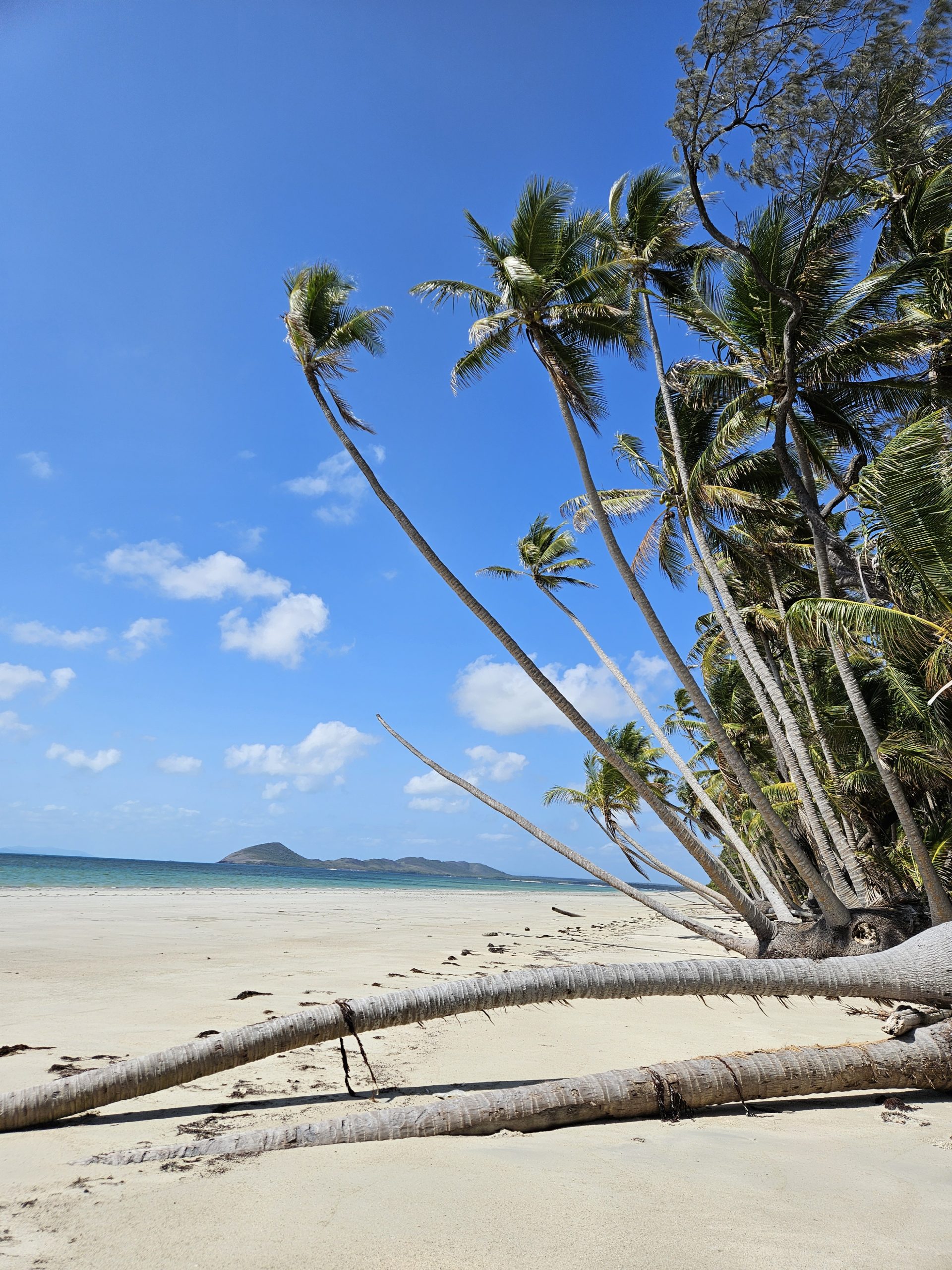
This place is unreal. We spent two nights chilling out at this spectacular campground on Cape York’s eastern shores. It felt like we were on an island in the Whitsundays, with a long white beach lined with coconut palms greeting a bright blue sea. Definitely a must-do for any Cape York road trip.
Location: About 200km north of Coen, and 40 km north of Lockhart River – in Kutini-Payamu (Iron Range) National Park (CYPAL)
Cost: $7.50 per site (max 12 people)
Facilities: Unpowered, beachfront sites suitable for 4WD access, tents, and small camper trailers. Facilities are limited to toilets. Campers must be fully self-sufficient.
Downside: We collected a big bag of rubbish, swept up from international waters.
Isabella Falls Campground
A scenic bush camp next to a popular freshwater swimming hole and small waterfalls. Perfect for cooling off after a day of driving and enjoying some quiet time in nature.
Location: 40km north of Cooktown
Cost: Free
Facilities: None – but an awesome refreshing swimming hole
Downside: It’s small, so would fill up quickly in peak season. Limited flat ground.
Cooktown Orchid Travellers Park
Cooktown Orchid Travellers Park is a relaxed, welllocated campground right in the heart of historic Cooktown. Surrounded by lush tropical gardens and just a short stroll from cafés and shops, it’s a great place to rest up, top up supplies, and explore the region.
Location: Cooktown township
Cost: Approx. $30–$40 per night (varies by site and season)
Facilities: Powered and unpowered sites, clean toilets and hot showers, camp kitchen, BBQ area, laundry, shaded grassed areas, and a friendly office with local info.
Downside: None.
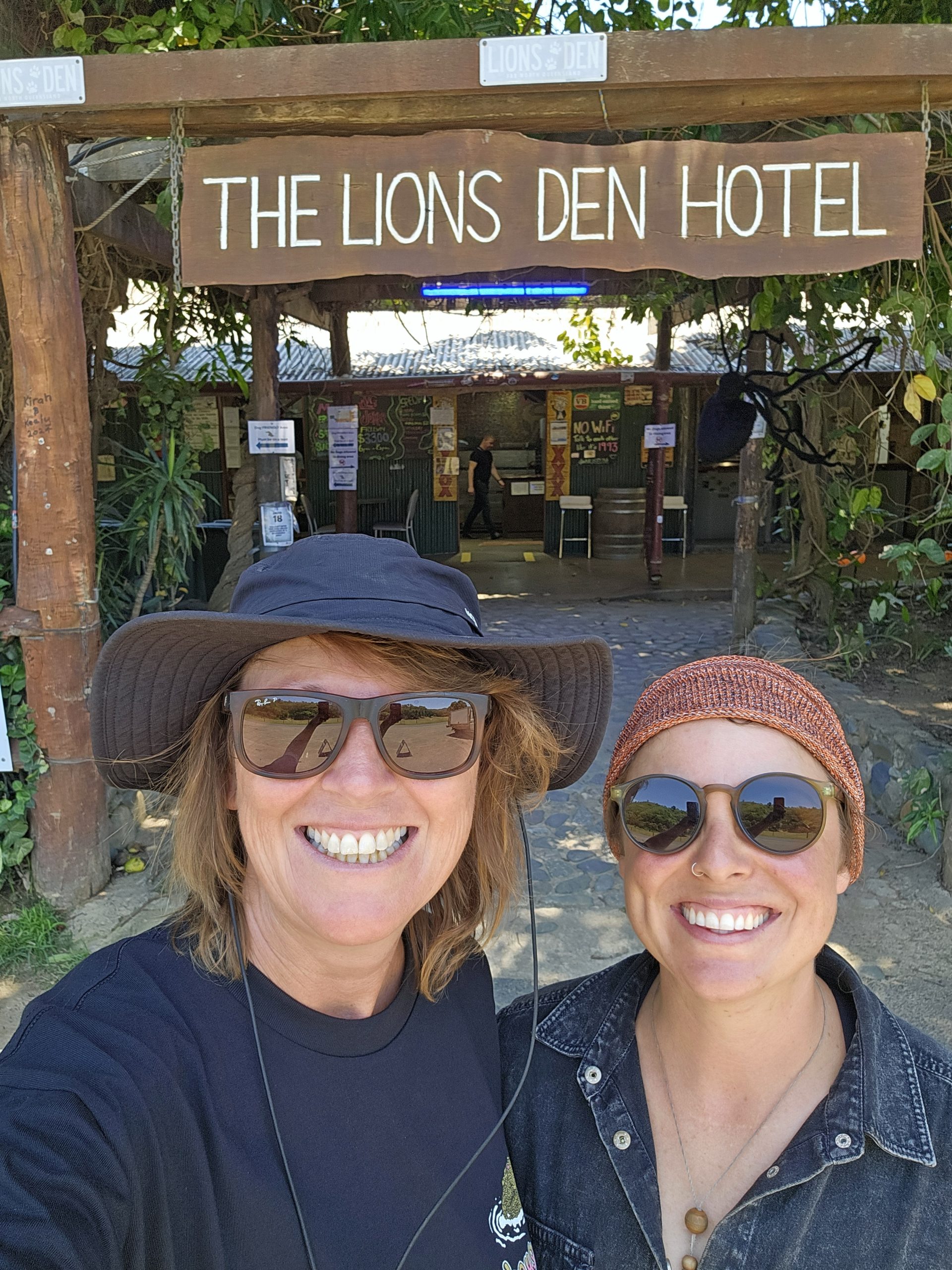
Lions Den Hotel Campground
A classic Queensland stopover, the Lions Den offers an iconic and wellequipped camping experiences on the Little Annan River. Best known for its eclectic pub atmosphere, the Lions Den is a great base before or after exploring the Bloomfield Track.
Location: 30 km south of Cooktown
Cost: $15pp pn (bookings recommended)
Facilities: Powered and unpowered site, toilets, hot showers, laundry, fire pits, licensed bar and café serving meals, drinks and pizzas.
Downside: Can get busy – could be a shock to the system after bush camping
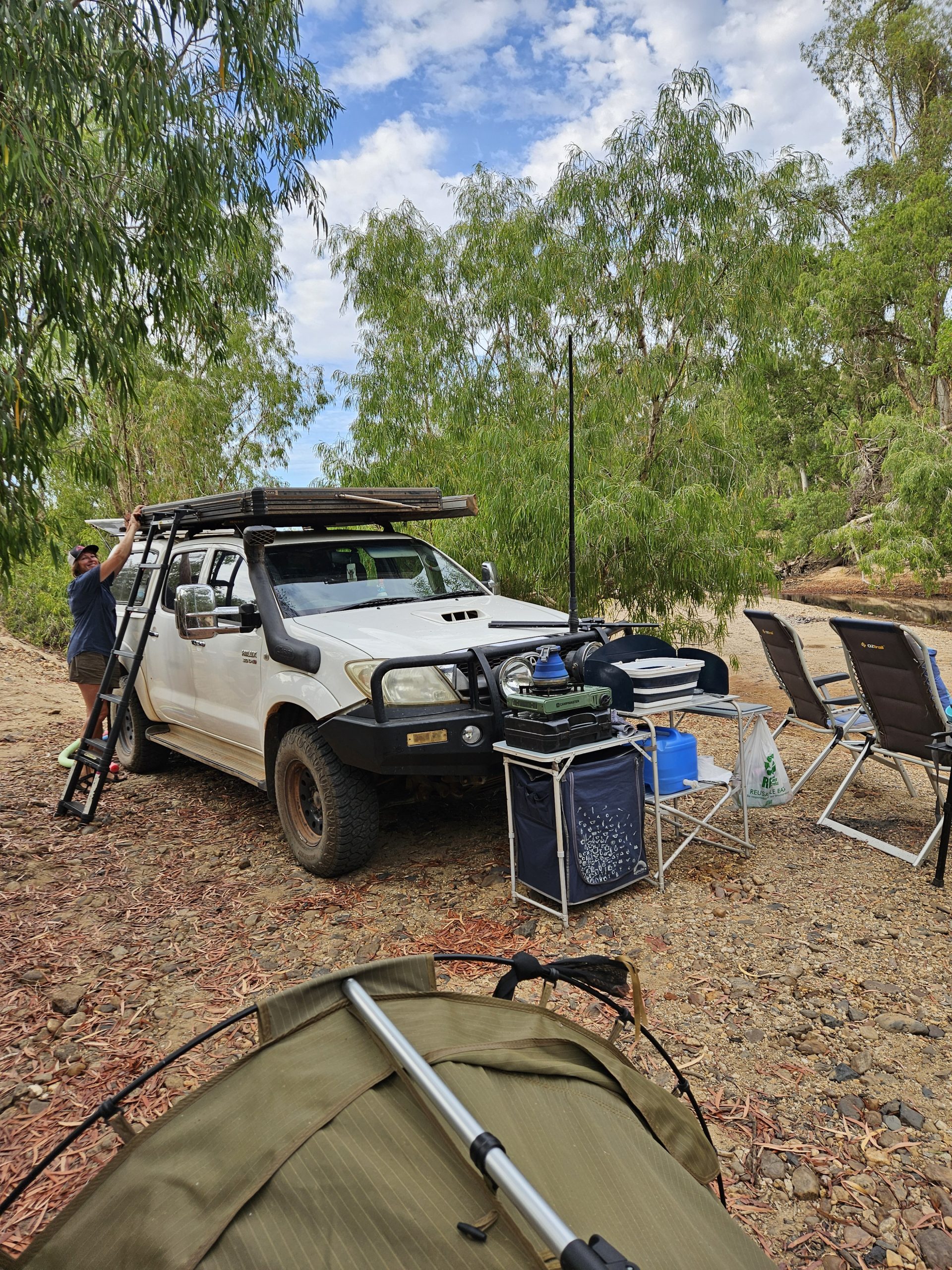
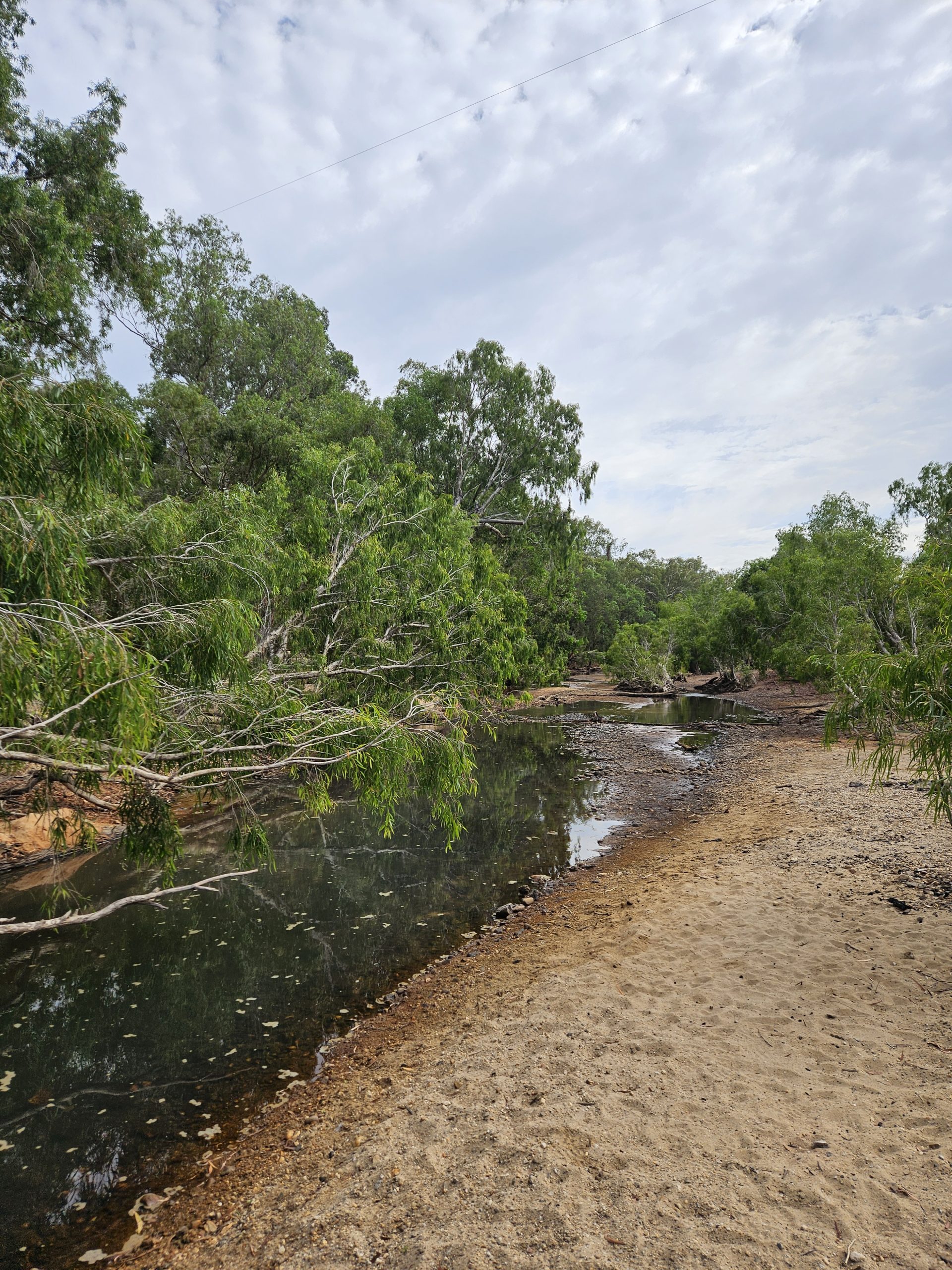
After dropping off our van at the NRMA Atherton Caravan Park, we headed to Laura – the first stop on our Cape York adventure to the Tip of Australia. We headed just up the road from Laura to the Kennedy River Rest Area – a popular free camp by the Hann Crossing, on the banks of the Kennedy River. We arrived just as the sun began to set and quickly set up camp on a small roadside creek bed, alongside a few other campers. We lit a beautiful fire and enjoyed a stunning green curry, under the stars, kleeping an ear out for crocodiles.
Highlights:
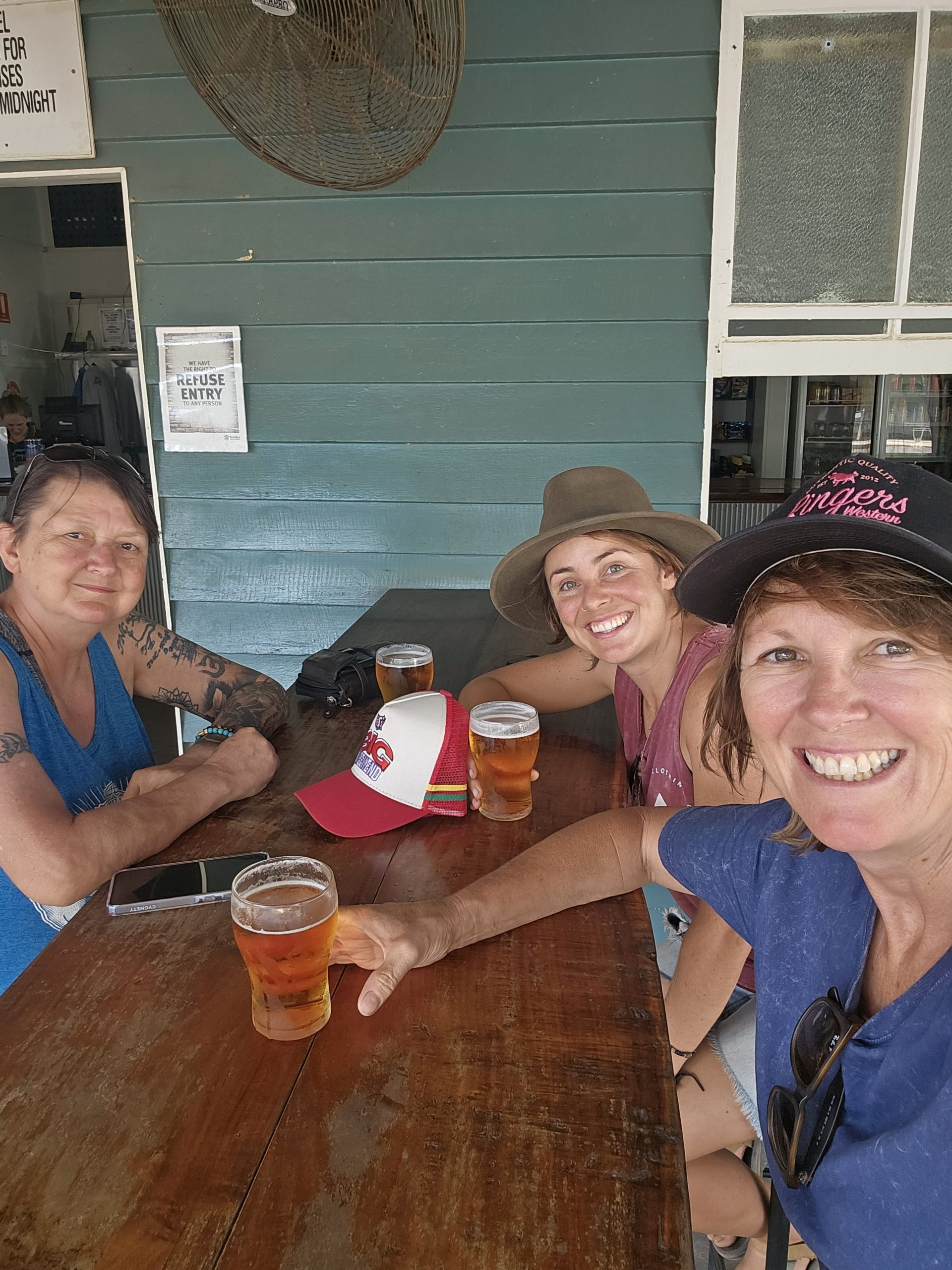
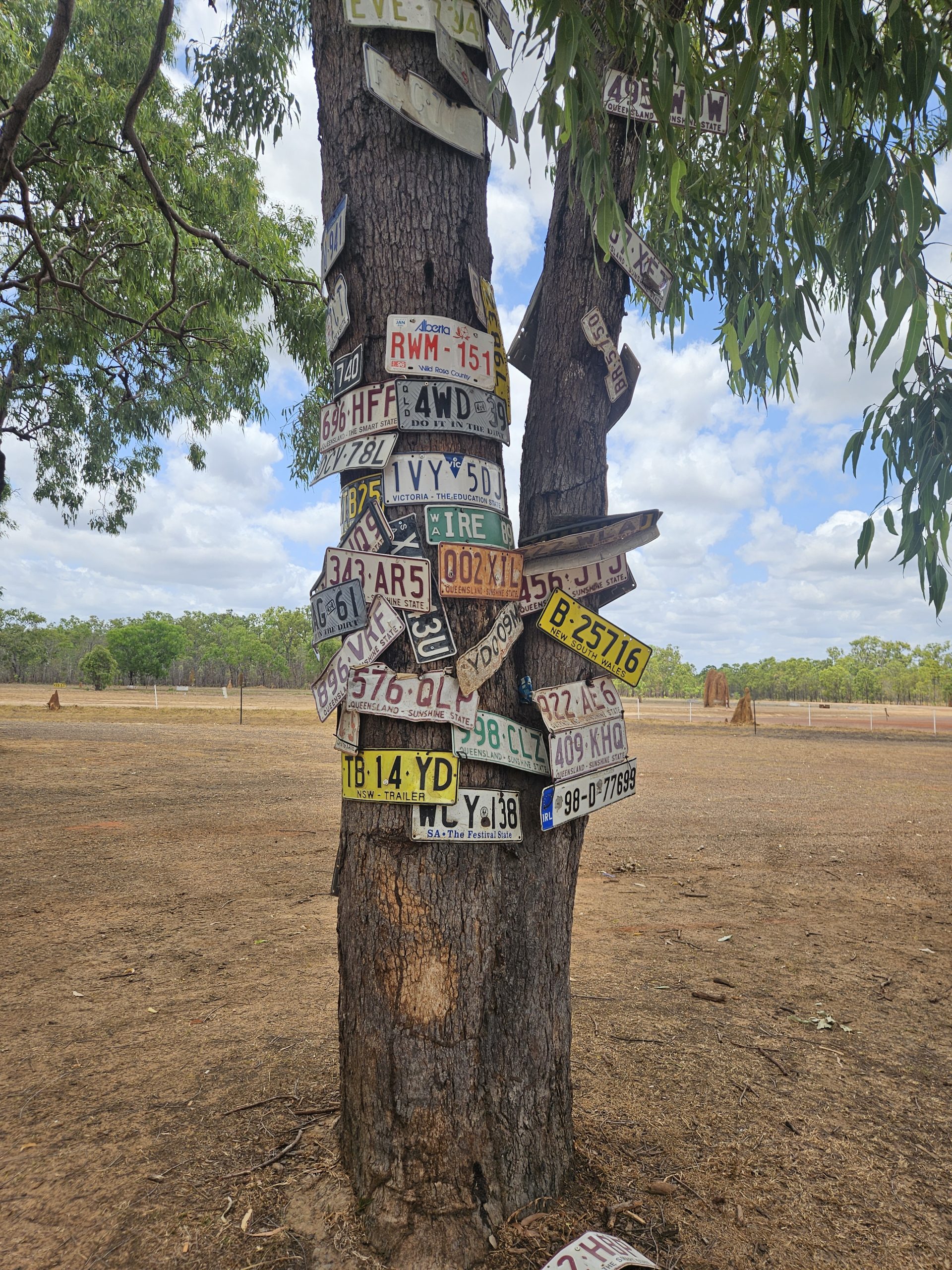
We started the day by exploring the historic Laura Homestead and the quirky “bridge to nowhere” — a railway crossing built during the gold rush that was never finished. Before leaving town, we popped into the Peninsula Hotel, where we got chatting with the publican’s brother. He told us the story of the former publican, ‘Stumpy’, who had been eaten by a crocodile just 18 months earlier (in 2023)!
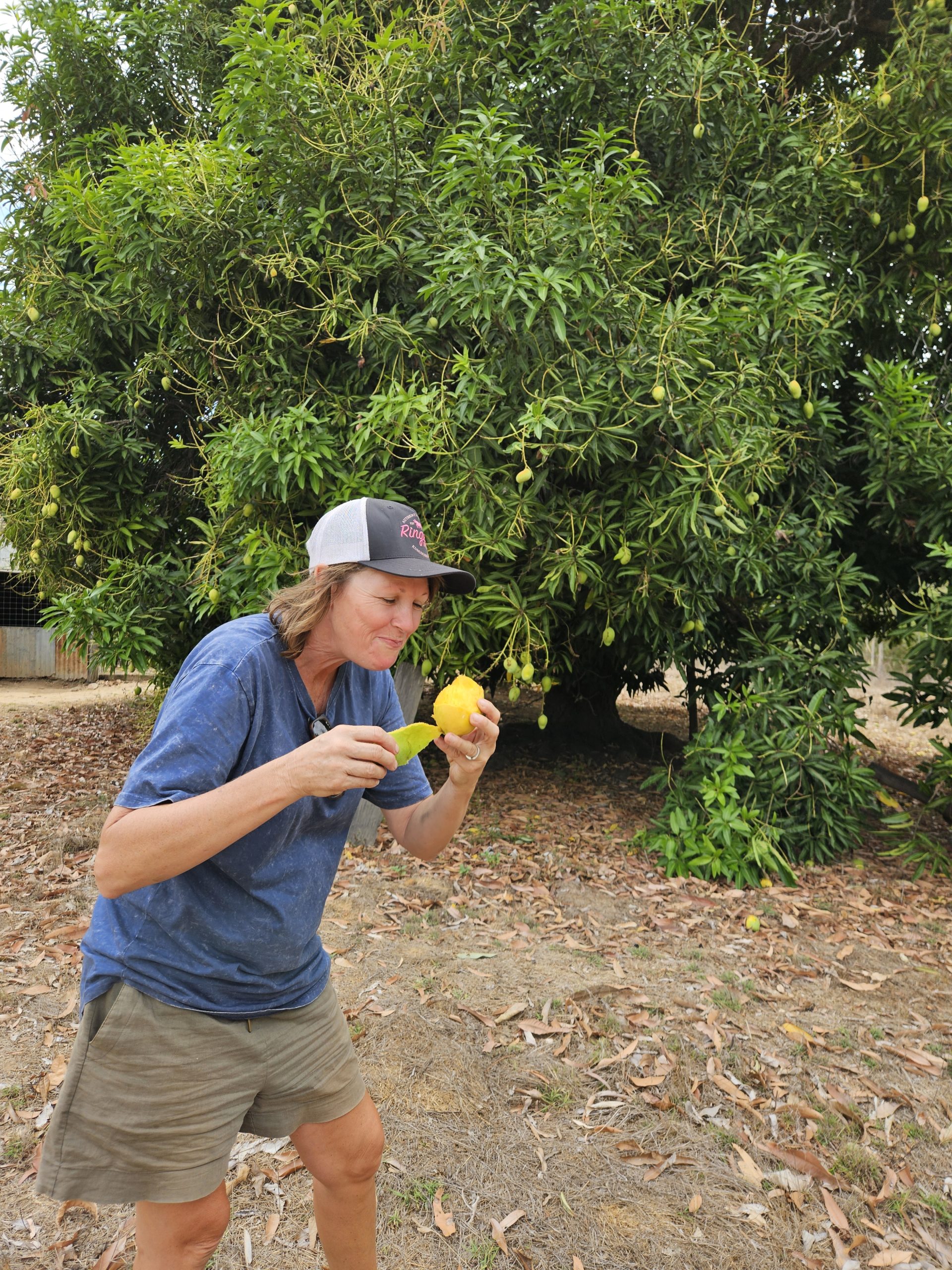
After sinking our first Cape York ale, we plucked a few wild mangoes from trees lining the town’s main street, then hit the road three hours north to Coen. On the way, we stopped at the Junction and Musgrave Roadhouses. The last 40 km into Coen was seriously corrugated, so we were glad we aired down at Musgrave. Cows milled around the roadhouse entrance, and the owner and her daughter were hilariously shooing them away by holding plastic chairs above their heads.
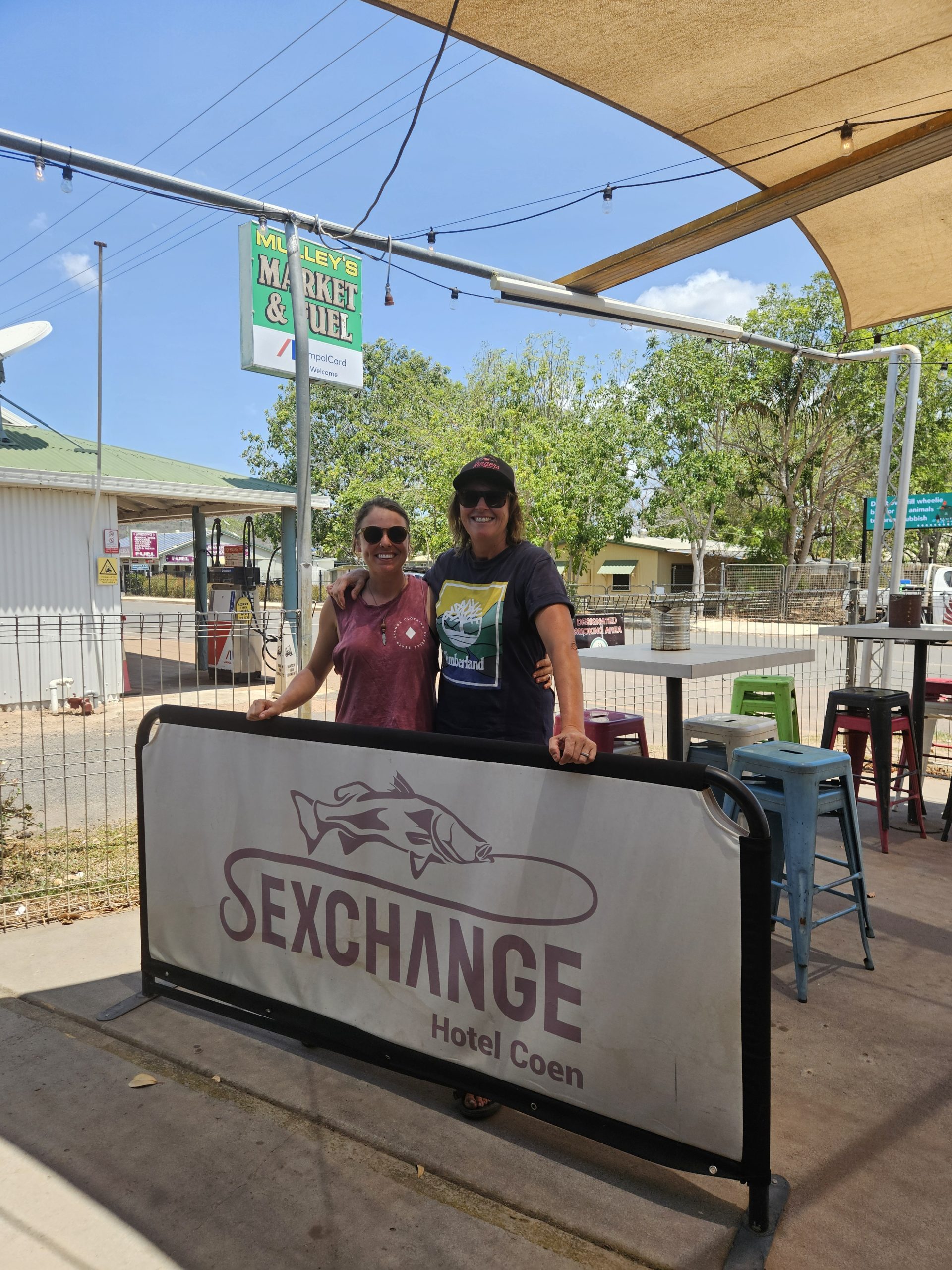
Arriving in Coen, we called into the Exchange Hotel — famously nicknamed the Sexchange Hotel after an “s” mysteriously appeared on the sign some 20 years ago.
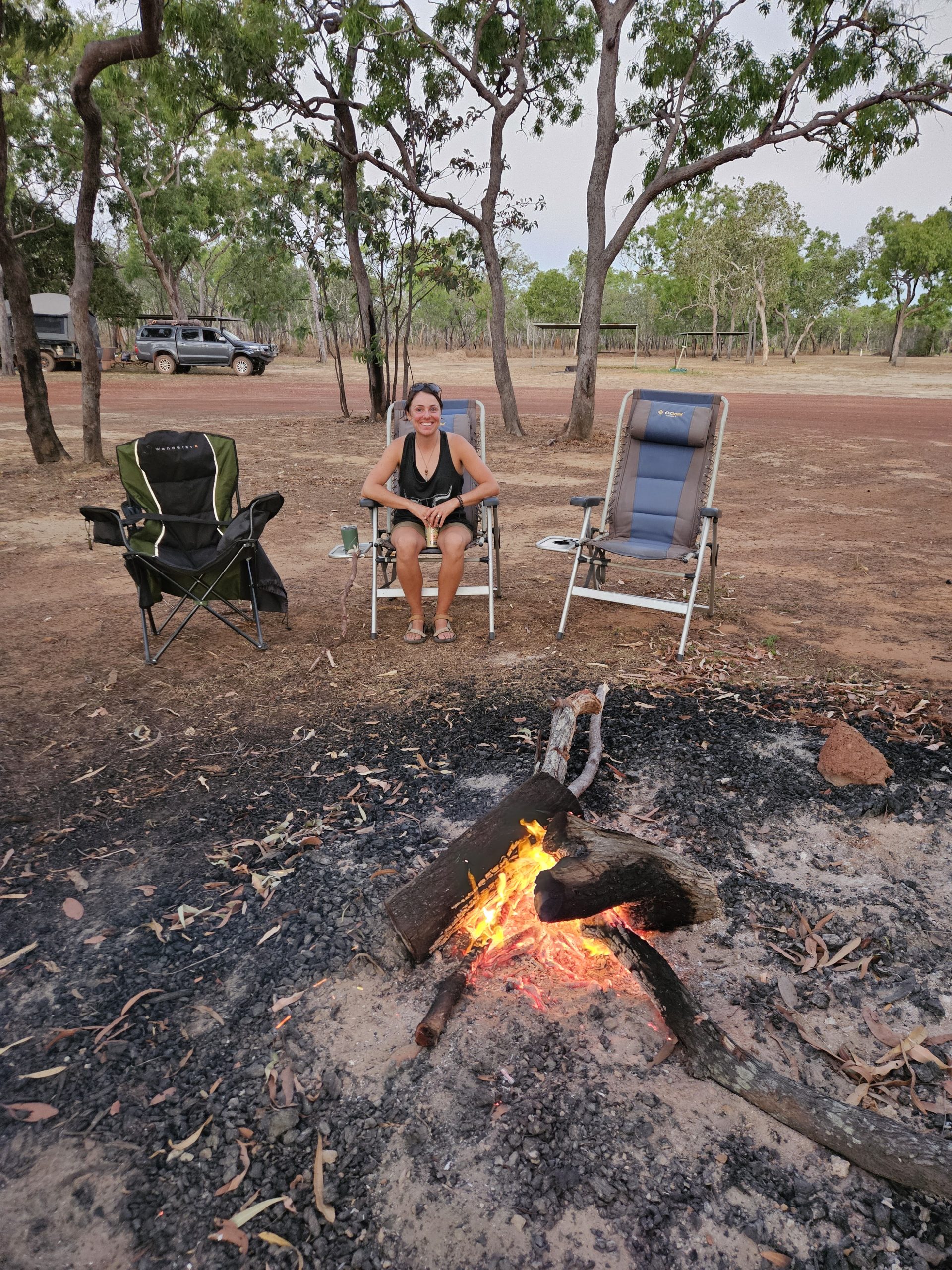
We then drove 1.5 km out of town to set up camp by a clear, shallow river.
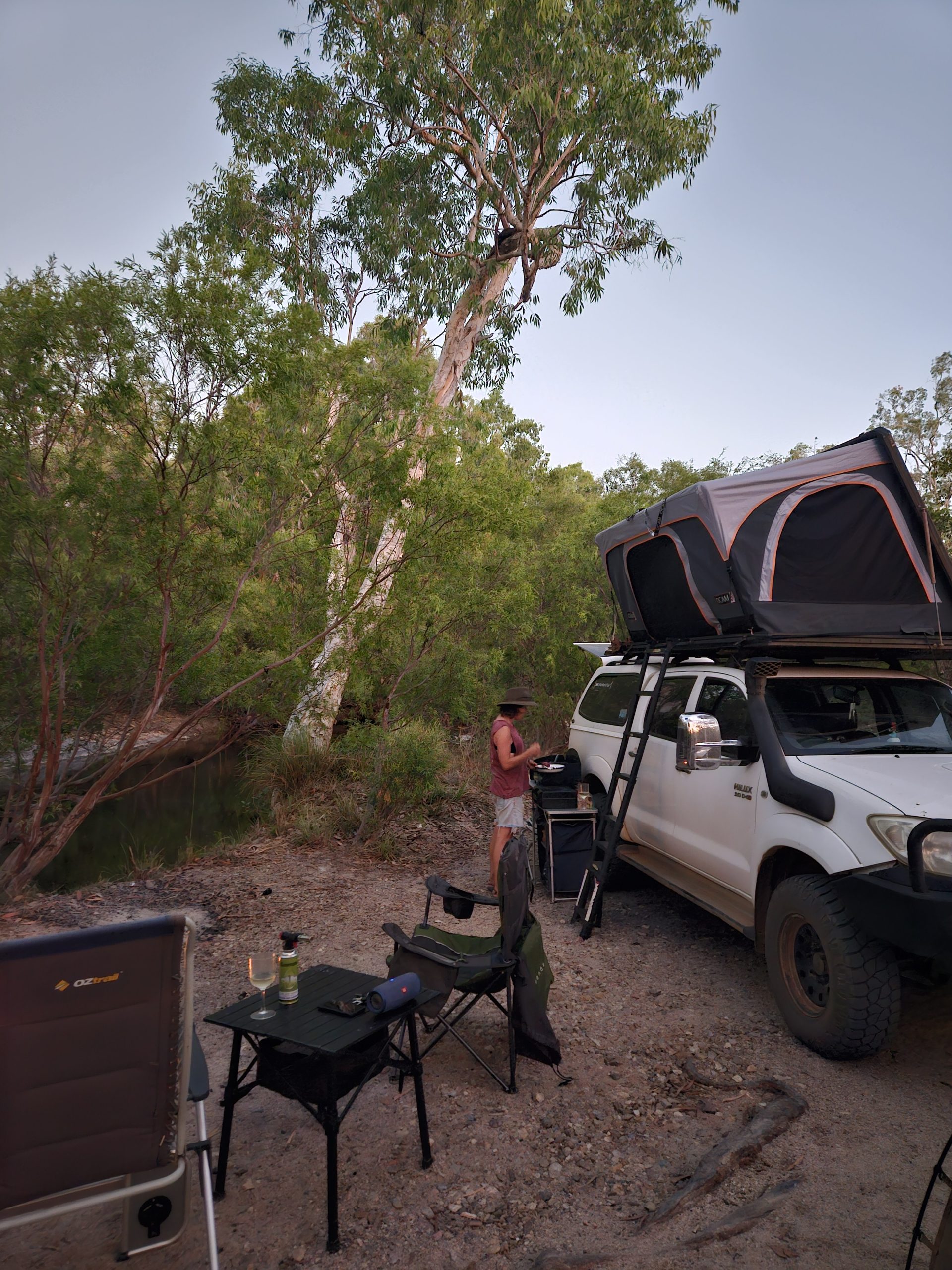
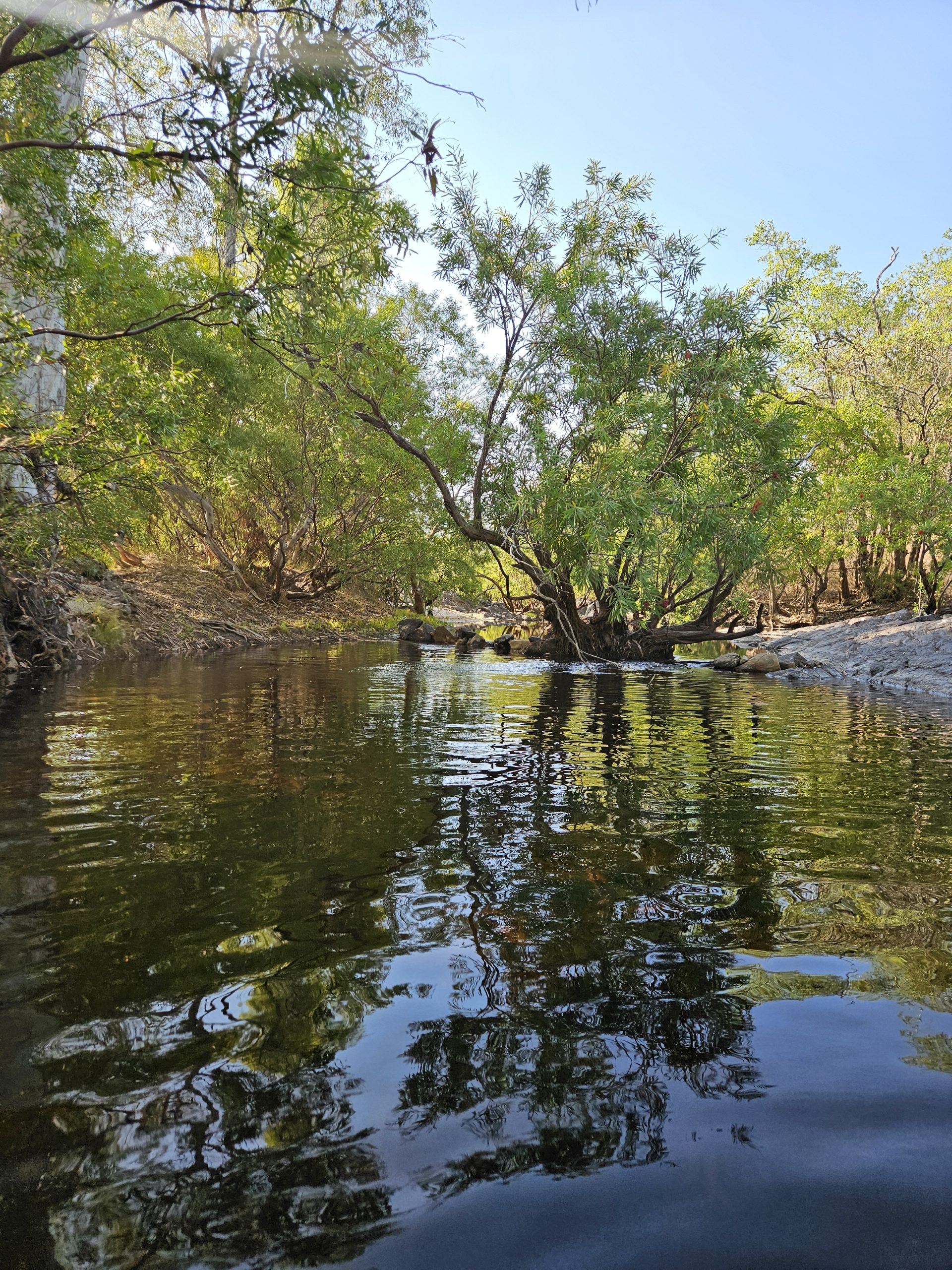
We spent the day chilling out by the river, enjoying a fire, cooling dips, and spotting local birds and wildlife. After a few big travel days, it was the perfect spot to relax and recharge.
Highlights:
We arrived at Bramwell Roadhouse around midday and set up camp early. Bramwell serves as the last fuel stop and “caravan park” before the start of the Telegraph Track and Bypass Road, so we were happy to pull up stumps and grab a much-needed shower after four days of bush camping.
We spent some time chatting with other travellers who were either starting or had completed the journey north, picking their brains to get a sense of conditions on the Tele Track.
That evening, we invited a couple of campers from Coen to join us by the fire for happy hour. We all decided to head to the start of the Telegraph Track the next morning to check out the first crossing — the challenging Palm Creek — and make a call about whether to continue.
The next day, we set off as planned – a newly formed crew of three vehicles – hearts racing with nervous excitement.
Highlights:
We passed the Tele Track sign and drove 6 km to Palm Creek, where we explored the three entry and exit points, ranging from a sharp nose drop to a heavily rutted sandy slide. After walking through and assessing each option, we made a call not to go ahead due to one of the vehicles being brand new and not yet lifted, so likely to sustain front-end damage.
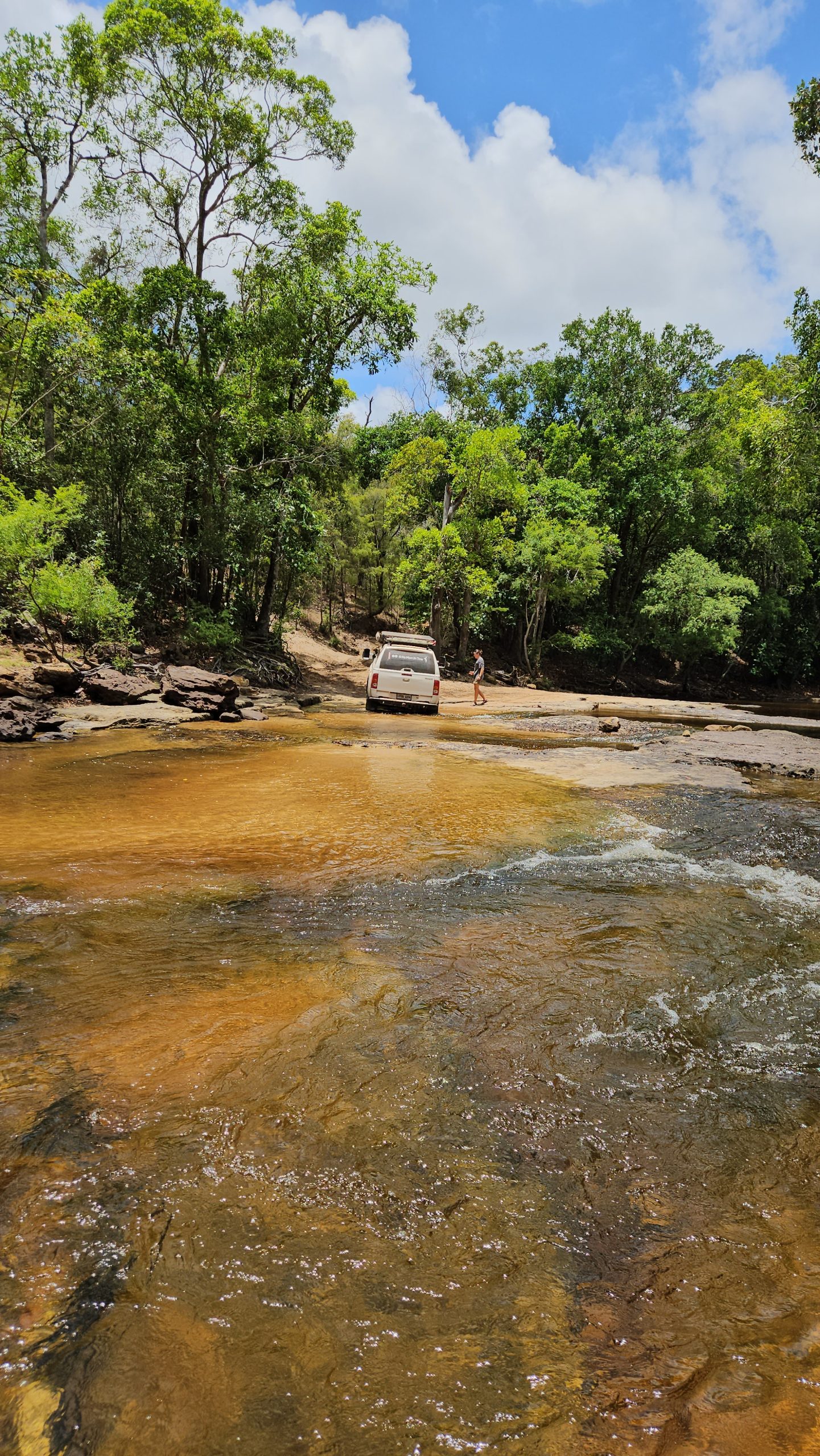
Instead, we decided to travel along the Bypass Road and rejoin the Tele Track at the Gunshot Bypass junction. The Gunshot Bypass track was heavily corrugated, so the journey in was slow and rough. After rejoining the Tele Track, we were faced with our first water crossing at Cockatoo Creek — a rushing waterway with a steep, sandy embankment waiting on the other side. We walked the waterway and picked the best line. Then Jane expertly maneuvered the car through the knee-deep water before taking it successfully up the steep embankment.
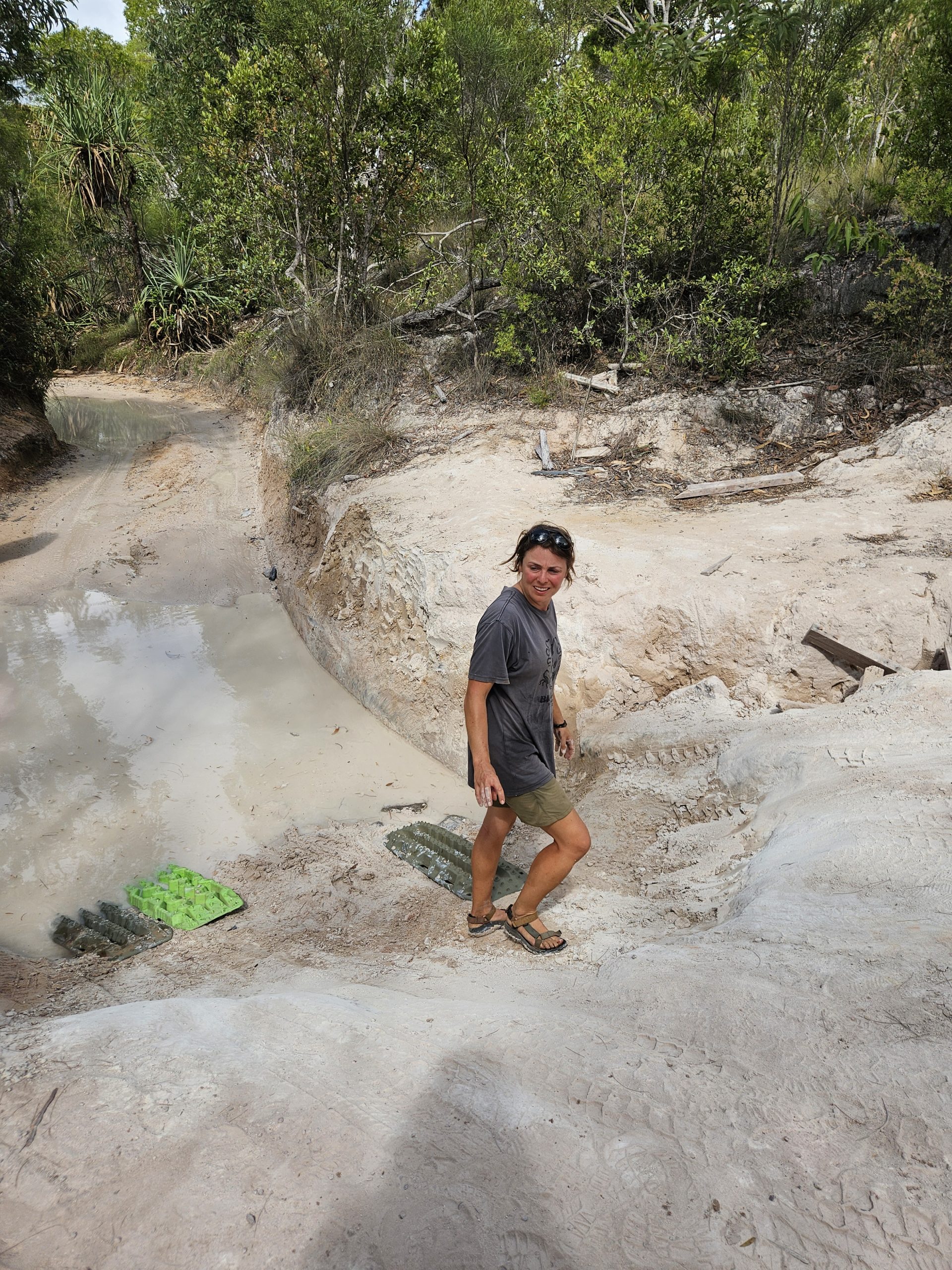
Not long after, we were confronted with our next challenge — Sailor Creek. Sailor Creek featured a sheer three-metre drop into a shallow creek — a daunting prospect. Faced with the option of turning back and retracing our tracks across 40 km of challenging terrain, we decided to take the plunge, quite literally. We made some modifications to the steep path, digging in rocks and logs and adding Maxtrax to aid our crossing. With gasps, a few choice words, and some applause, we each edged towards the dip, vehicles sliding nose-first down the steep embankment before flattening out just in time.
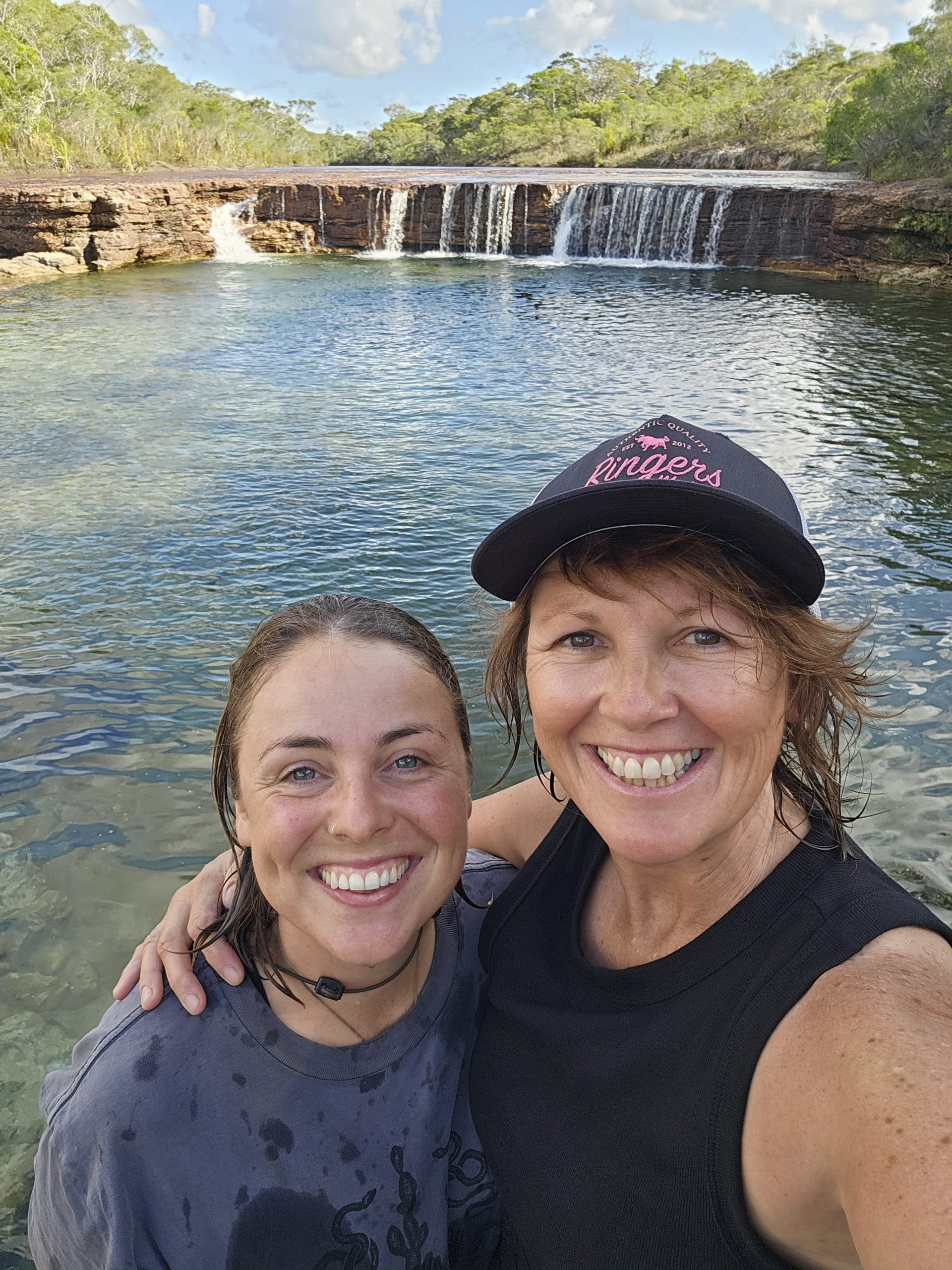
After a hectic day of crossings and corrugations, the Tele rejoined the Bypass Road and we welcomed the brief relief of a wider, smoother stretch before veering back onto the track a few kilometres later. The trail led us into Jardine River National Park and to spectacular Fruit Bat Falls, where we cooled off in its croc-free waters.
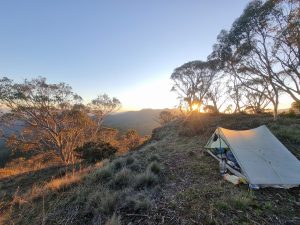
As the sun dipped low, we set up camp beside Scrubby Creek, descending steeply to reach the banks. That night, we shared dinner around the fire, reflecting on an intense but unforgettable day — and raised a glass to celebrate.
Highlights:
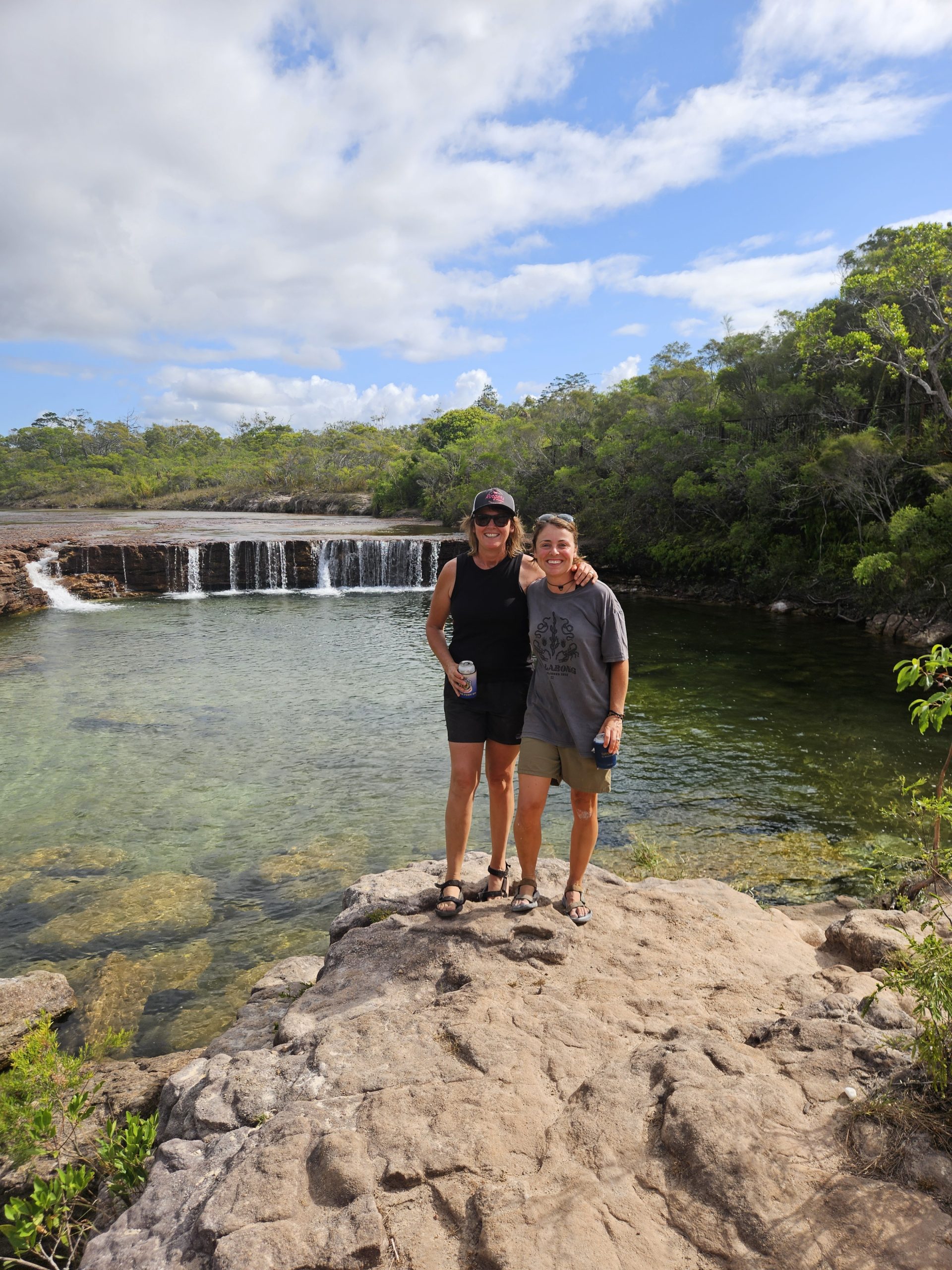
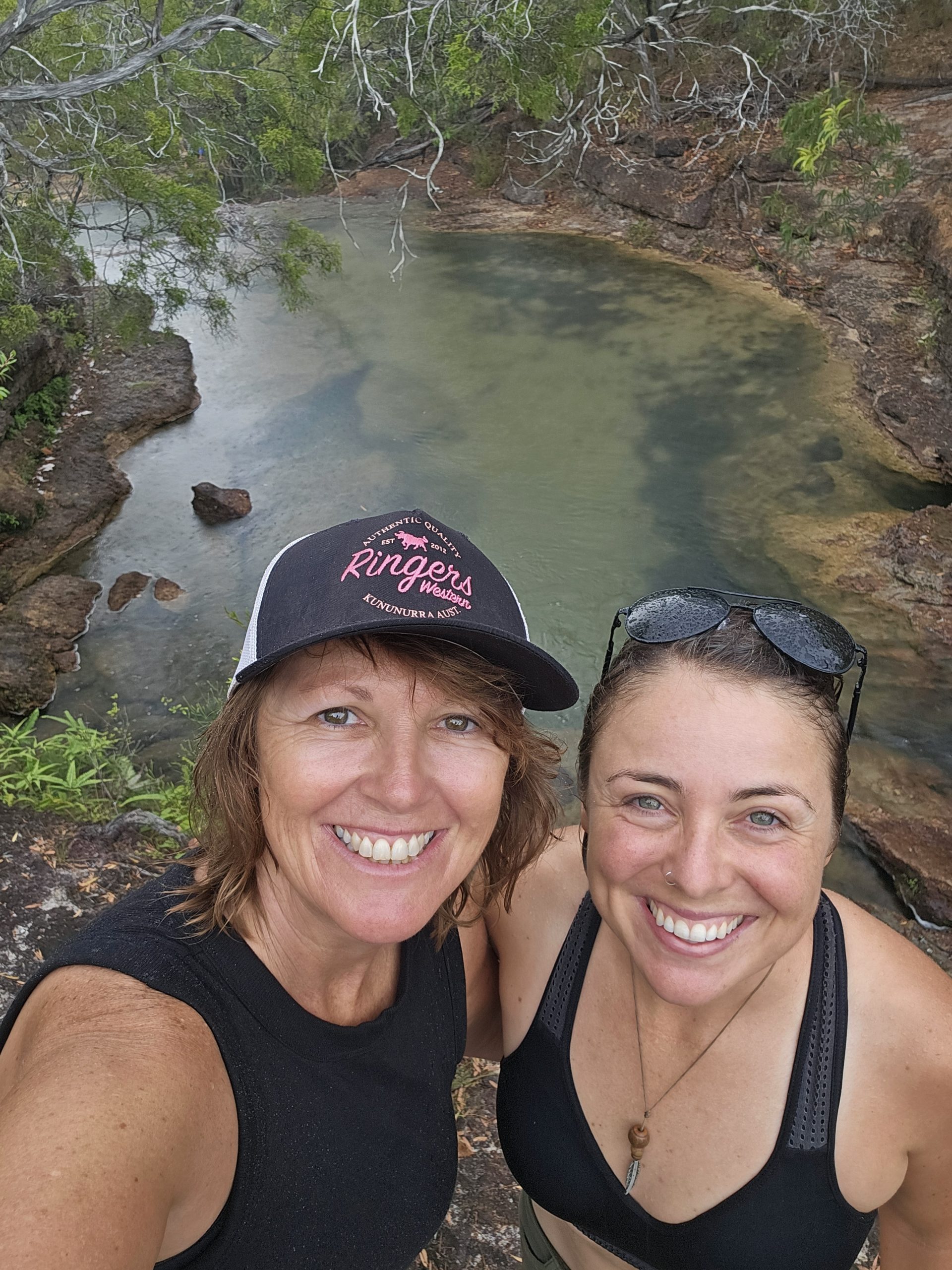
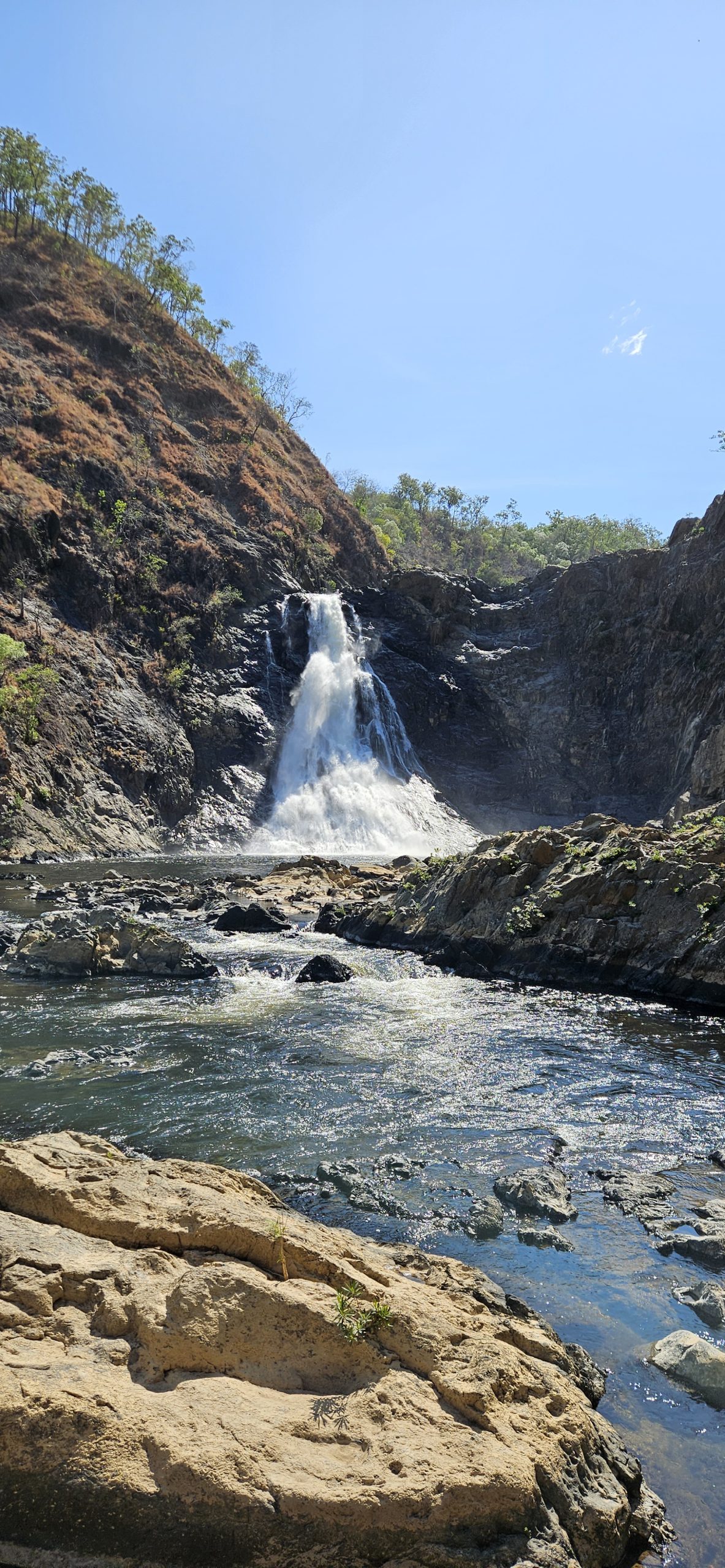
We took off early in the misty rain and made our way to another two iconic Tele Track destinations — Eliot Falls and neighbouring Twin Falls. At Eliot Falls, water gushes down a 5-metre-wide split in the rocky earth. We cooled off in a shallow rock pool at the top of the falls, where we kept a keen eye out for submerged crocs. After our dip, we headed 200 m or so downstream to Twin Falls, where water rushes over two tiers from the creek above. We cooled off in a large plunge pool at the base of the falls, jumping in and out quickly to avoid any croc encounters. It felt magic here as the misty rain fell and we explored the two stunning falls, with no one else present but the birds and lizards. We felt high on life.
The Canal Creek crossing marked the point at which our crew departed the Tele Track once and for all. There were three options to cross the creek. All routes dipped into deep holes of murky water, hiding a sharp, rocky bottom before climbing the bank. A LandCruiser was being winched out from a mud pit waiting on the other side. We decided to call it quits, and backtrack to the Bypass Road.
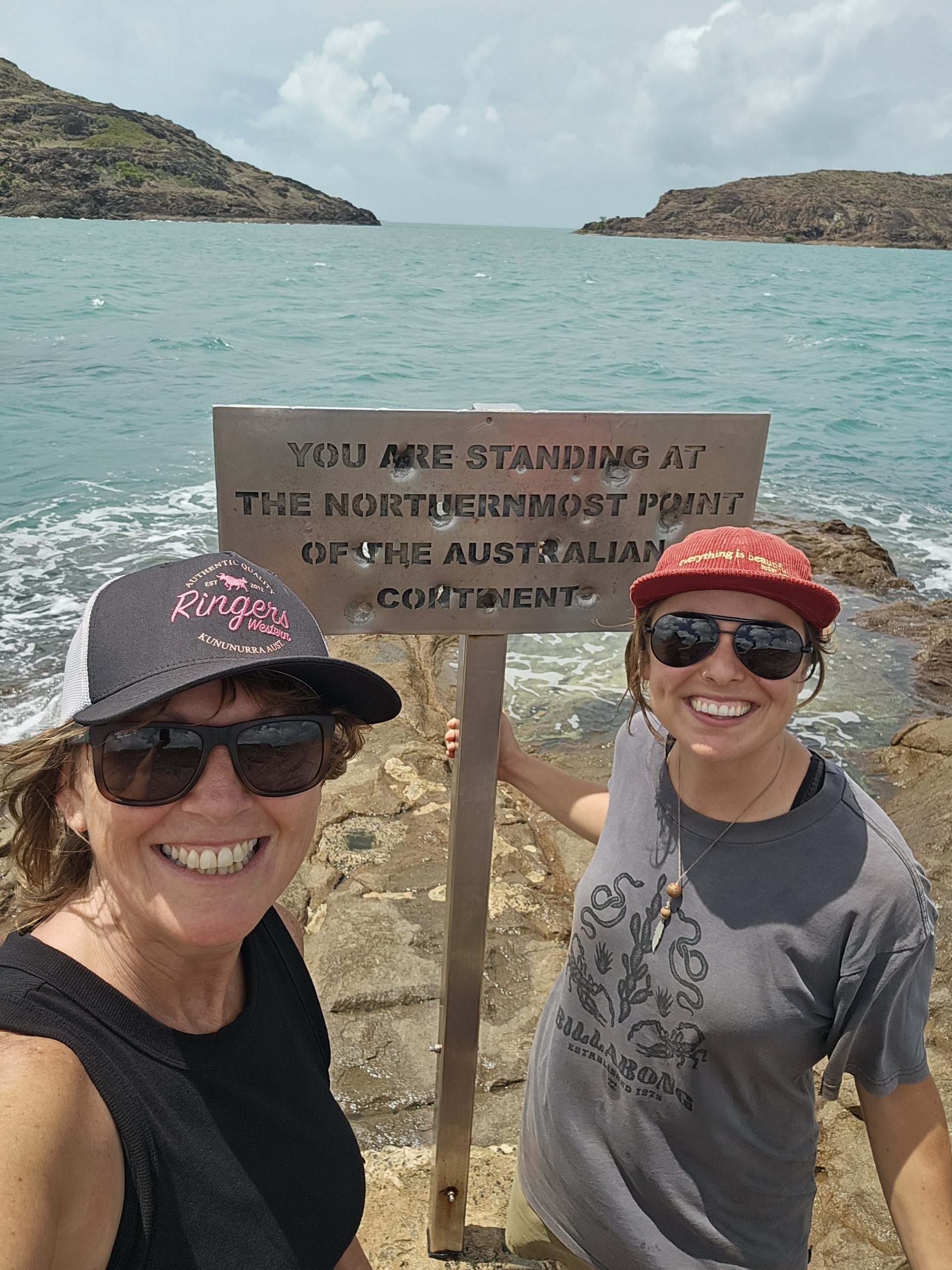
After a short ferry ride across the Jardine River and stopping off at the iconic “Croc Tent” information centre, we made our way up to Pajinka — the Tip. As we pulled into the parking bay, we were greeted by towering palm trees and incredible turquoise water. From here, we took the 1.4 km return walk up over a bluff and rolling hills to the famous sign reading, “You are standing at the northernmost point of the Australian continent.” It felt big being there, surrounded by beautiful sandy beaches, small green islands, rolling hills, and the bright blue ocean at every angle. We celebrated by cracking a beer and posing for a few photos with the bullet-hole-ridden sign.
We topped off our day by heading east to Somerset, where we followed the 5 Beaches 4WD track over sandy hills and five stunning beaches, stopping for a bevvie to take in the view.
Next, we headed onto Punsand Bay Cape York Camping, setting up camp before the ocean. We said goodbye to rough roads and g’day to serious island vibes.
Highlights:
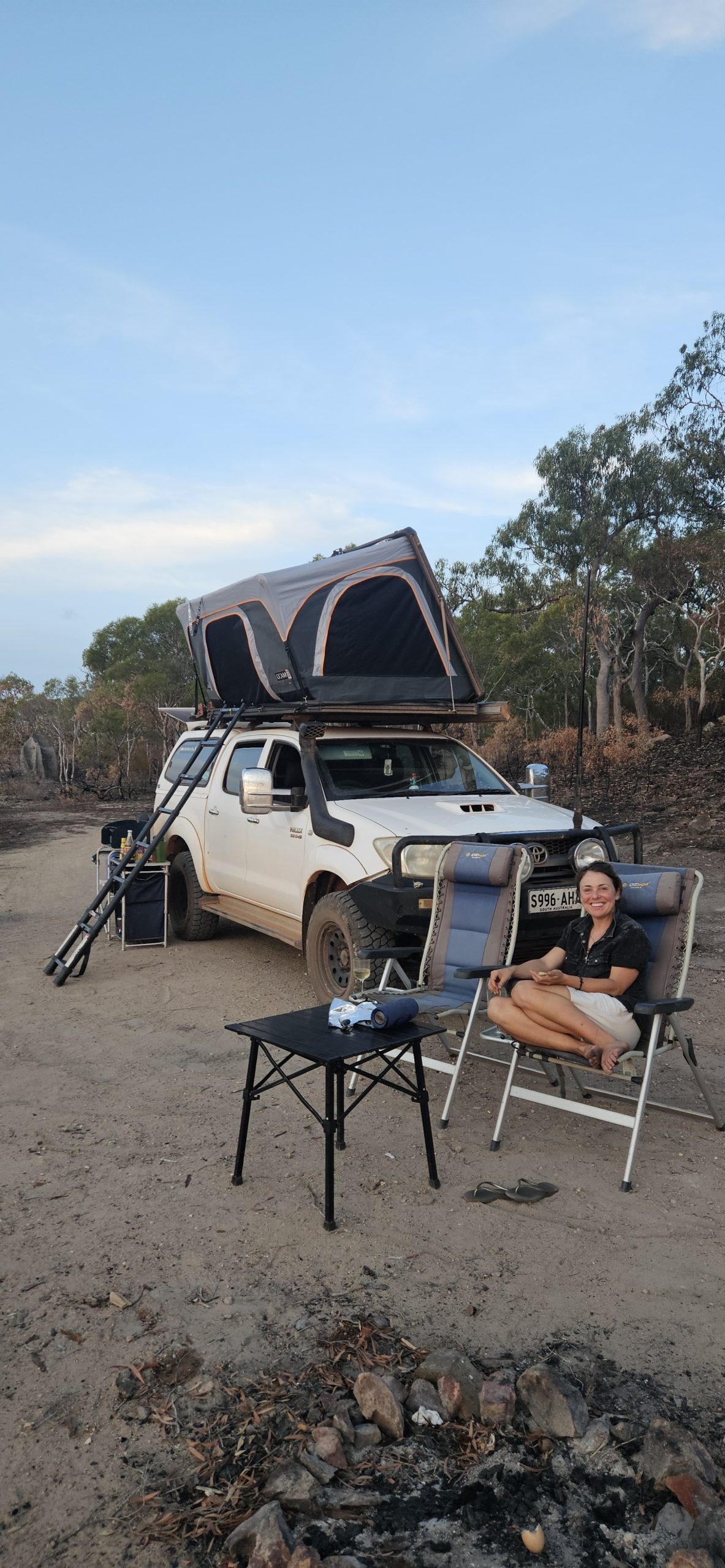
As soon as we walked through the main entrance, dusty and weary, we knew Punsand Bay was unlike anywhere we’d stayed on our two laps of Australia.
It was an absolute beachside gem and the perfect place to spend a chill day after an adventure-packed week getting to The Tip.
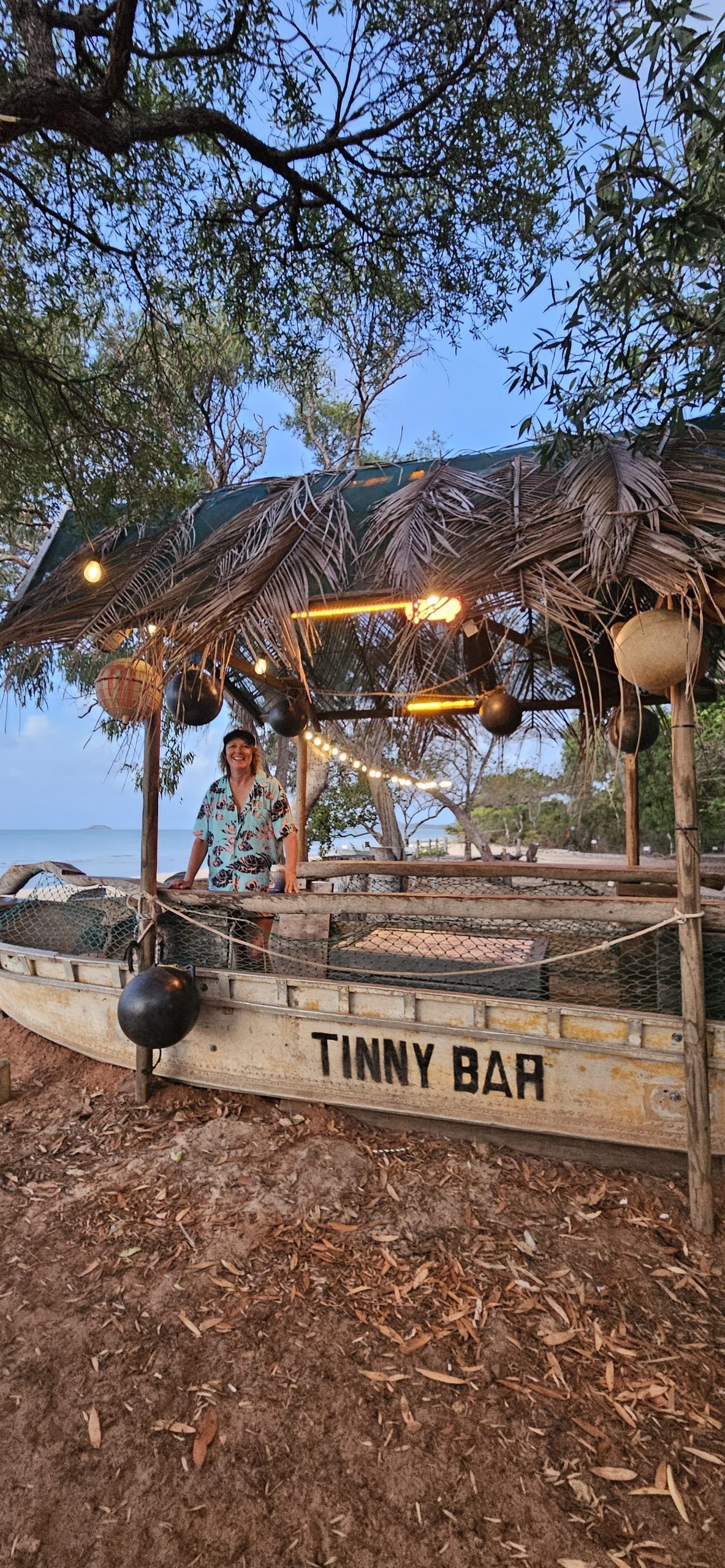
We spent two nights camped up on the beachfront, enjoying the campground’s swimming pool with ocean views and Corrugation Bar with live music and amazing pizzas. Our crew disbanded here as we continued on with our own adventures.
Highlights:
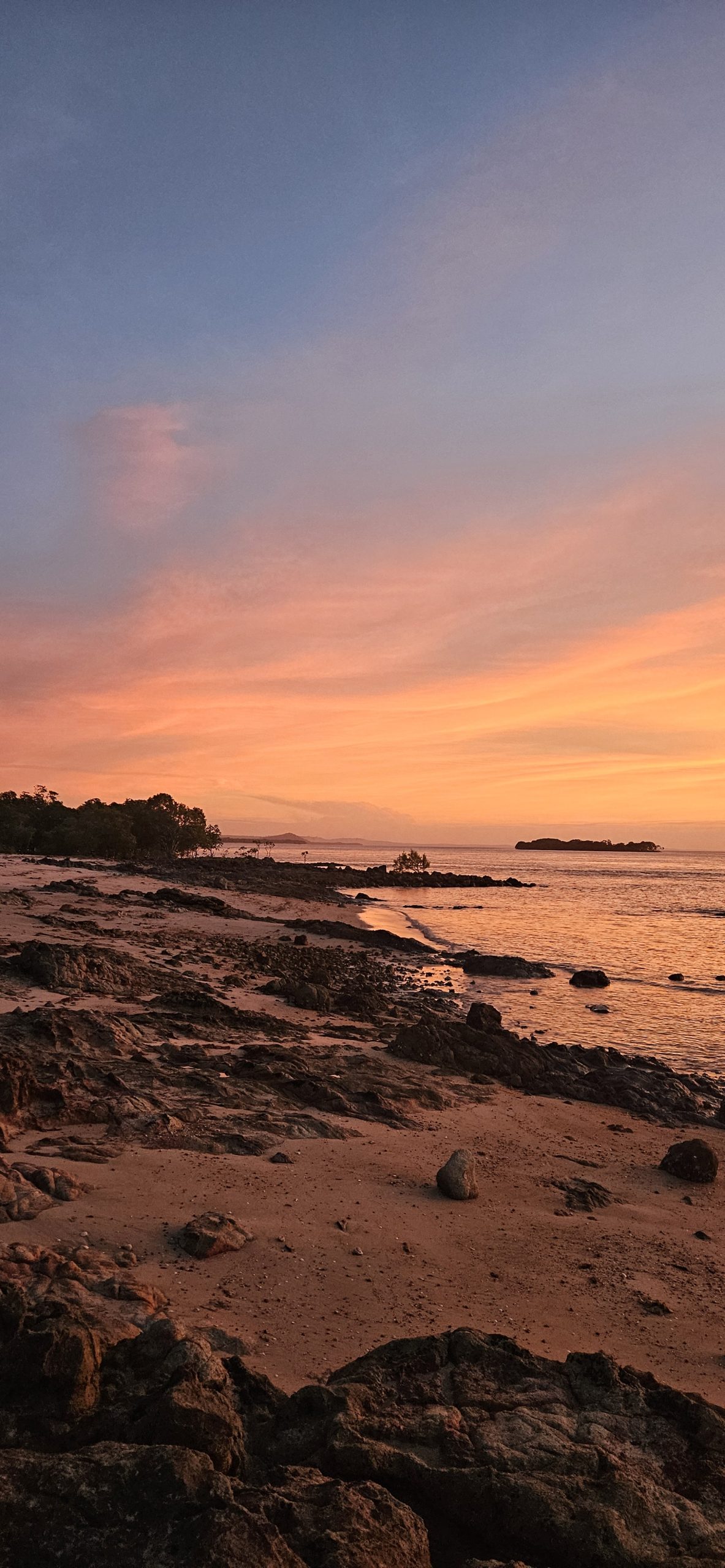
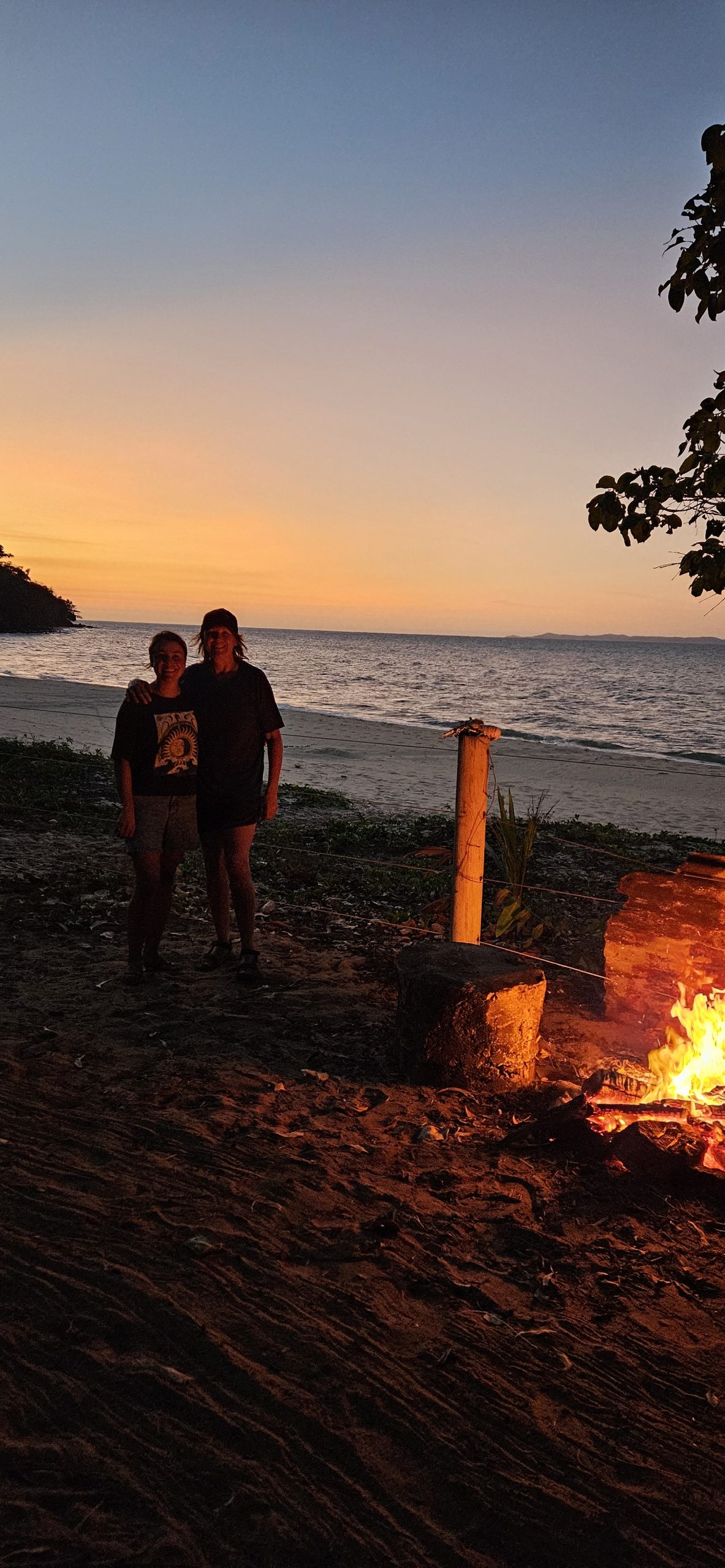
After spending the day chilling out at Punsand Bay, we arrived at Roonga Point just before sunset. This free coastal campsite is located 5 km from Punsand and is reached via a rough 4WD track. But every bump was worth it as we watched the sun dip behind the ocean, leaving a bright pink and orange sky in its wake — one of the best sunsets of our entire trip.
It felt magical being here, camping with no one else in sight and right beside an ocean that looked silver under the setting sun. We enjoyed eating our dinner by the roaring fire and under a starry sky. It was a beautiful outback coastal ‘date night’.
Highlights:
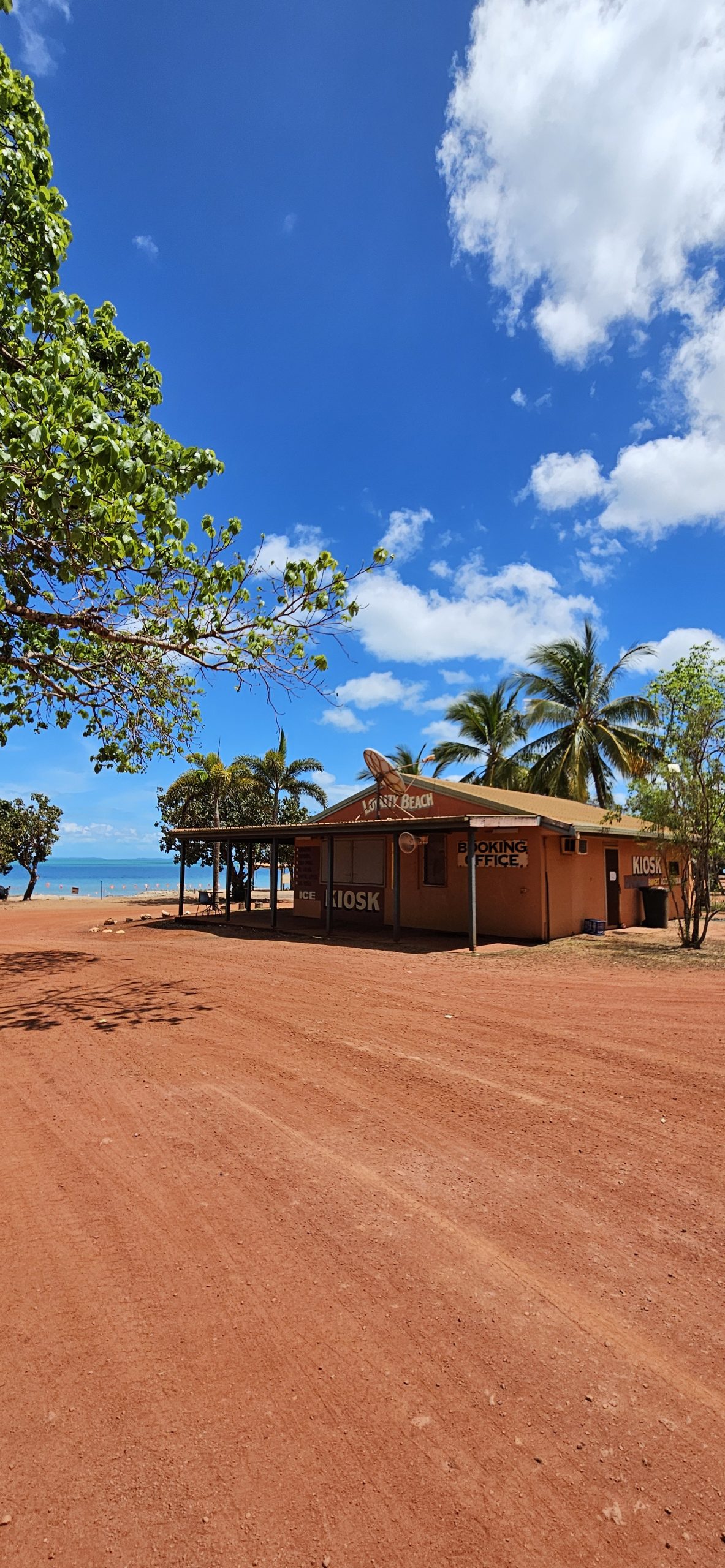
Arriving at Loyalty Beach felt like we’d jumped off a boat and onto the shores of a remote island. It had total island vibes, with white sandy beaches, water like glass, and the islands of the Torres Strait lining the horizon. With only a handful of other campers, we had our choice of sites and parked up right on the beach.
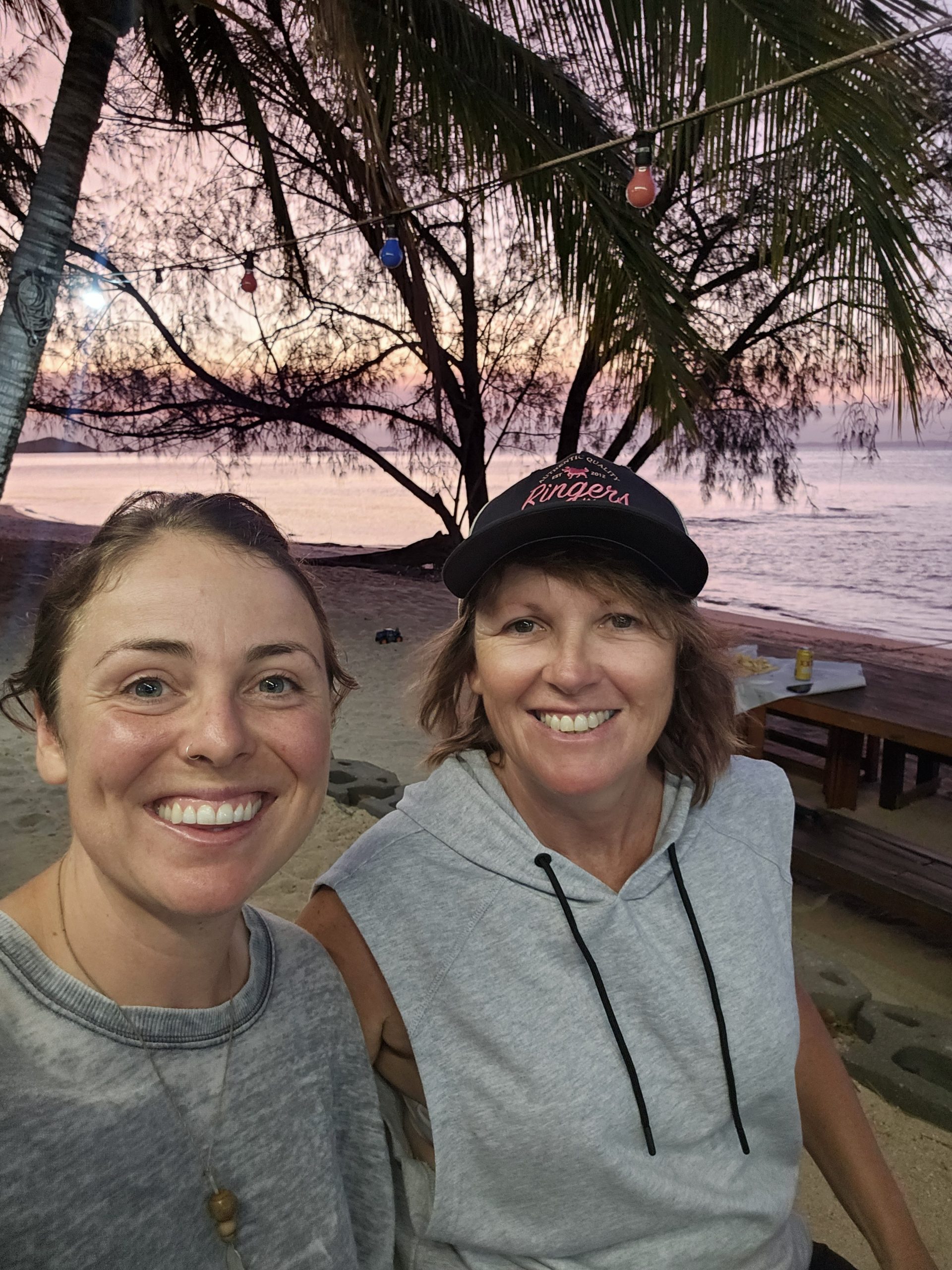
We spent one glorious night at the Loyalty Beach campground, timed to enjoy their famous Fish & Chips night held each Sunday at their seaside café and bar. A DJ spun tunes to a crowd of happy campers and locals as the sun set over the ocean and the glow of the festoon lights shone. The fish and chips were delicious, along with a couple of drinks ordered from the canteen-style bar.
Earlier in the day, we drove around the neighbouring towns of Bamaga and Seisia, chatting to a local shop owner, who told us she was married to the “E” in Seisia — a town named after the first letter of three Torres Strait Islander families and three Aboriginal families.
Highlights:
We spent the morning exploring the First Nation’s communities of New Mapoon and Bamaga – the traditional lands of both Aboriginal and Torres Strait Islander peoples. At New Mapoon, we visited a tribute which outlined the burning of old Mapoon and the forced removal of its people. Both New Mapoon and Bamaga had a lovely vibe, with houses on stilts surrounded by tropical plants and green lawn, with stray horses roaming down the main street and the most immaculate supermarket we’ve ever visited.
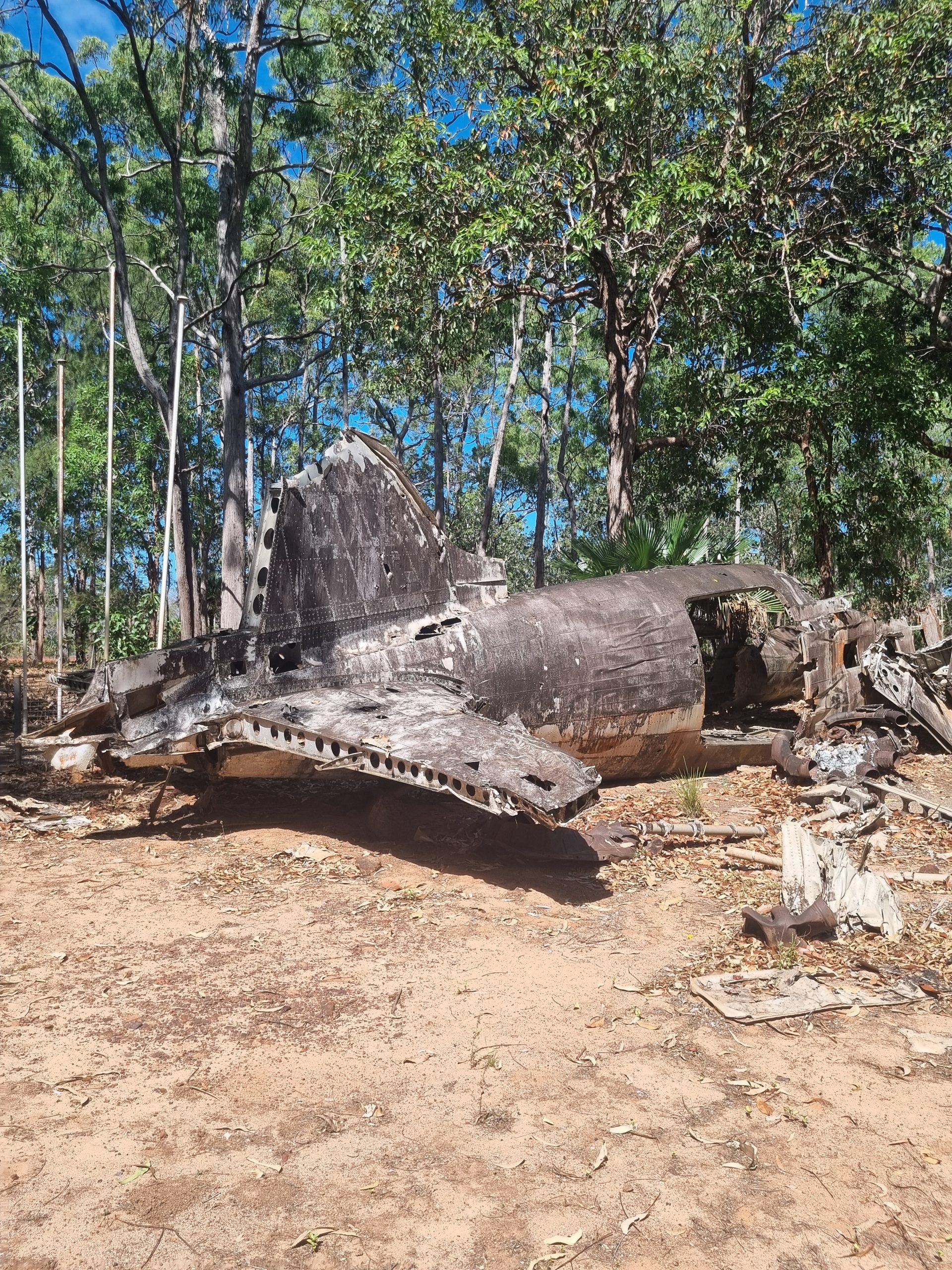
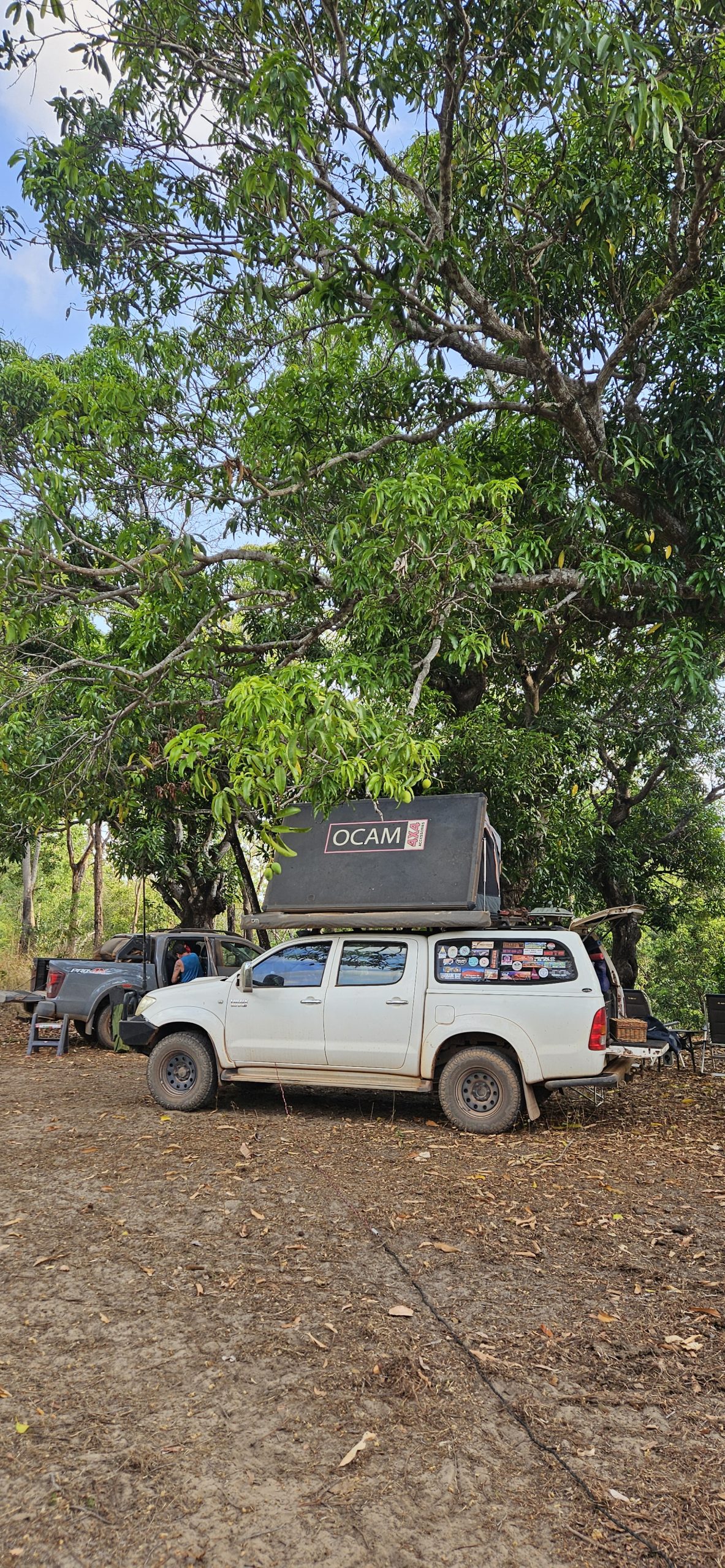
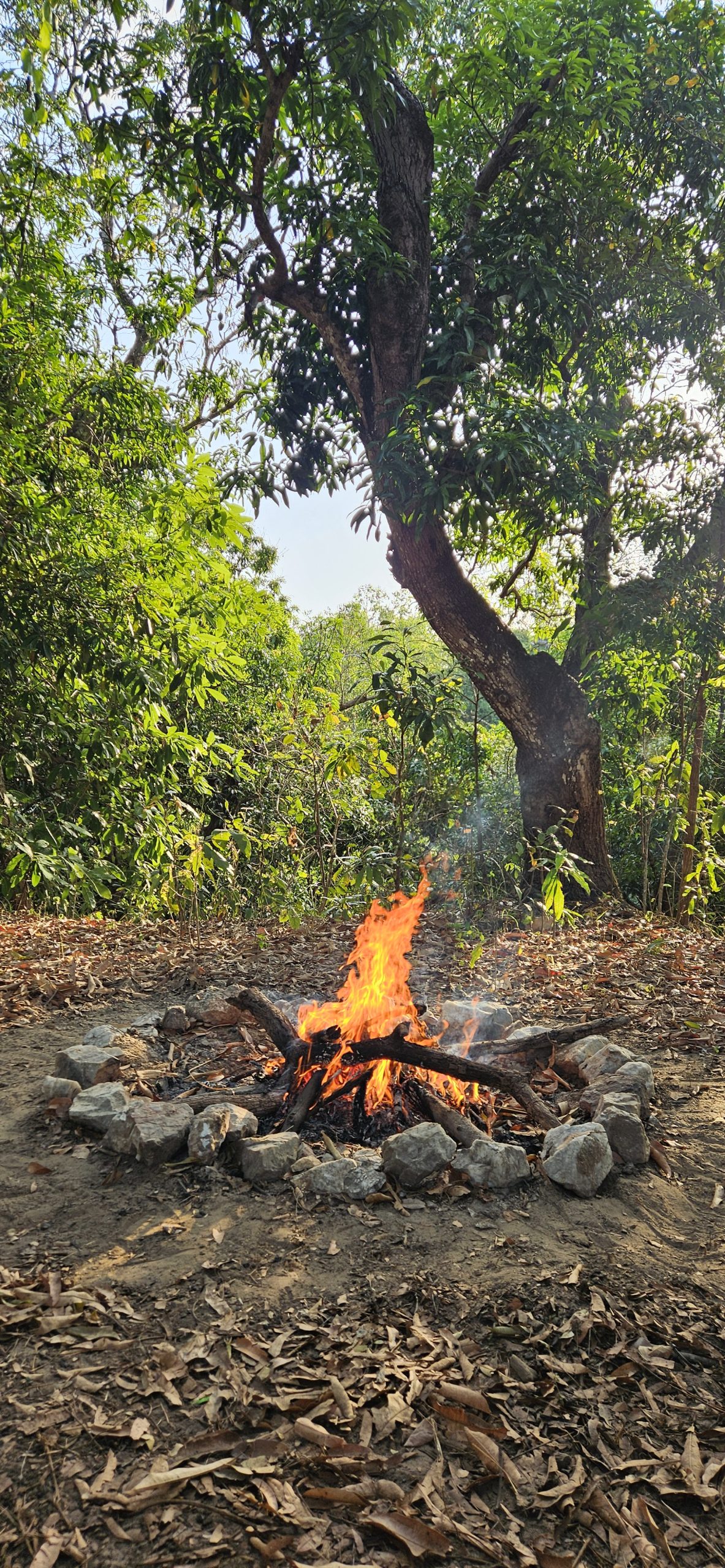
In the afternoon, we visited a few World War II historical and commemorative sites, before heading to the popular Mutee Heads Campground. As the tourist season was coming to an end, we had the beachfront campground to ourselves and enjoyed baked potatoes cooked over a beautiful fire.
Highlights:
–
With continued balmy weather, we returned to Fruitbat Falls for one last swim on our journey back down south. A dip at this beautiful swimming hole was exactly what we needed.
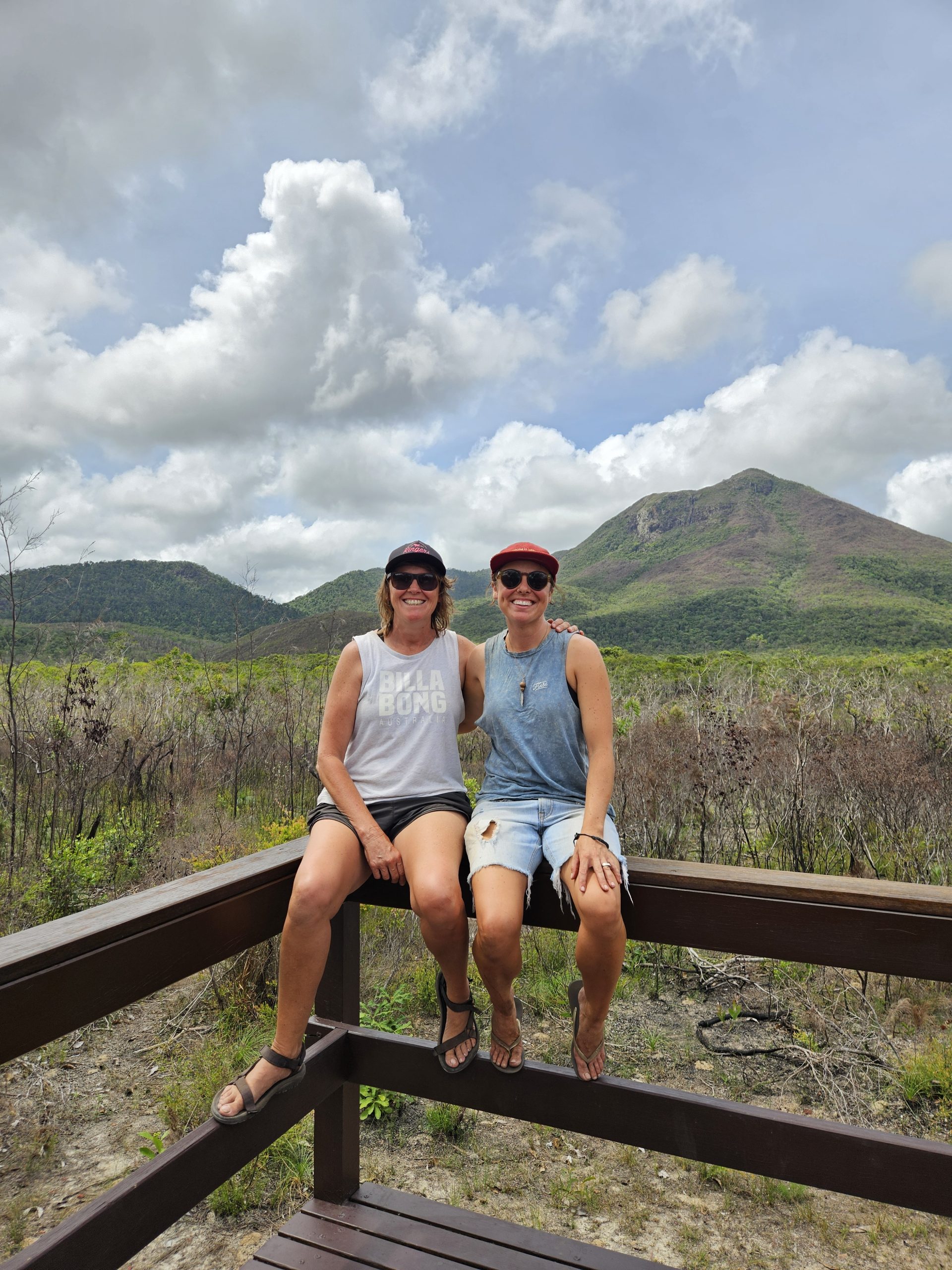
After spending over four hours on the road, we pulled up for the night at a free camp on the Wenlock River. The road in was rugged and nothing too special, but we were rewarded with a magical camp positioned high on the banks of a dry river and under the shade of two giant mango trees. We lit a beautiful fire in a huge fire pit, and enjoyed a chorus of bird calls and the groan of bulls – one who we disturbed on our way in as he was having a doze on the road.
Highlights:
After packing up, we headed down a rugged track to the abandoned Batavia mining site, where we explored relics of old machinery and tractors.
On our way to Chilli Beach, we called into Lockhart – a nearby First Nation’s community, and watched a big resupply ship arrive on its remote shores.
We also drove through lush rainforests, stopping off at the Mount Tozer lookout to take in the hilly surrounds.
Highlights:
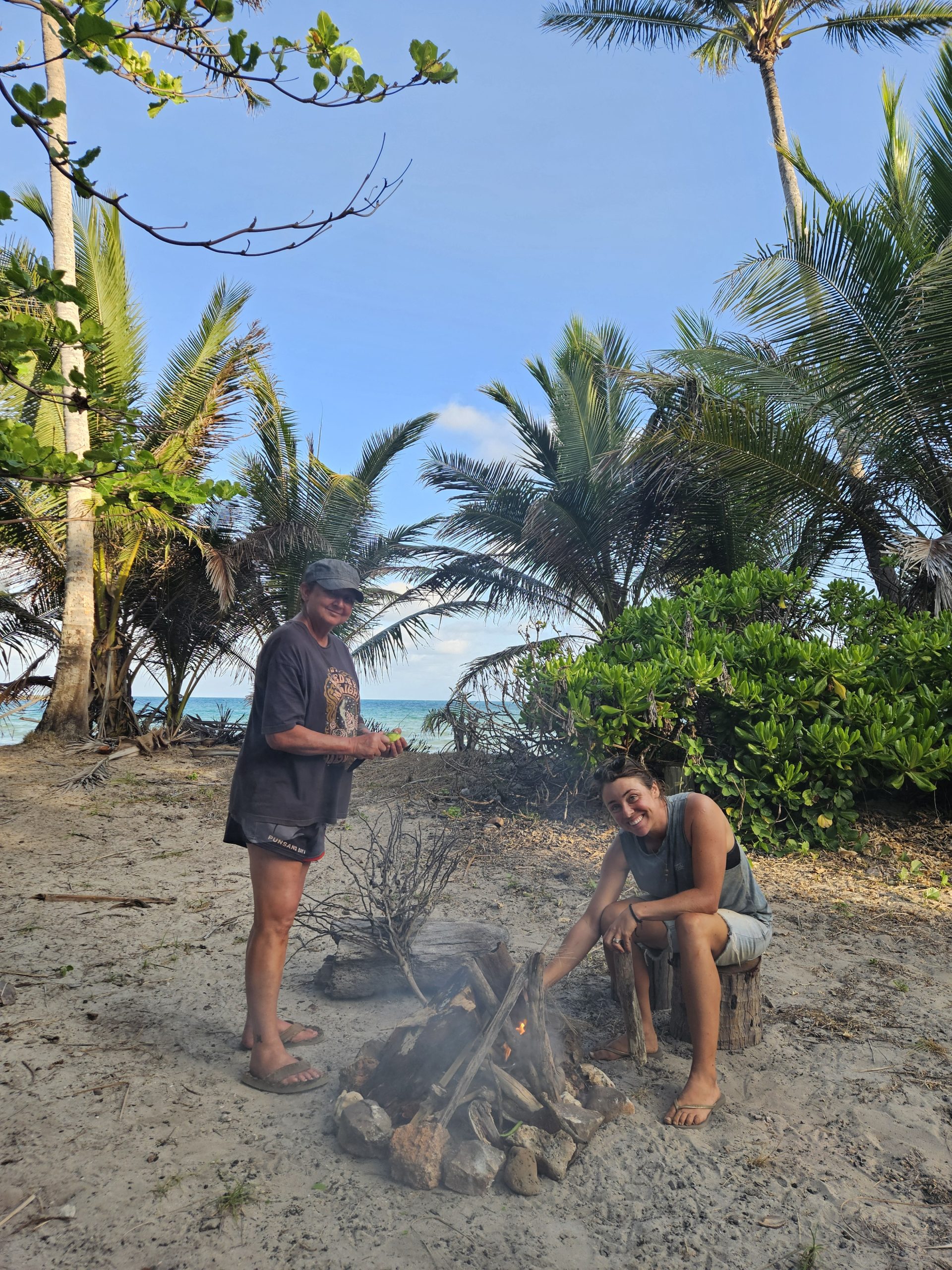
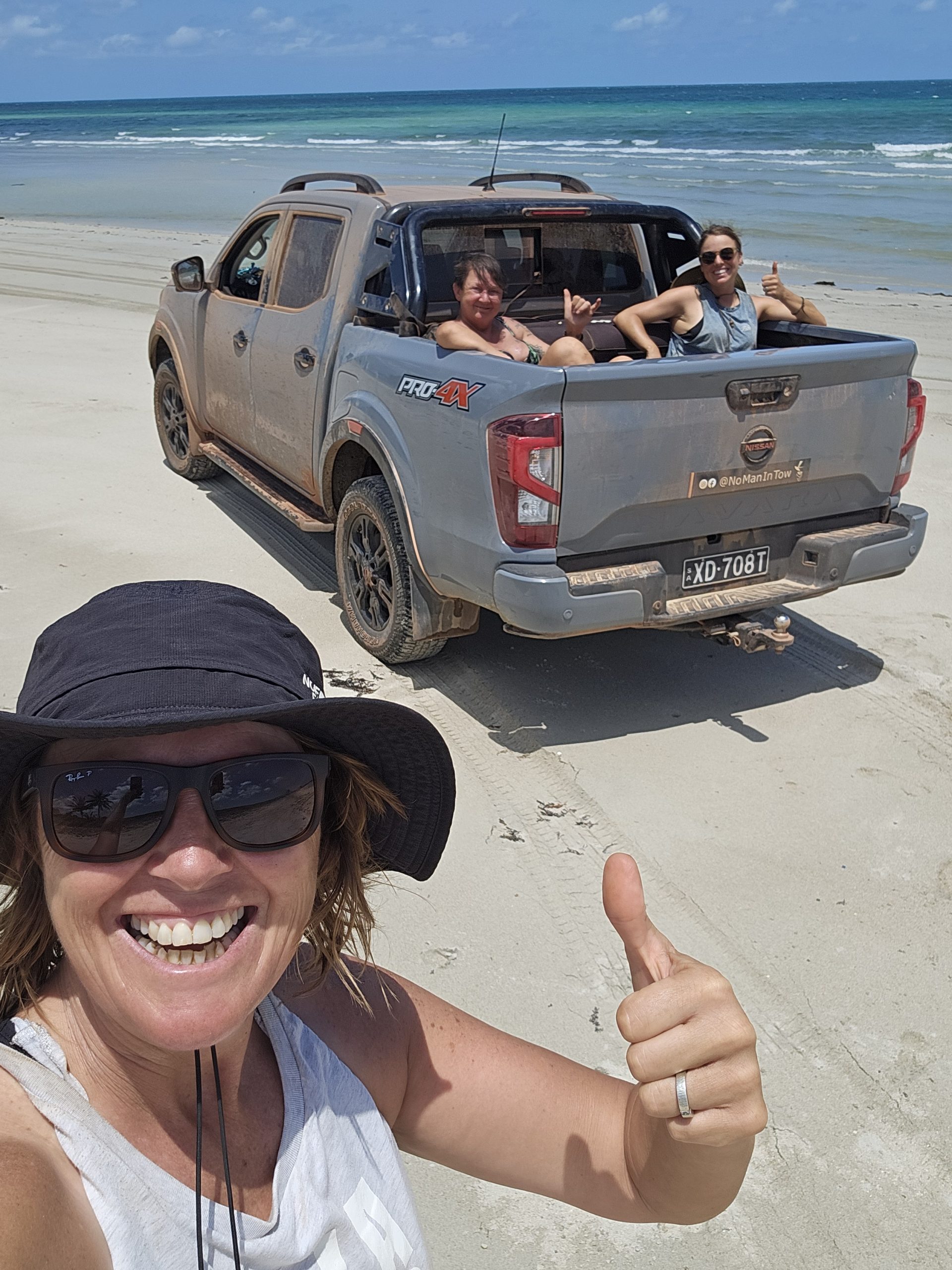
We spent two magical nights chilling out at the spectacular Chilli Beach campground on the Cape’s eastern shores. It felt like we were on an island in the Whitsundays, with a long white beach lined with coconut palms greeting the blue sea.
We spent our days walking along the beach, cruising it’s shores in a 4WD, collecting wild coconuts, taking in sunrise from a cute beach swing and enjoying nightly fires.
It felt magic being there – and is one of our all-time favourite campsite across Australia.
Highlights:
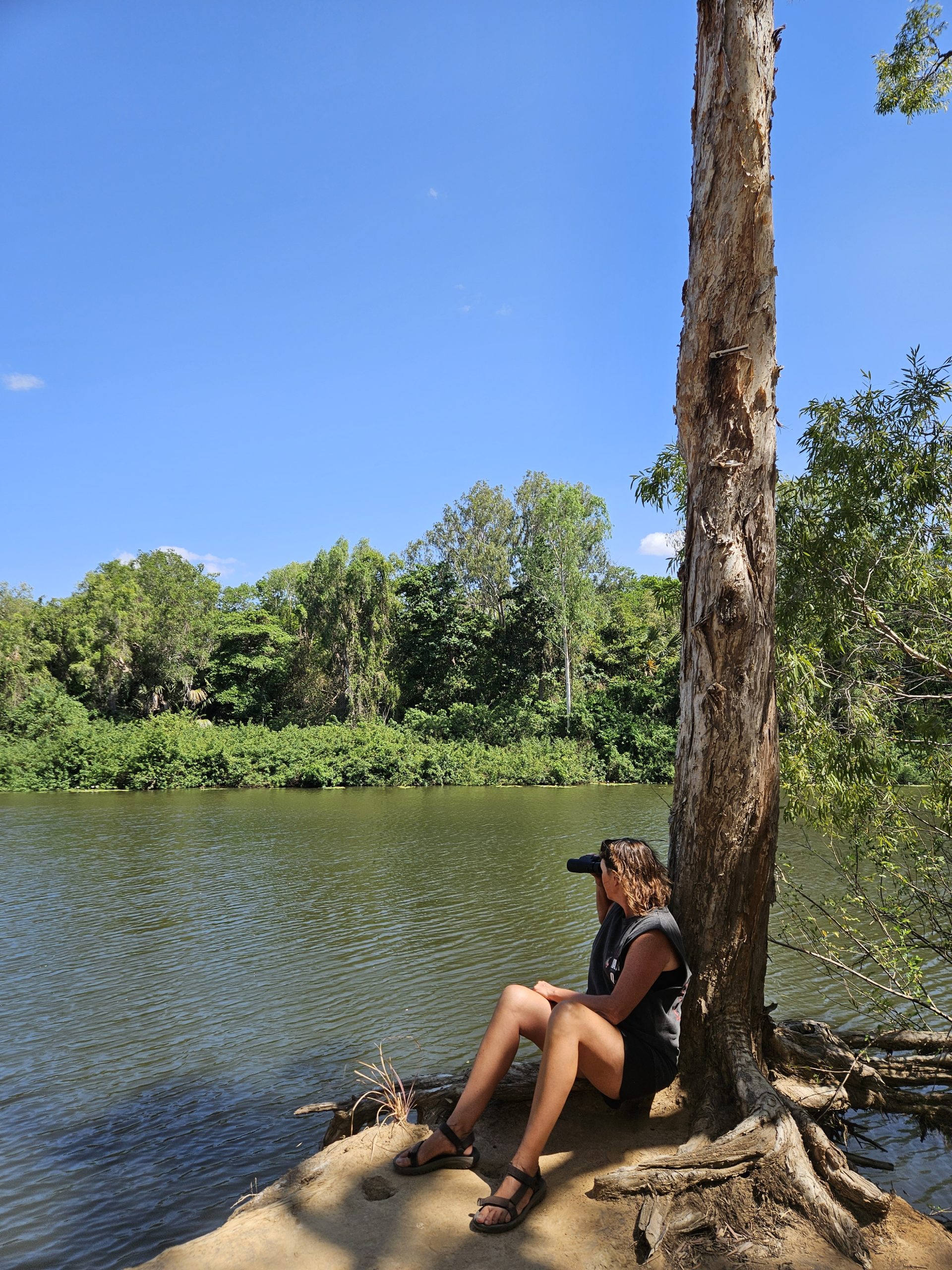
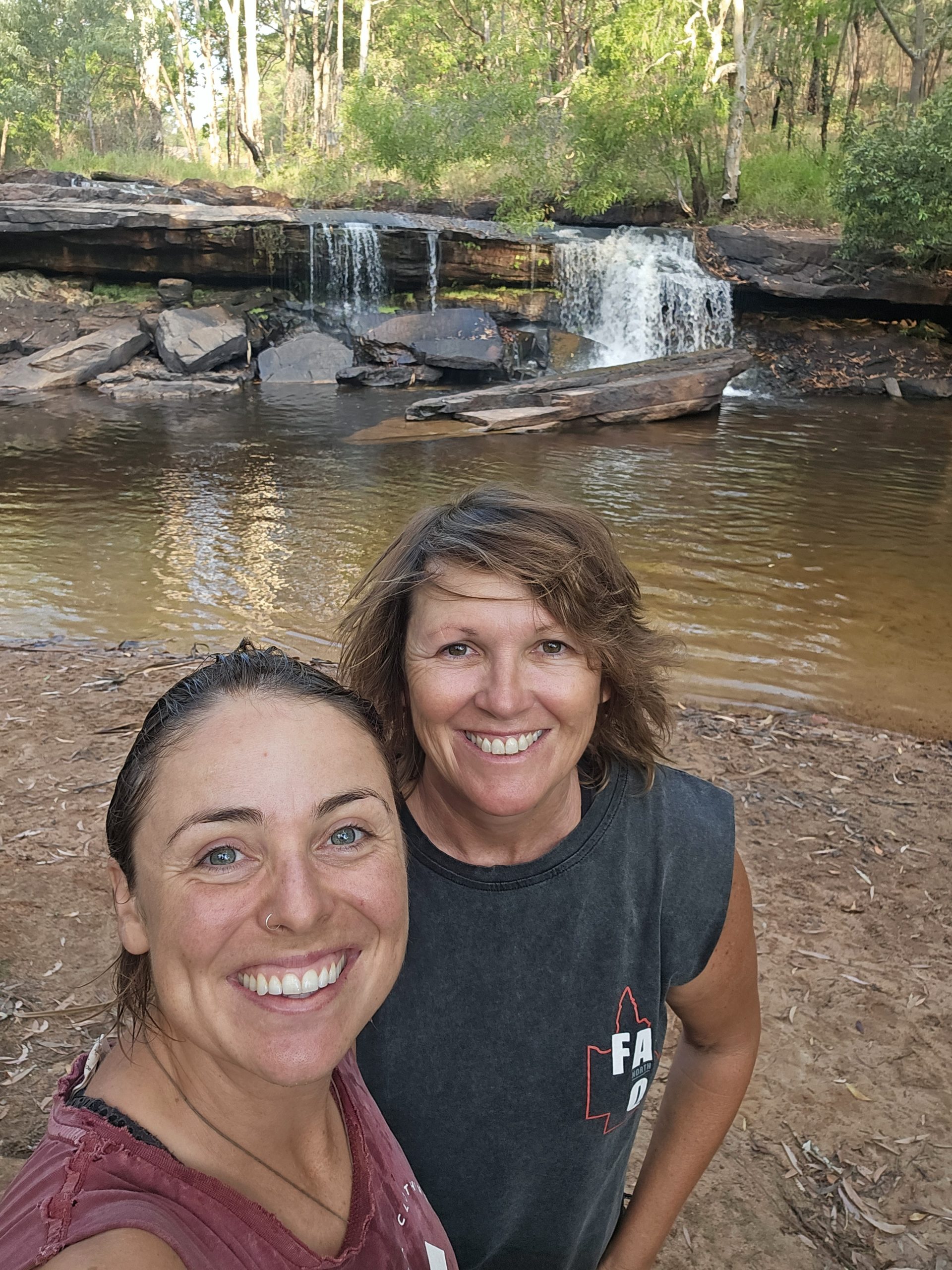
After five hours on the road, and pitstops at the Archer River Roadhouse and Sexchange Hotel, we pulled up at the Musgrave Roadhouse for an overnighter.
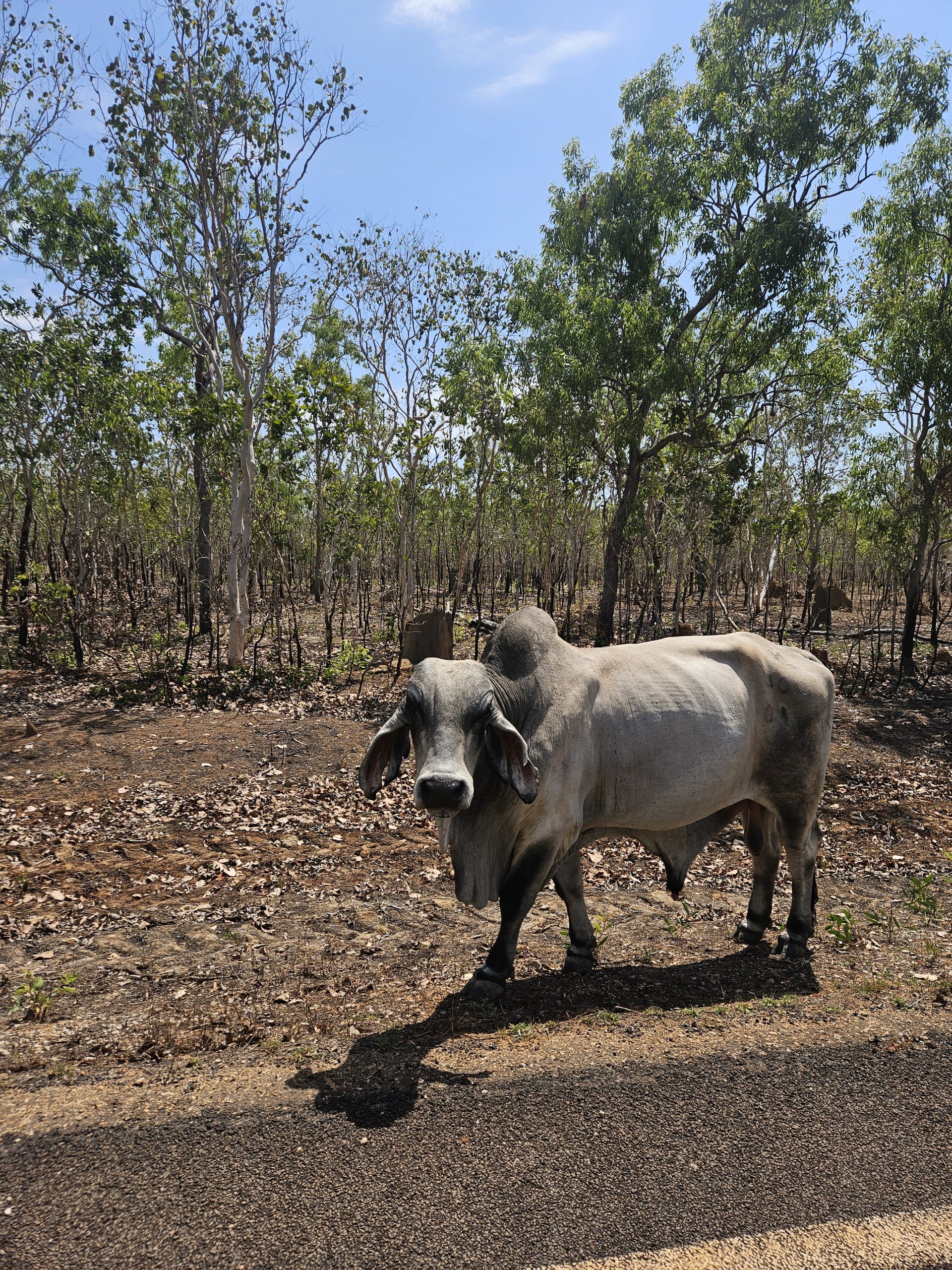
We were greeted by cows roaming happily through the campground. We enjoyed a steak and a few drinks at the roadhouse diner before calling it a night.
Highlights:
We took the scenic route from Musgrave Roadhouse to Cooktown, travelling down an unsealed road through Lakefield National Park. We were on the lookout for crocs and birds, and headed to half a dozen or so watering holes for wildlife spotting. It was hot and humid so we didn’t spend long at each spot, but managed to spot a couple of crocs who quickly ducked under water, as well as many bird species, including beautiful brolgas.
After collecting a handful of wild mangoes from the historic Laura Homestead, we left the park and pulled up for the night at Isabella Falls. We arrived just before dark at this free roadside campsite, and waded in the water (we didn’t swim as it wasn’t clear and we remained croc wary). It was lovely enjoying our dinner and chilling out, with the sight and sound of water crashing metres away. We were the only van at the camp.
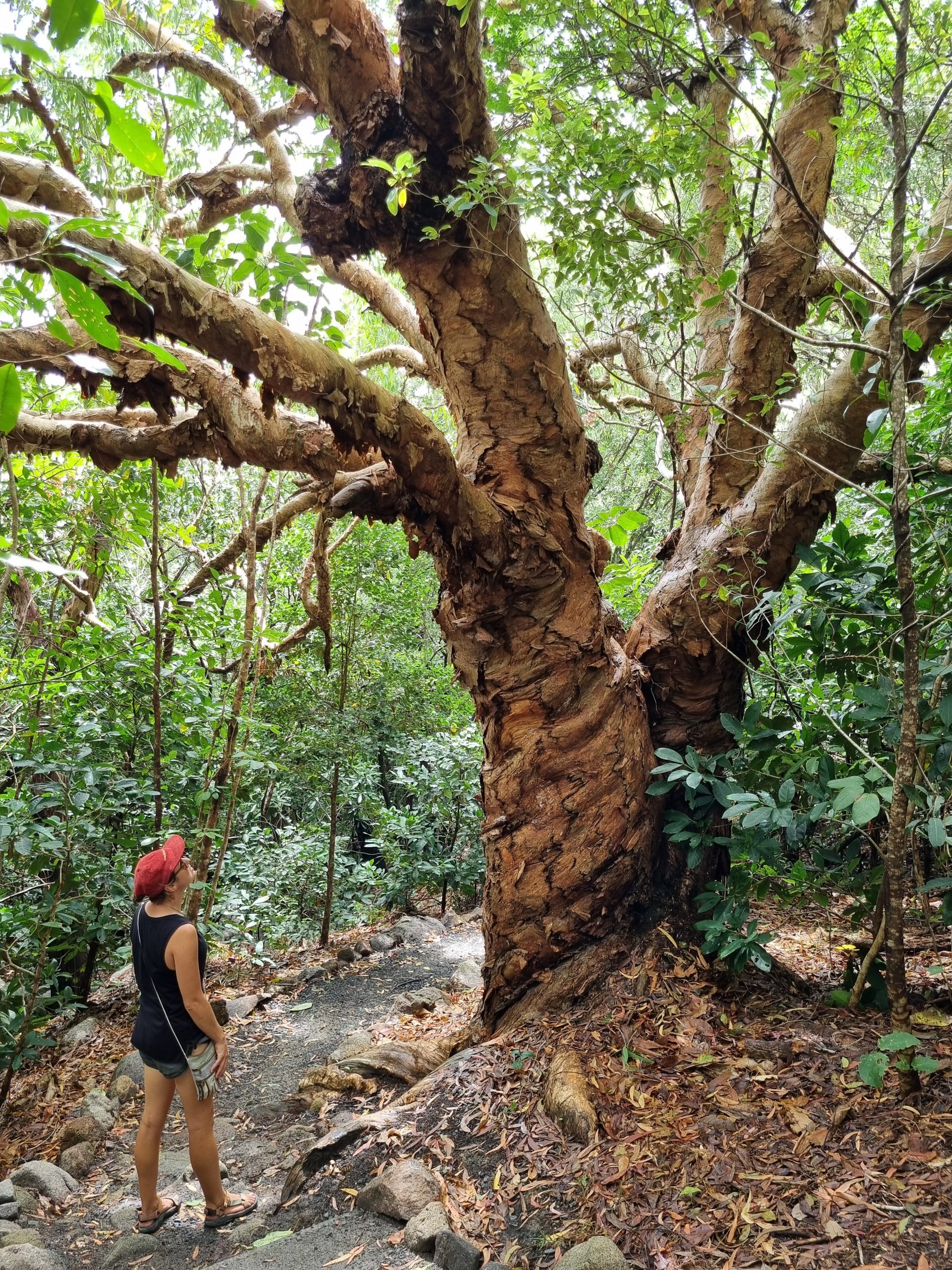
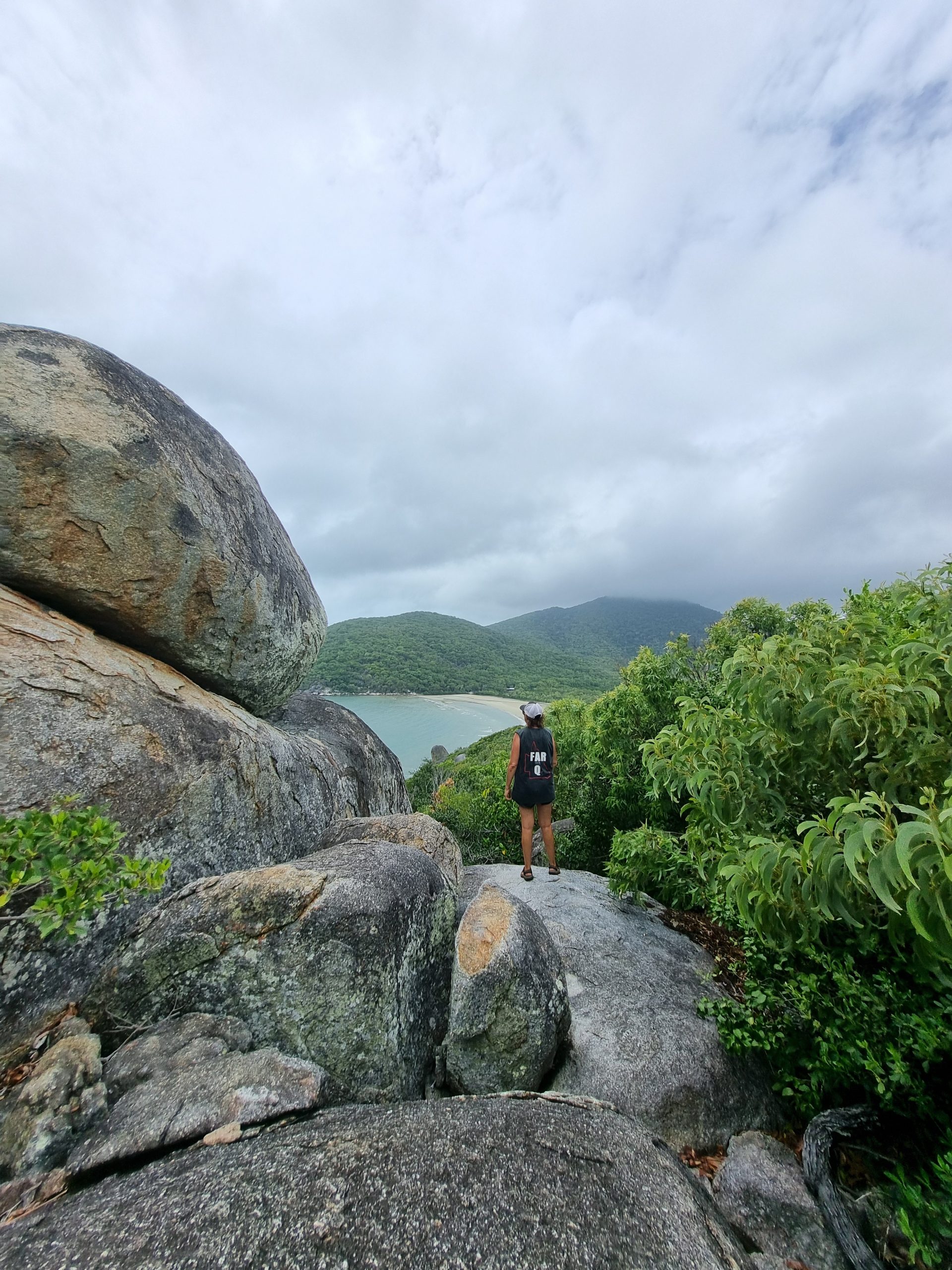
Today, we headed to Cooktown, where we discovered a wild frontier history that lingers today. A place where people disappear into the forest to live off-grid, and where tales of deadly crocodile encounters and cyclones are shared by local characters. Cooktown has a cool vibe. And we decided to stick around for a few days to let it really sink in.
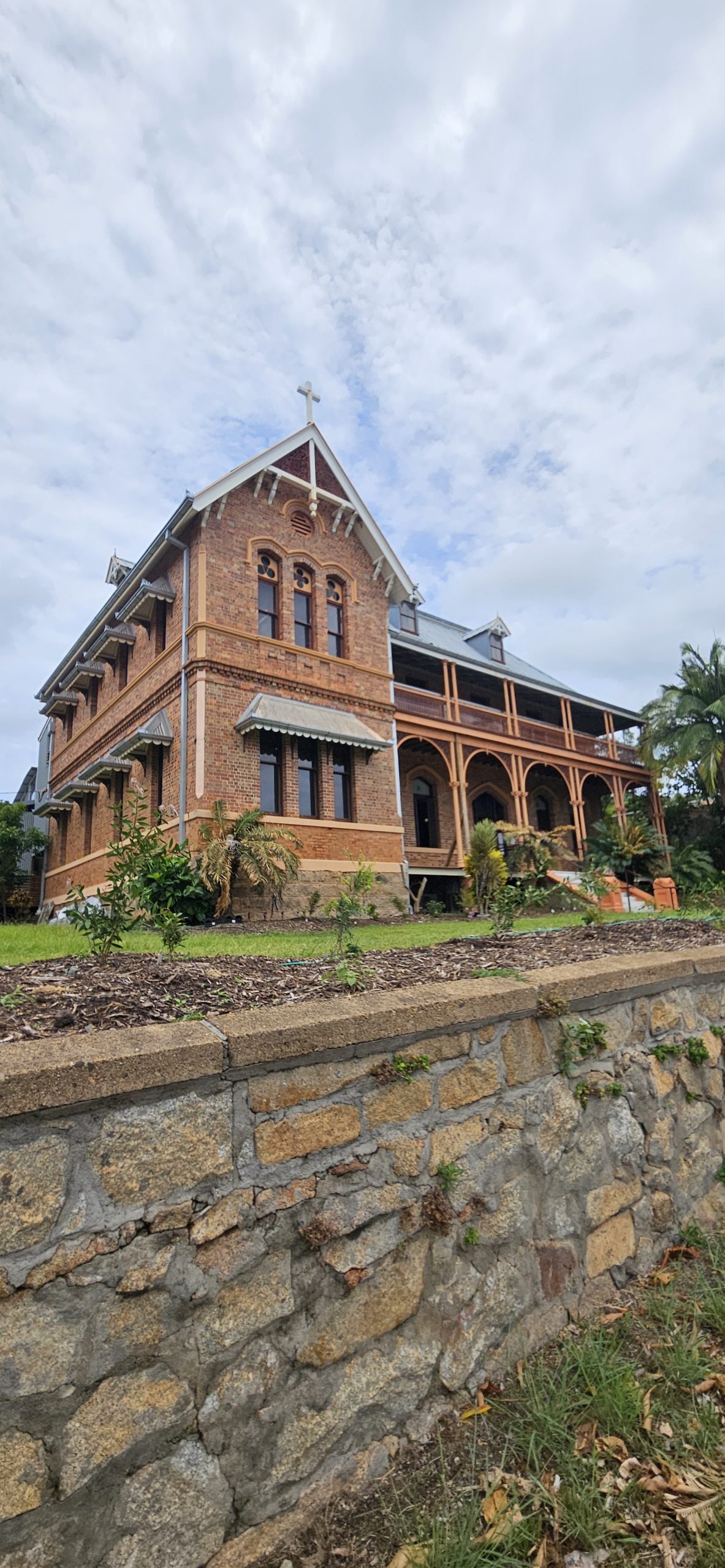
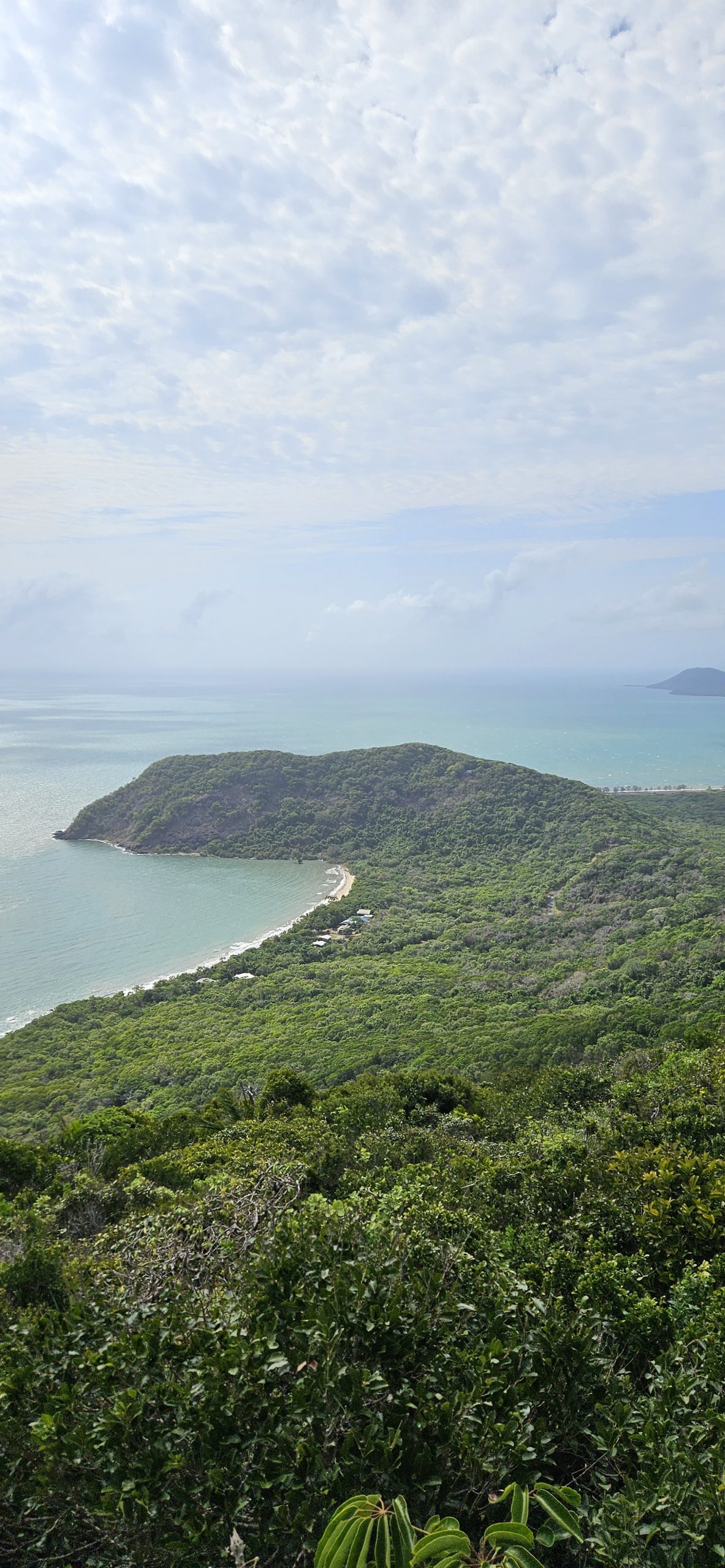
Highlights:
We spent 72 hours exploring this remote corner of Australia’s northern tropics.
Here’s what we got up to:
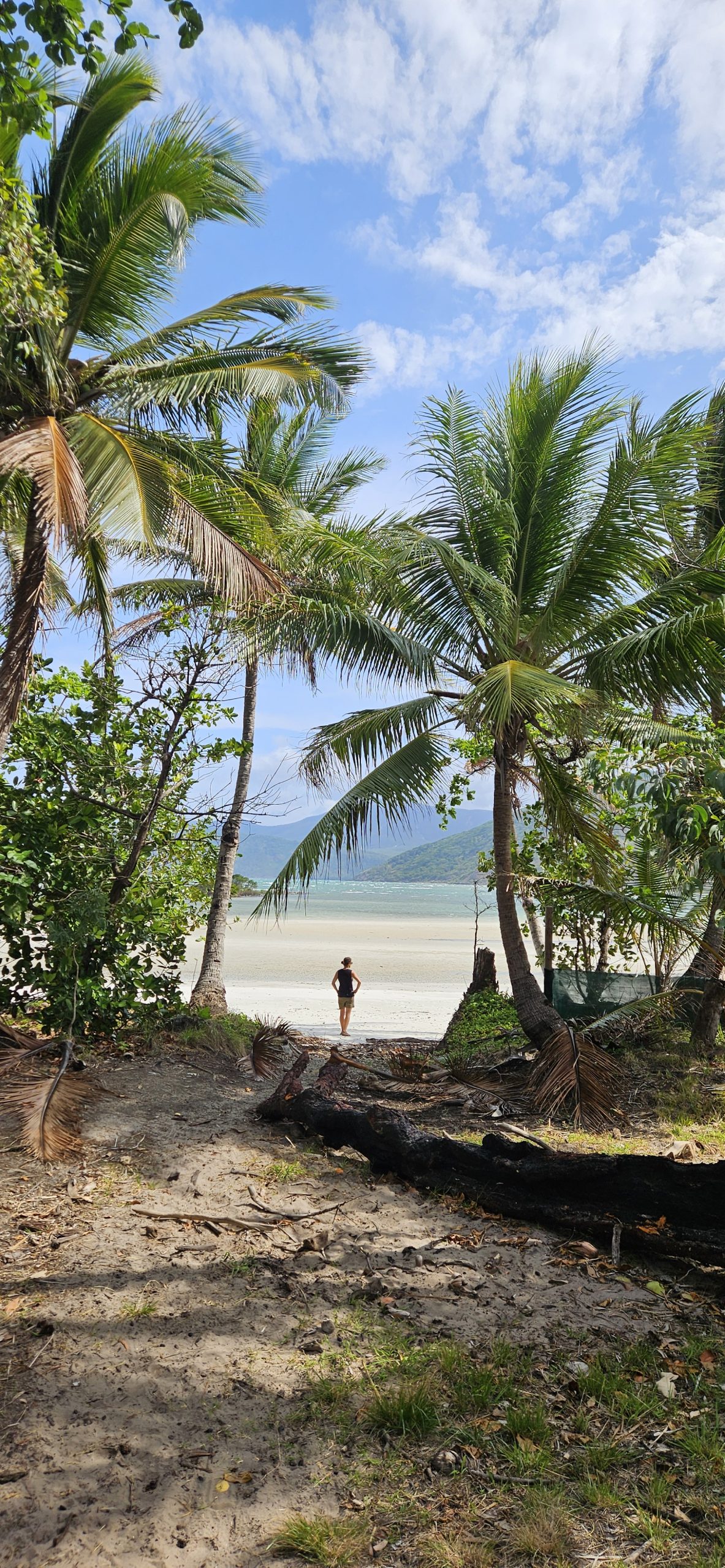
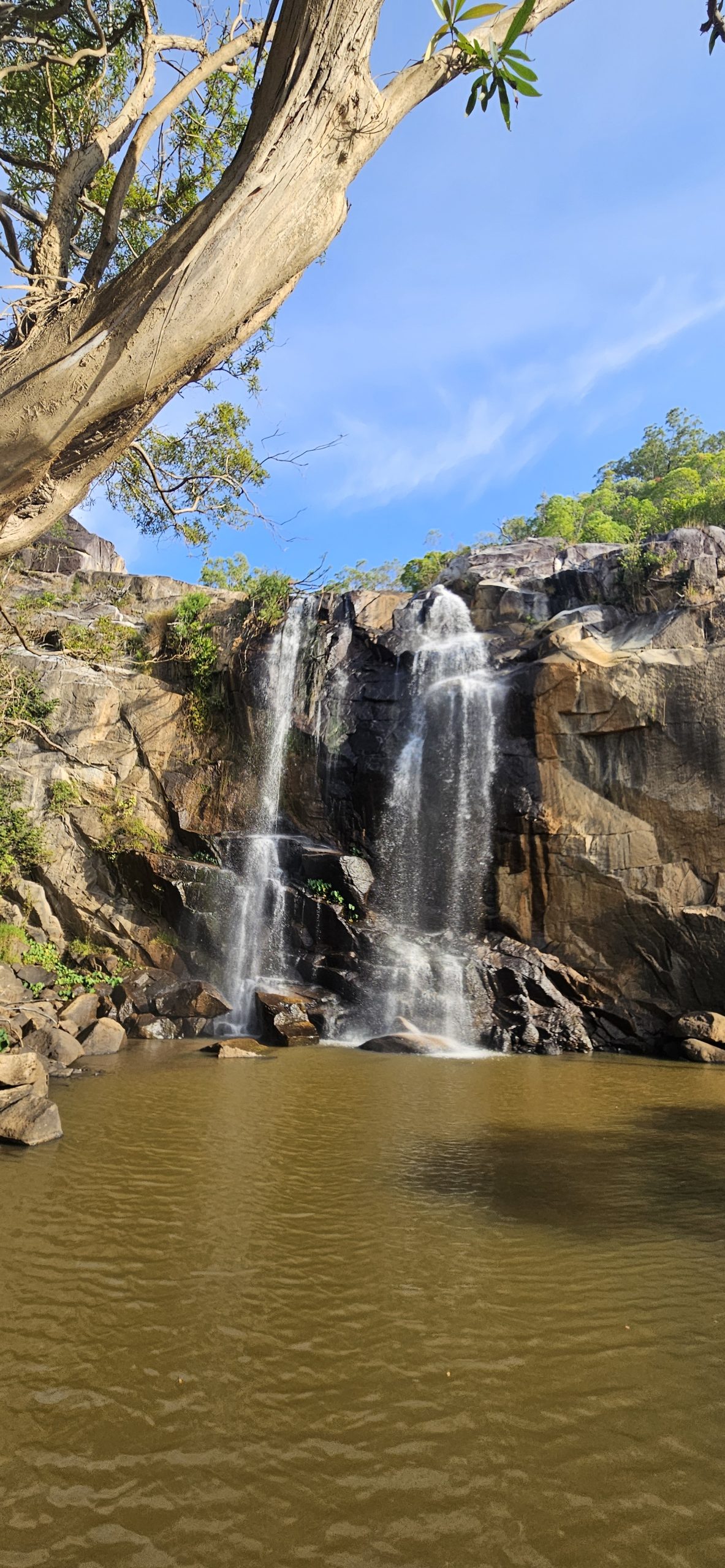
Highlights:
On our way out of Cooktown, we stopped at Keatings Lagoon for a spot of birding, visited Archer Point to take in incredible views of the mountainous coast, and called in at Trevathan Falls, where we watched a goat casually saunter along the top.
We arrived at the Lions Den Hotel, an iconic watering hole for Cape York travellers, early in the evening and decided to pull up stumps for the night. We chatted with friendly travellers and locals, and enjoyed dinner and drinks on the deck of this quirky establishment, where guests scrawl messages all over the walls. We added our names just above the front entry — pride of place!
Highlights:
We kicked off the day with an incredible tour and smoking ceremony on country with Kuku Nyungkul Elder Uncle Mooks, who shared traditional bush medicine and food knowledge passed down from his grandparents. In a hilarious twist, Mooks joined our crew on the Bloomfield Track — along with his dinner, a frozen turtle, which we ferried in our esky!
The Bloomfield Track itself is narrow, windy, and wickedly steep, linking Cape Tribulation with Wujal Wujal and Cooktown. We threaded through dense forest, crossed waterways, and hugged ridges that dropped sharply to the ocean. Cyclone Jasper’s impact was clear, with uprooted trees lining long stretches. Gradients topped 30 per cent, but our trusty Hilux climbed steadily in high 4×4 — slowing to 20 km/h on the steepest sections.
Highlights along the way included Wujal Wujal Falls, Emmagen Creek inlet, and Myall Beach. To cap off the day, Jane, Don, and I rented a 6bed dorm at PK’s in Cape Tribulation, each grabbing a bunk. Our visit was brief but sweet, letting us relive favourite moments from our 2019 lap of Australia — from beach walks and epic lookouts to a much-needed stop at the Daintree Ice Cream Company.
When travel savings run low, working on the road can keep the adventure rolling — and give you time to truly explore places like a local.
We road-tripped from Adelaide to Melbourne for $1 a day. Here’s how campervan car relocations work — and the catches.
Hard-earned tips for setting up your vanlife rig, choosing the right gear, and thriving on the road in Australia.
Developed and tested on some of Australia’s toughest trails and in extreme weather, these 15 hiking gear hacks will elevate your hiking experience.
Sign up to receive our latest travel stories, tips, tricks and destination guides.

We honour the ancient cultures of the First Nations peoples whose land we travel.
Copyright © Franky Roams | 2026 | All Rights Reserved