
All you need to get trail-ready
Into the wild
Get trail ready with us
Every great hike starts before the trailhead — with drive, a decision made, and no turning back.
Out there, nothing’s guaranteed. Weather shifts, legs burn, gear gets tested, and mindset can make or break the day. How you prepare is what stacks the odds in your favour — giving you the freedom to go further, stay sharp, and fully commit to the adventure.
This is Hiking 101 — your base camp for bigger things. From building real trail fitness and dialling in your gear, to reading conditions and packing with intent, we’ll help you hit the track confident, capable, and ready for whatever the wild throws back.
Our hiking fire
In 2019, we climbed out of a small aluminum boat onto the untamed shores of North Queensland’s Hitchinbrook Island.
The plan - to walk across the island over four days, hauling our packs over mountain ranges, wading through tidal creeks, drinking from streams, and sleeping under the stars.
It was our first overnight hike. It felt wild. And it lit a fire that keeps us roaming today. Now, we’re helping others embark on their own journeys — fully prepared, inspired, and ready to fall in love with hiking, like we did.

Meals that move us: Trail food that fuels our adventures
Food on trail is ritual, celebration, and survival rolled into one. Here’s how we plan, prep, and cook while chasing adventure.
Top 15 hiking gear hacks we swear by
Developed and tested on some of Australia’s toughest trails and in extreme weather, these 15 hiking gear hacks will elevate your hiking experience.
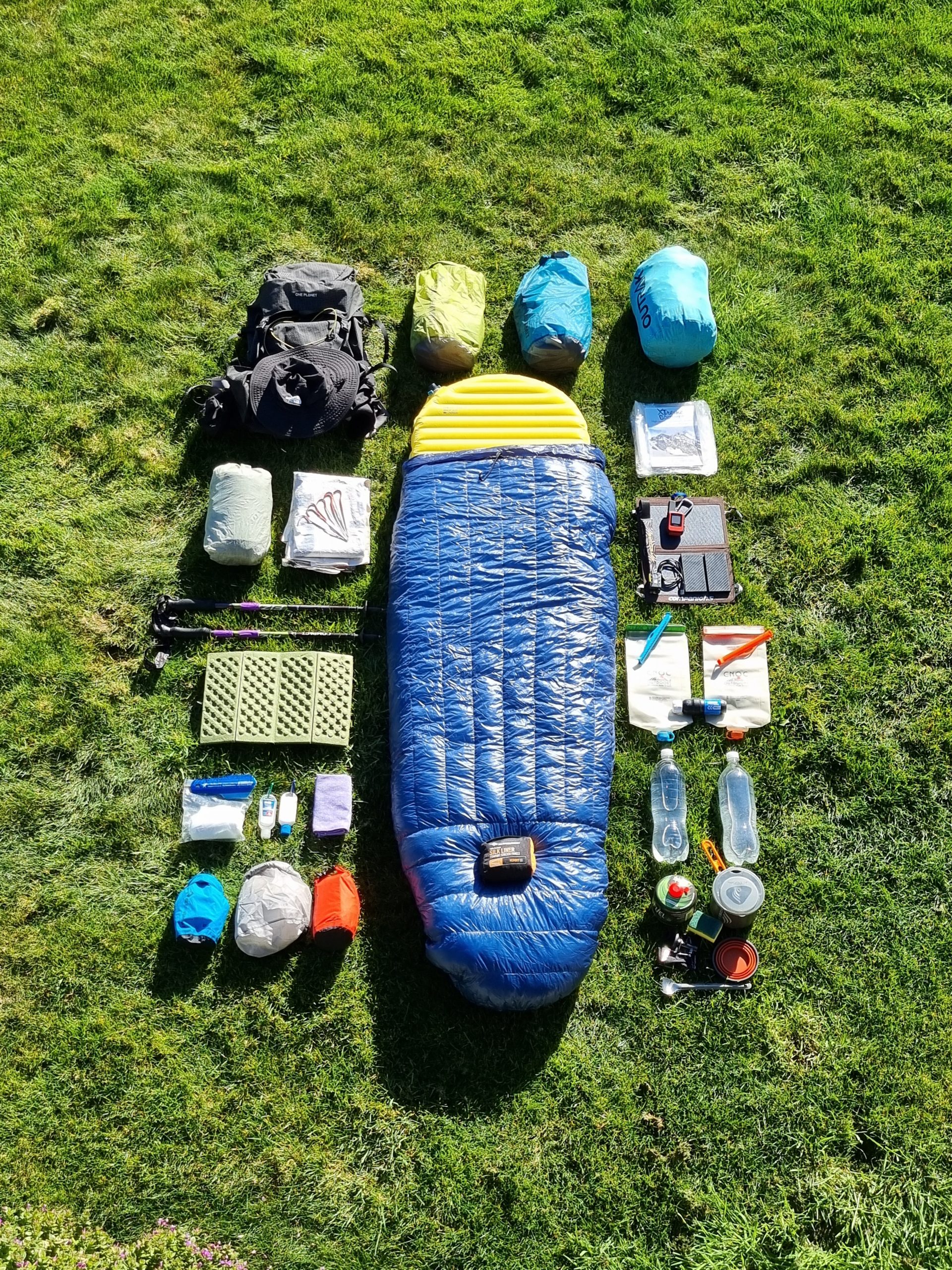
Our ultimate multi-day hiking pack list
Gear up for adventure with our ultimate hiking pack list. Discover must-have items for comfort, safety, and success on every trail, from beginners to pros.
Food on the trail done right
Unsure how to go about food to fuel a long-distance hike? Here’s how I (Kyla) did it for five weeks and 730kms on the Australian Alps Walking Track.
I’ll walk you through…
- how I pre-prepared my own meals (in bulk, without a dehydrator) using the Xtreme Gourmet cook book
- my favourite camp kitchen gear
- what my daily trail menu looked like
730km gear review: Australian Alps
After 35 days and 730km solo hiking the Australian Alps Walking Track, I’m sharing my gear list — what worked, what didn’t, and what I’d change.
In this video, I break down the essentials that got me through the rugged trail, plus tips for ultralight packing. Want the full list with weights? Check out my complete gear list on Lighter Pack.
Check out the kit from Aussie stockists, Ultralight Gear, that helped me go lighter and further.
Got questions? We've got you.
We’ve rounded up some of the most common things people ask us about vanlife — so you can
spend less time wondering and more time adventuring.
First big hike—where do I even start?
Your first overnight or multi-day hike feels huge—backpacks, boots, food and sleep systems. But don’t stress, with the right prep, it’s more wonder than worry, and far more doable than you think.
To head off on an overnight, or multi-day hiking adventure, generally speaking, you’ll need a sleeping mat, sleeping bag or quilt, tent, a cooker, spork, water carriers, a water treatment system, a PLB or satellite phone, headlamp, powerbank, sit pad or ultralight chair, thermals, good boots or trail runners and outer layer. You can check out the full packing list from our latest multi-day hike at https://lighterpack.com/.
Admittedly, it can cost a bit to get your full set up sorted. Our advice is to look on Marketplace and other Facebook pages for secondhand goods and to choose what products to invest more money in. For example, in our opinion, you’re generally better off investing in a quality tent and making do with more affordable hiking poles and clothes. The good thing is, when you can afford to upgrade a bit of kit, you can usually get a good price for your second hand gear - adventure goods seems to hold their price. There are other ways to save money, like using soft-drink bottles to carry water instead of hiking-specific water bottles, buying butane gas from Bunnings instead of adventure shops, and preparing your own hiking meals, instead of buying ready made meals. We use the Xtreme Gourmet recipe book to prepare our dinners.
Develop an itinerary that sets out how many kilometres you intend to travel each day, where you expect to sleep each night, and where you will collect water. Provide your itinerary to a loved one - it’s important someone knows roughly we’re you’ll be and when you intend to start and finish, in case something goes wrong. Ensure you have a navigation system ready to go and know how to use them. This could be a mixture of paper maps and a compass, a mobile phone GPS app, and trail notes (from an author like John Chapman).
There is no general answer to this. This distance you’ll cover depends on several factors, such as terrain and elevation. If it’s a track that requires careful foot placement or an intense uphill climb, you may only cover a shorter distance (I.e. 8-10kms). The distance you travel may also me impacted by:
- Location of huts or flat terrain suitable for pitching a tent - Sometimes options for are limited and you’ll need to choose between a really long (I.e. double hutting) or short day
- Location of water sources - It’s really helpful to camp near a water source to avoid long water hauls
- Weather - if it’s hot, or raining and slippery, you’ll probably move slower, and if there’s a snow storm you may need to end your day abruptly to take shelter
- Your general fitness - how many kilometres you known you are capable of covering in a day
- Your preferences - some people prefer to hike long and fast, starting before the sun rises and ending after the sun falls, while others prefer to stop and smell the roses, as it were, and spend time enjoying their campsites.
In the weeks, or months, leading up to your hike, get in plenty of days walks in the shoes you’ll be wearing on your walk. Make sure you can match the distance you intend to hike on trail, so that you know your itinerary will stack up.
Wear-in the shoes you’ll be wearing on trail. Consider buying shoes that are half a size bigger to give your feet room to swell on long days hiking. Try to keep your feet dry. Have a blister ‘kit’ handy, like hiker’s wool, balm and strapping tape, and use it proactively to treat friction spots and p[event blisters from forming. We also find that tow socks - like Injini liners - are a game changer for preventing blisters from forming between your toes.
We carry about 900 grams worth of food per person, per day. We kick off the day with a coffee sachet and quick oats or muesli with powdered milk for breakfast, while lunch is a mixture of mountain bread or savoury biscuits with cheese, sundried tomatoes and a protein like tuna or salami, and snacks take the form of nuts, dried fruit, chocolate and chips. Dinners are prepared meals, using recipes from the Xtreme Gourtmet cookbook and dehydrated ingredients from supermarkets and Asian markets, alongside two-minute Mi Goreng noodles with dehydrated vegetables. To top off the night, we enjoy a cuppa and a biscuit. We also use powdered energy drinks for a buzz on long days and to get us up mountains.
Although not having 240v appliances like blenders and kettles just makes the cooking process more manual.
If you’re keen to start multi-day hiking, but are nervous about getting started, check out your local area for bush walking groups. They offer a great way to do hikes in a group setting, learn from others with more experience, and make sure you’ve got the right gear and skills to get started. If you’d prefer to start solo, try testing your gear by camping in your backyard, then moving onto a lower-grade overnighter. There are also plenty of guided walks out there offered by tourist businesses, but they usually come at a hefty cost.
Generally speaking, all water you collect while on trail will need to be treated, even if it’s come from a beautiful flowing creek. Trust us, you’re better to be safe than sorry! There are many ways of treating water, including using purification tablets, boiling water with your butane cooker or on a fire, using a water filter (like the Sawyer Filtration system), or a UV (ultraviolet) light device (e.g. a SteriPEN). There is no perfect, or better solution, for filtering water. It really depends your personal preferences. We currently use a Sawyer Filter, and carry purification tablets as a back up (when we’re wanting to purify water on the fly, the filter has blocked up, or we want to provide extra treatment to stagnant water).
That really depends on the trail you’re hiking and your general water consumption. If you’re on a trail that has reliable rainwater tanks or streams every few kilometres, then you may only need to carry one or two litres of water. However, if you’re only going to cross a water source once that day, and it’s earlier on, you’ll have to factor in the water needed to get you through that day, to cook your dinner that night, and potentially to prepare your breakfast the following morning and get you through to the next water source. The most water we’ve carried per person is 5 litre - and it was bloody heavy, but we needed it. If water is unreliable, it may also be worth considering water drops to lessen your load, and meal options that don’t rely on water.