Our complete guide to working on the road
When travel savings run low, working on the road can keep the adventure rolling — and give you time to truly explore places like a local.
Our hard-won advice for getting vanlife ready with the right gear
After 700+ days of full-time travel, 300+ unforgettable stops, two full laps of Australia and over 80,000 kilometres of outback roads, we’ve learned this:
The right vanlife gear doesn’t just make your trip easier — it can seriously make or break your adventure.
But working out what vanlife gear is right for you, your rig, and Australia’s diverse conditions doesn’t happen overnight.
It’s a long game of gear failures, shakedowns, upgrades, and complete rethinks — which is exactly why this article exists.
Whether you’re building your first setup, planning a lap of Australia, or already living full-time on the road — this is the hard-earned advice we wish we’d had to nail our vanlife gear from day one.
When your living space is only a few square metres (at most), every item seriously matters and needs to earn its place.
Life can quickly feel like bedlam when you have to dig your way through gear to get to what you need, stuff tumbles from your cupboards or boot, and your drawers end up a hot mess after a few bumpy tracks. That’s why we literally have only what we need. Two forks, two knives, two plates, two wine glasses, two towels. You get the picture.
And everything has its place. It’s incredible how quickly things can go missing in such a small space if you don’t have a dedicated home for everything. In a lifestyle where so much is out of your control, controlling what you can makes a huge difference.
When your clothes — and shoes — need to fit into two or three tubs, you need to make sure they suit the conditions. There’s no point lugging around a stack of winter gear when you’re sweltering in Far North Queensland.
Instead, we buy clothes from op shops when we’re gearing up for a new climate — and donate them when they’re no longer needed. It’s a great way to travel light, save coin, and recirculate clothing.
Having said that, we carry a box of dedicated hiking gear, including thermals and a down jacket, so we always have a cold-weather back-up.
We also tend to wear the same clothes — shorts and T-shirt — on repeat until they need a wash. The fewer clothes you wear, the less there is to wash. And no one cares what you’re wearing in the bush.
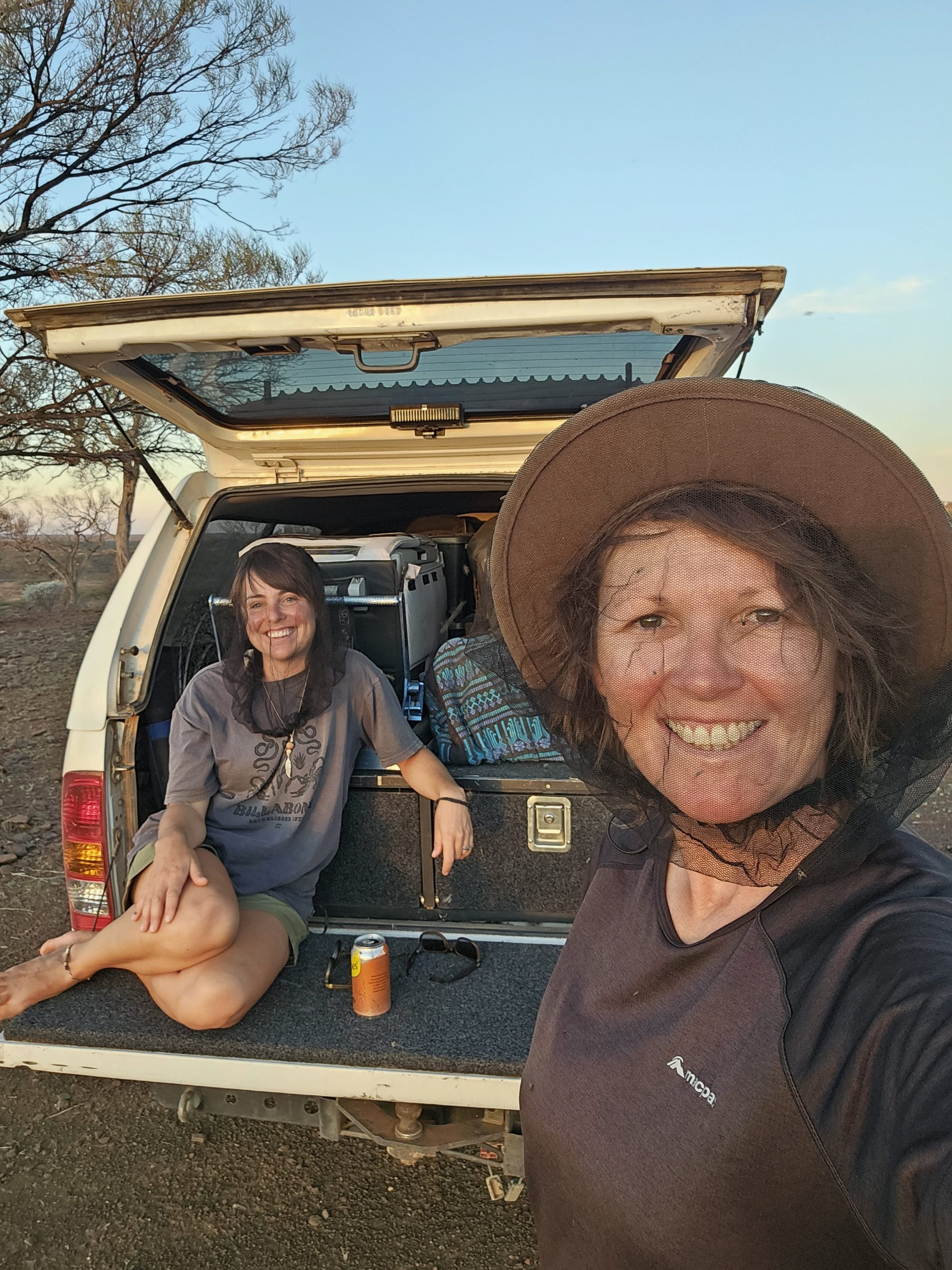
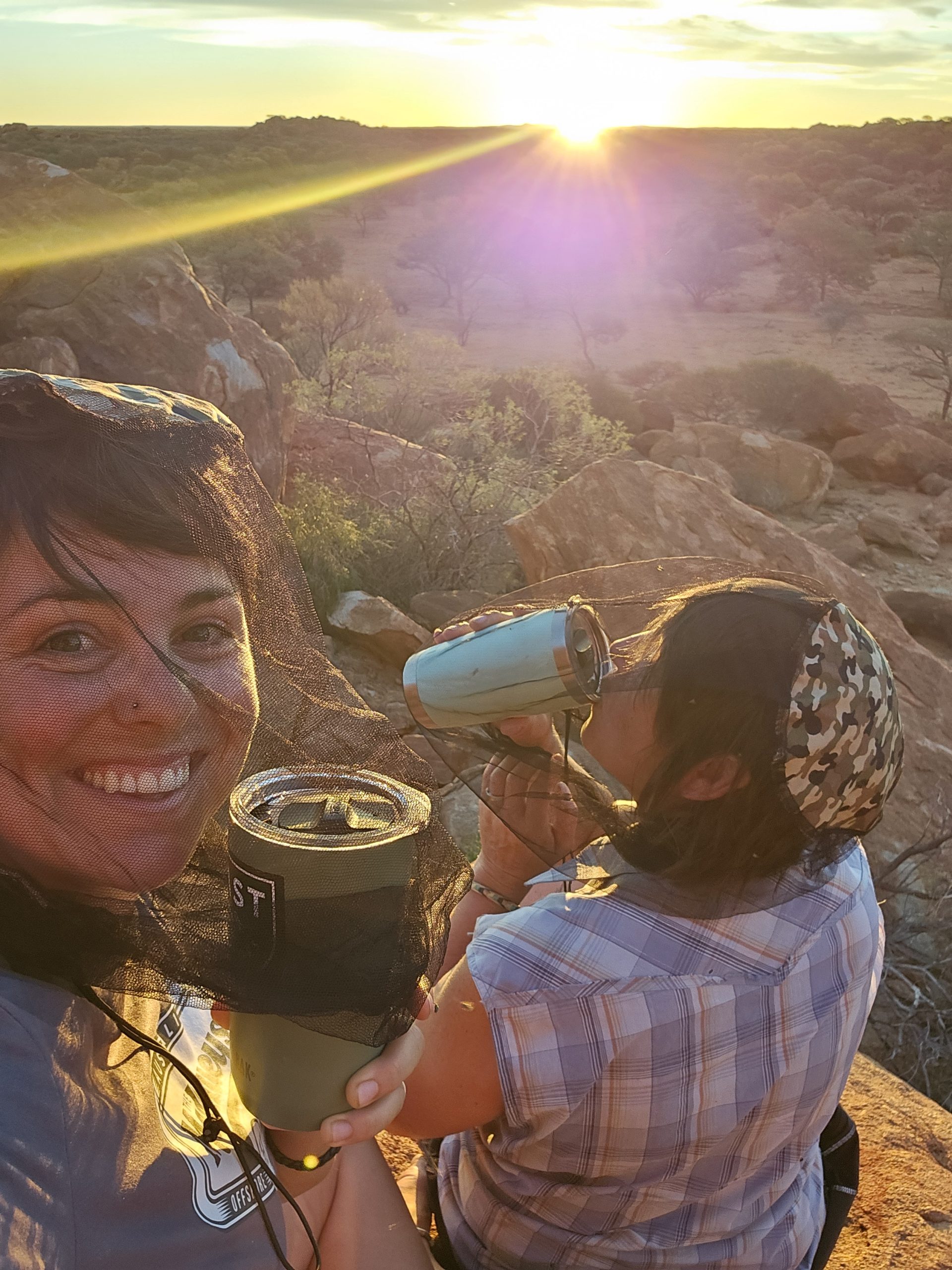
Back in the day, we swore we’d never wear head nets like the ‘tourists’ do. But when we ventured north of Kalbarri on our first lap in 2019, the flies were absolutely raging.
So we took the plunge and invested in a couple of head nets. They were a serious sanity saver. We wore them on all our walks. Ate dinner beneath them. And stopped dining on flies.
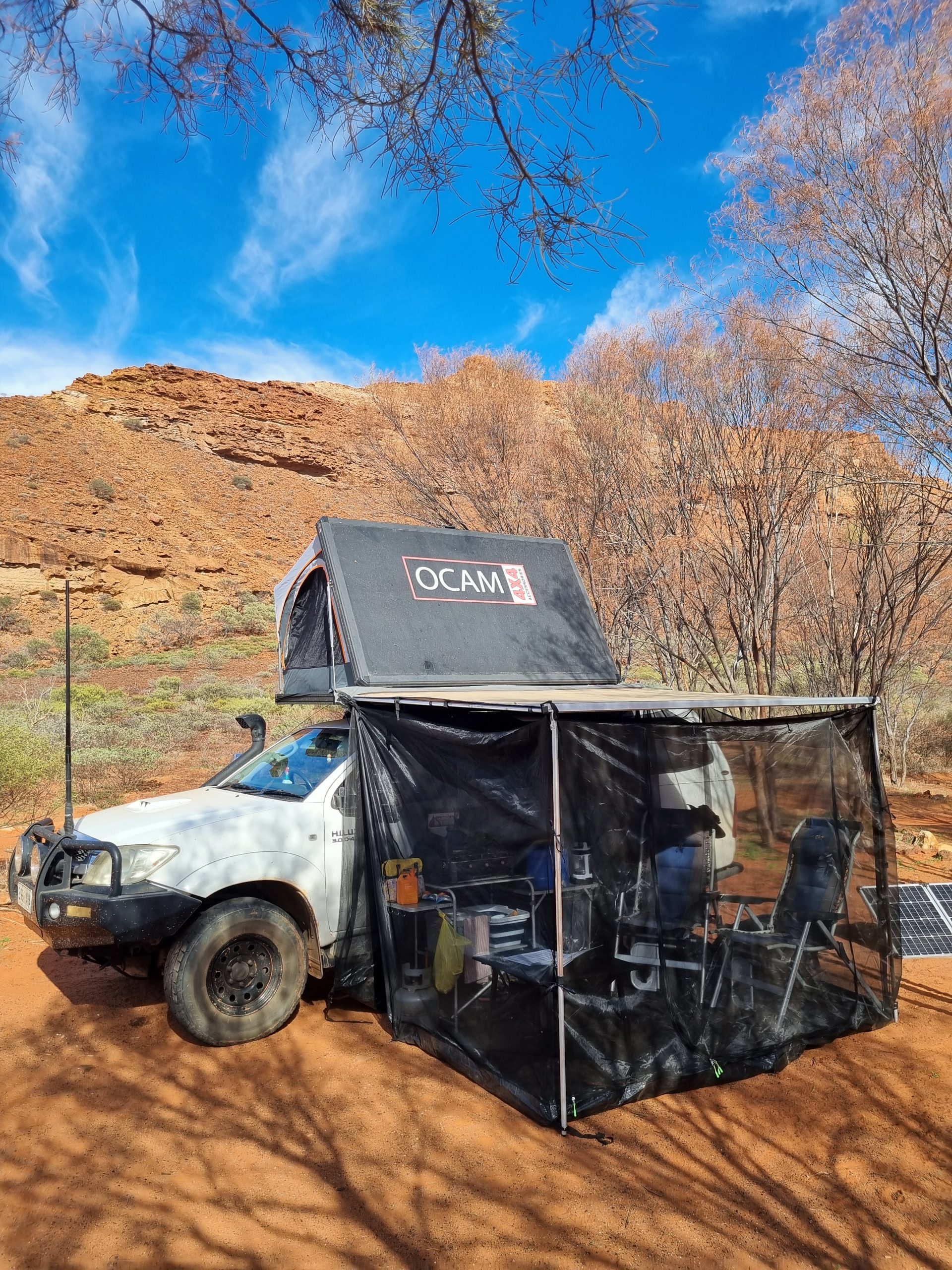
For our second lap, we even upped the stakes and invested in a gazebo inner net, which has been worth its weight in gold.
Our worst fly encounters to date have been at Karijini National Park, Shell Beach, and Gladstone Bay — all in WA.
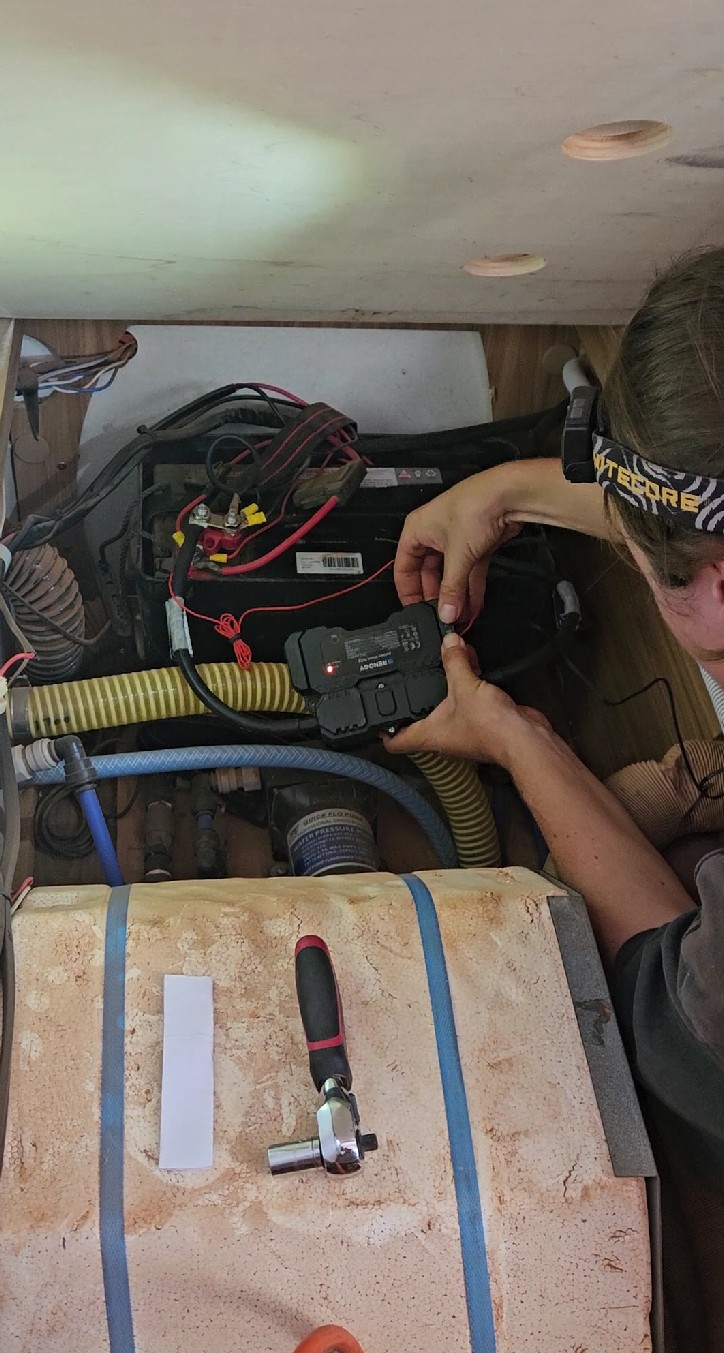
When you’re travelling off-grid and away from house power (240V) and sparkies, knowing how your 12V system works — and how to troubleshoot it — is essential.
Picture this: you’re set up in the bush, using a headlamp to cook dinner because your battery’s flat and your lights and fridge aren’t working.
Having a multimeter to check your battery voltage, measure the amps coming from your solar, and detect any breaks in your system is super helpful. Trying to troubleshoot without one is like going for a walk in pitch black darkness. You have no farking idea what’s going on.
Get familiar with volts, amps, positive (red), negative (black), and have manuals for your charging systems so you can read error codes.
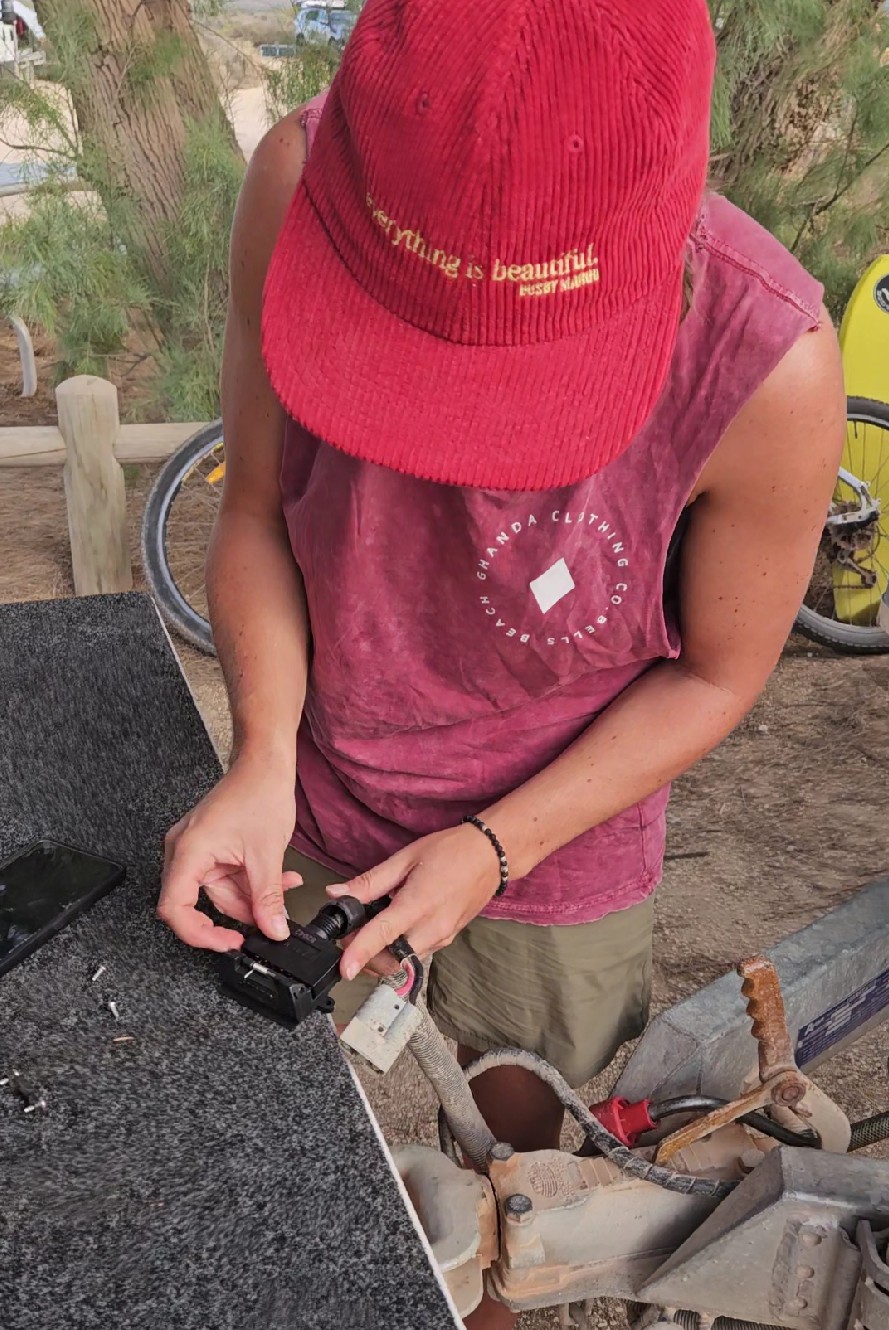
And invest in a soldering kit (Anderson plugs, wire, leads and a blowtorch) so you can fix or make up leads on the fly. It’s not that hard — and you won’t regret it.
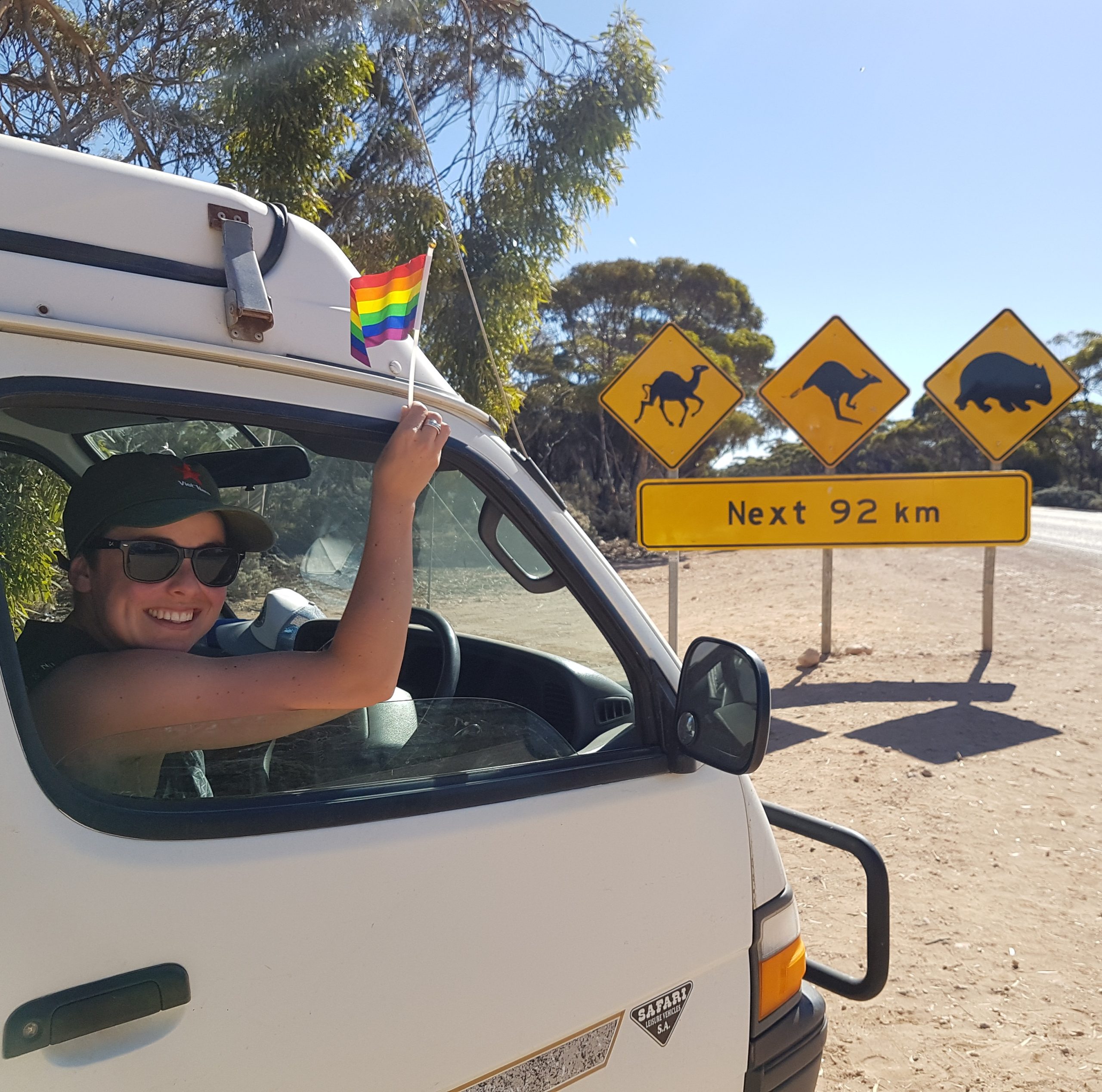
On our first lap of Australia, we had no idea what ‘self-contained’ meant. But we learned very quickly.
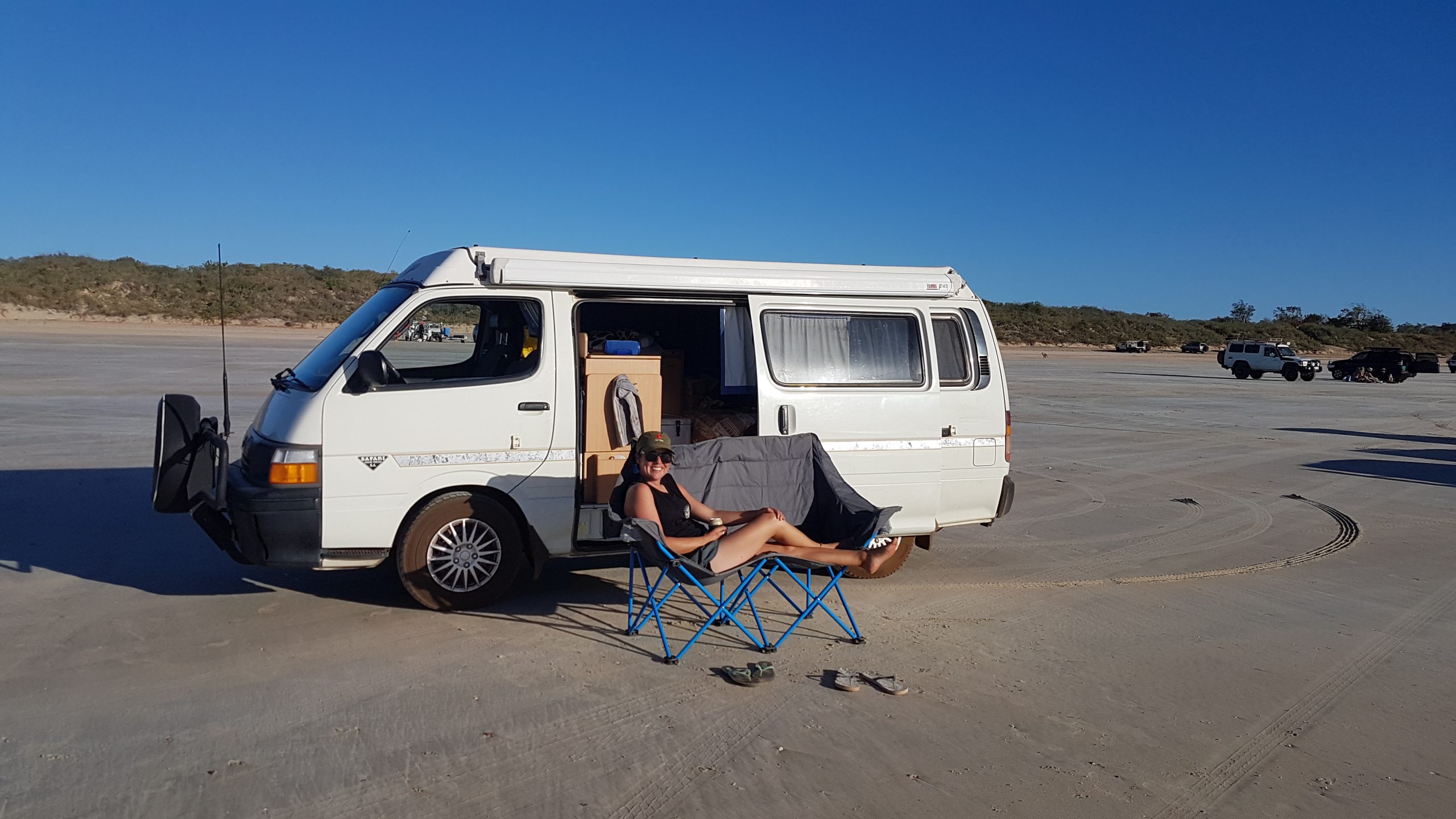
After crossing the Nullarbor, we parked up our Toyota HiAce pop-top campervan at a free RV camp and started whipping up a beautiful bolognaise dinner as heavy rain set in — only to be interrupted by a knock on the door. It was a council ranger enquiring as to whether we were ‘self-contained’.
With big smiles and our rich bolognaise wafting through the air, we responded, “We sure are! We have a kitchen and everything.”
Ranger: “Do you have a toilet?”
Us: “Ah no, but there’s a public toilet 200m down the street.”
Ranger: “Do you have a shower?”
Us: “No, but we had one this morning, so we’re all good.”
Ranger: “Do you have grey water storage?”
Us: “What’s grey water?”
We were given 20 minutes to vacate the property or receive a fine.
Fast forward to our next lap of Australia — we were intent on meeting the self-contained criteria so we could access the vast number of council-run free RV camps around the country.
We had a plumbed sink and water storage, tick, tick, and invested in a Porta Potti and a grey water tote to connect to our sink outlet.
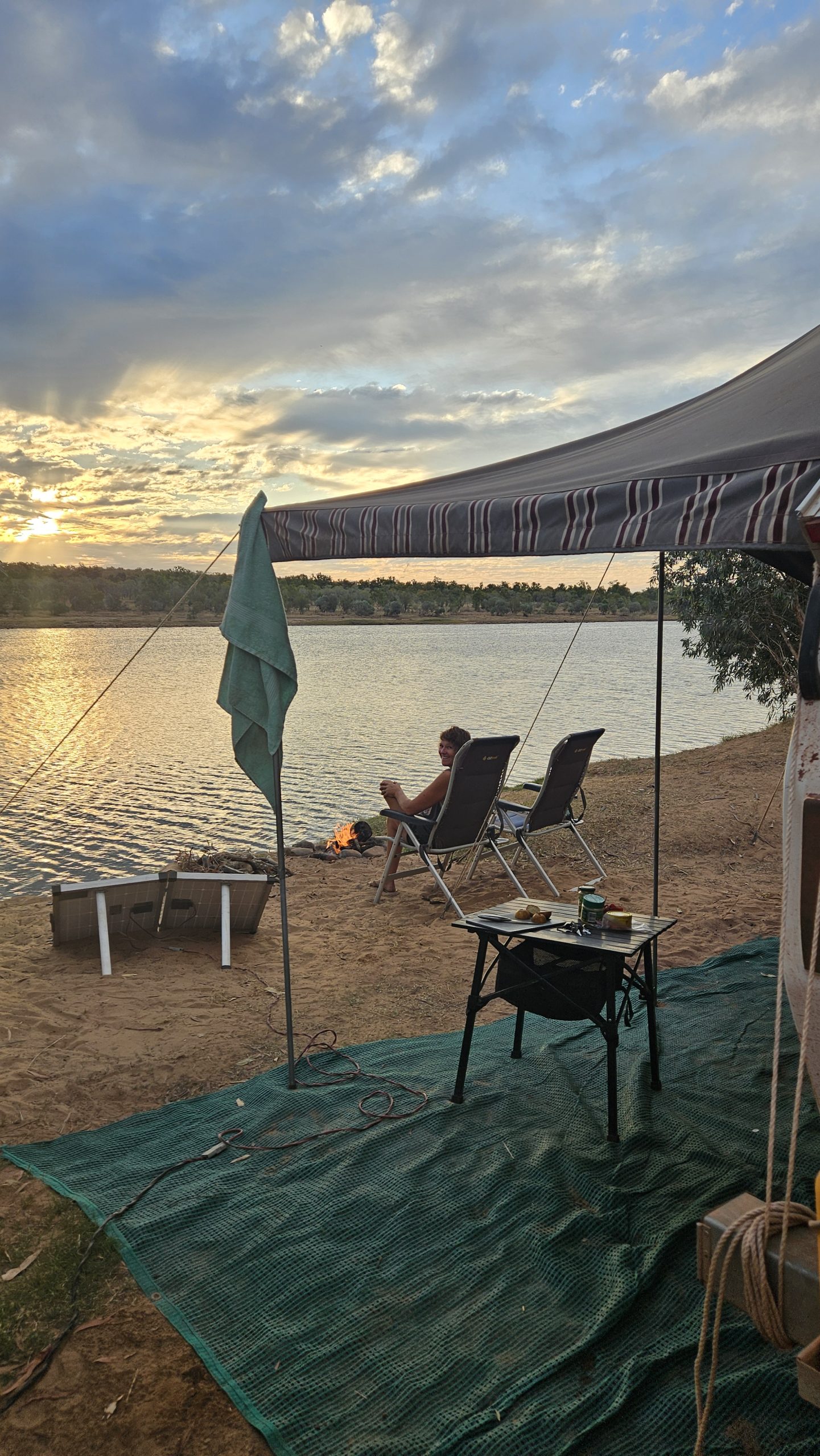
With these items onboard, our off-road pop-top caravan met the self-contained requirements set out by the Caravan and Motorhome Club of Australia.
There’s only been a couple of occasions where we’ve been denied access to self-contained parks, and that was based on not having an internal plumbed shower (which technically isn’t a requirement).
We suggest getting acquainted with the criteria so you know whether you are self-contained, aren’t, or can be.
On our first lap of Australia, we predominantly stuck to 2WD-friendly roads, with the exception of Karijini National Park and a few hairy national park tracks.
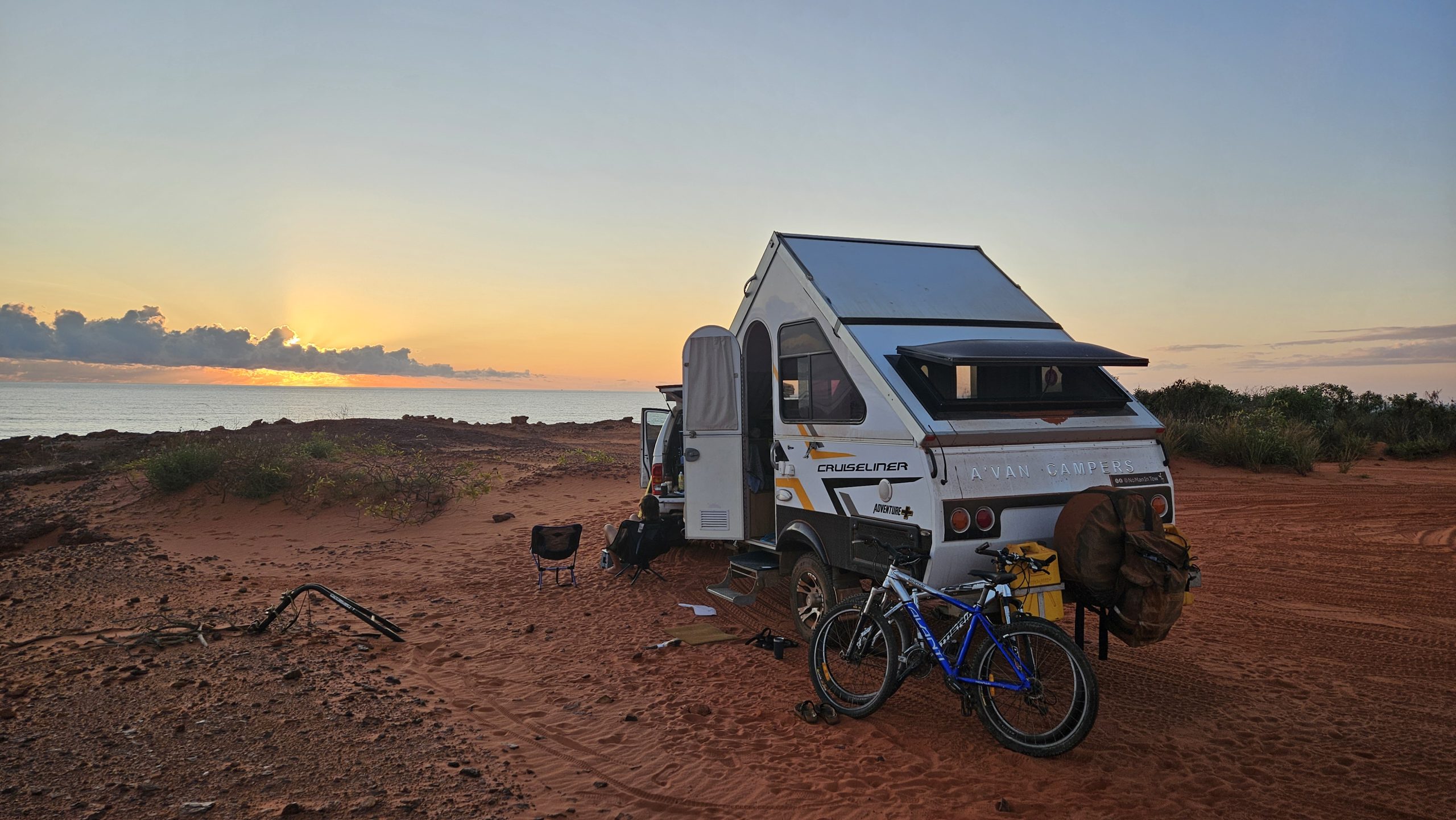
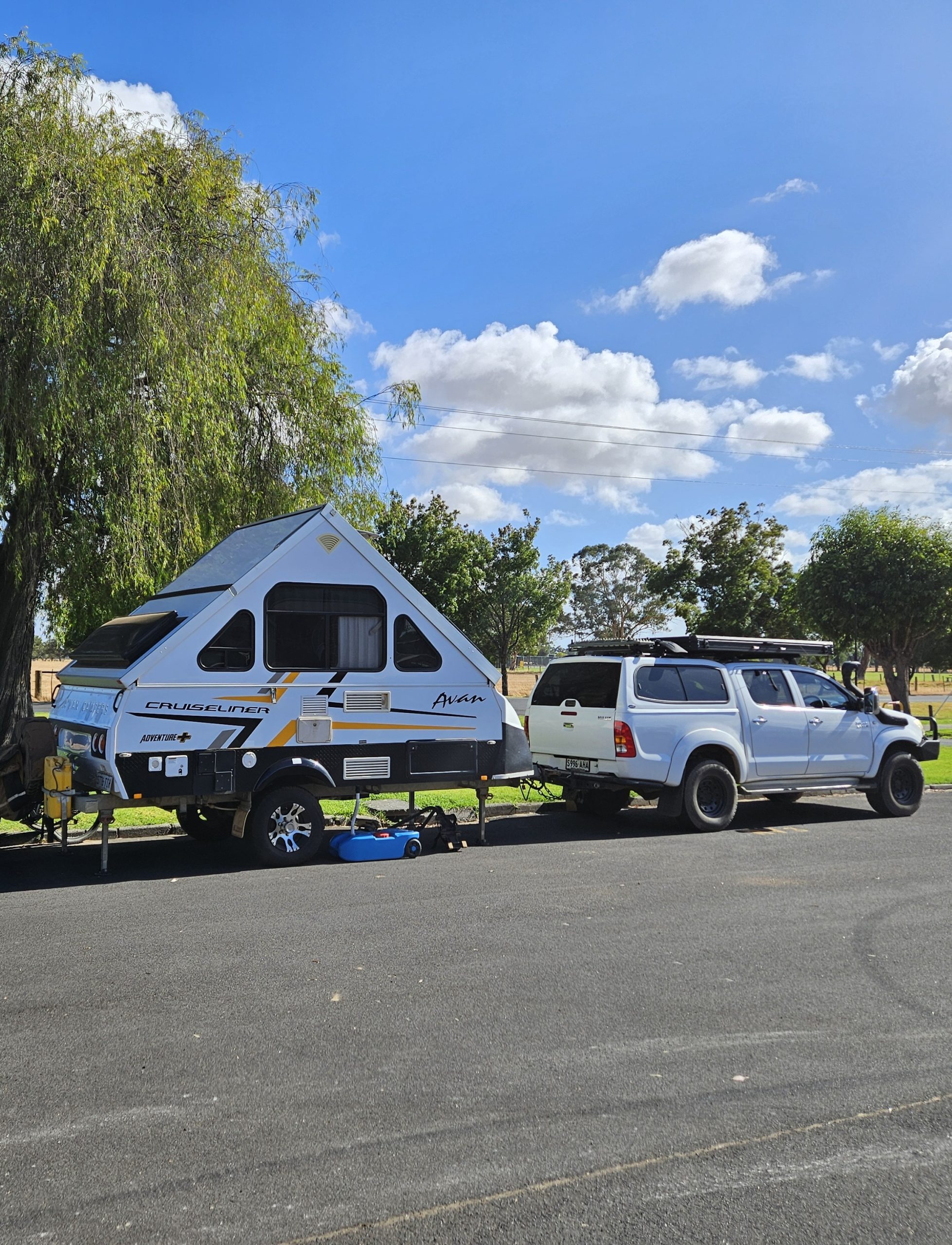
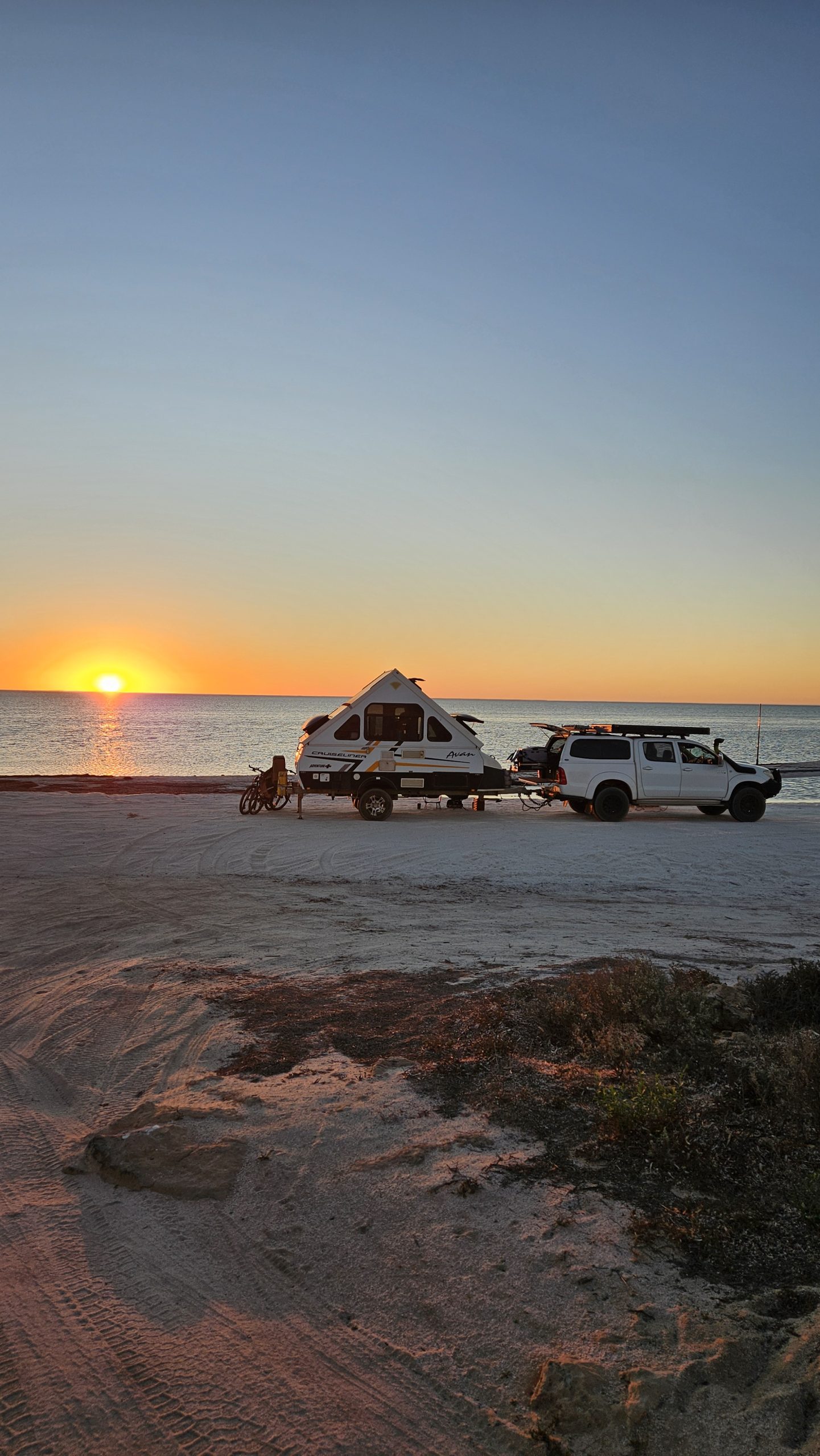
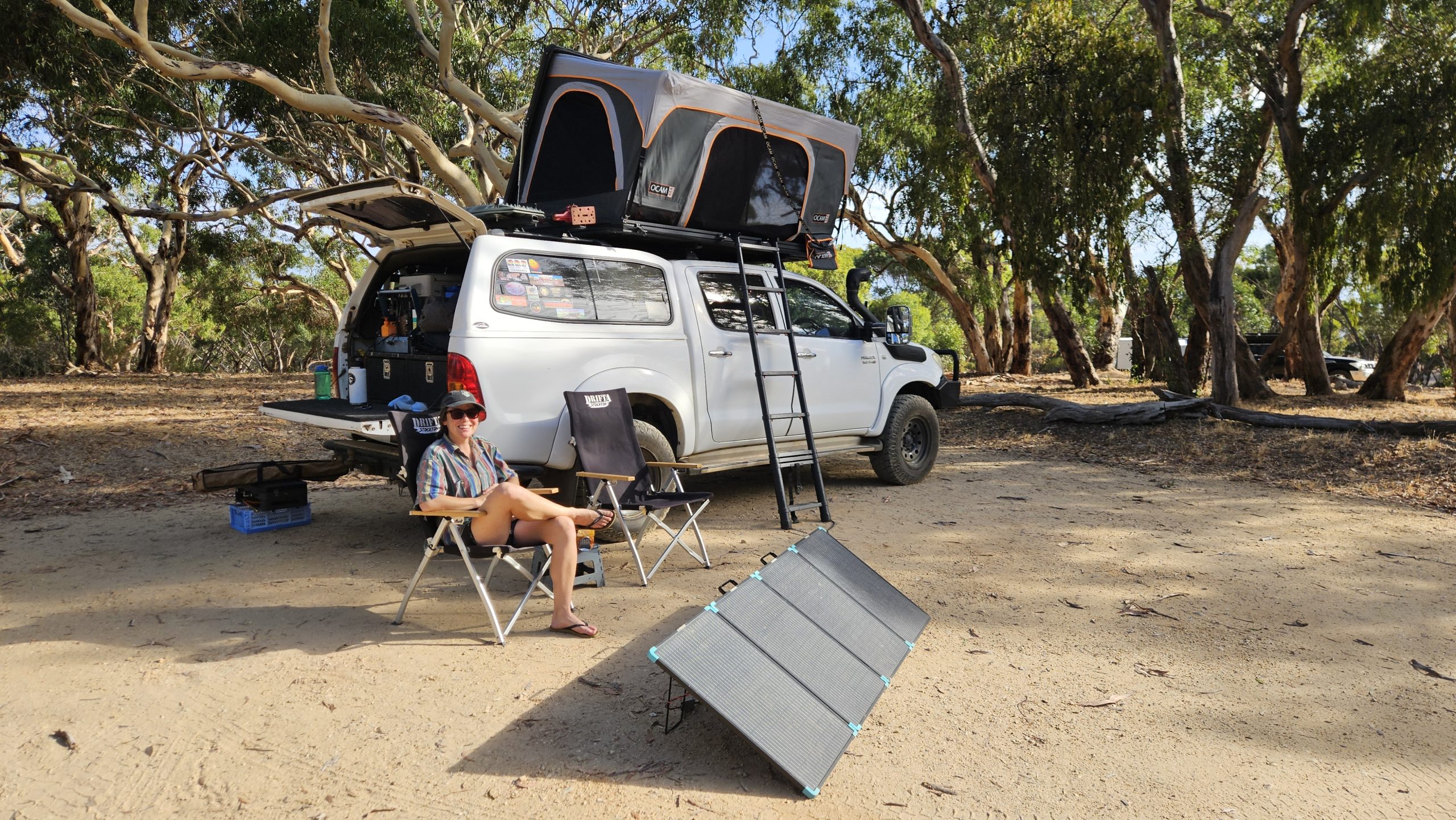
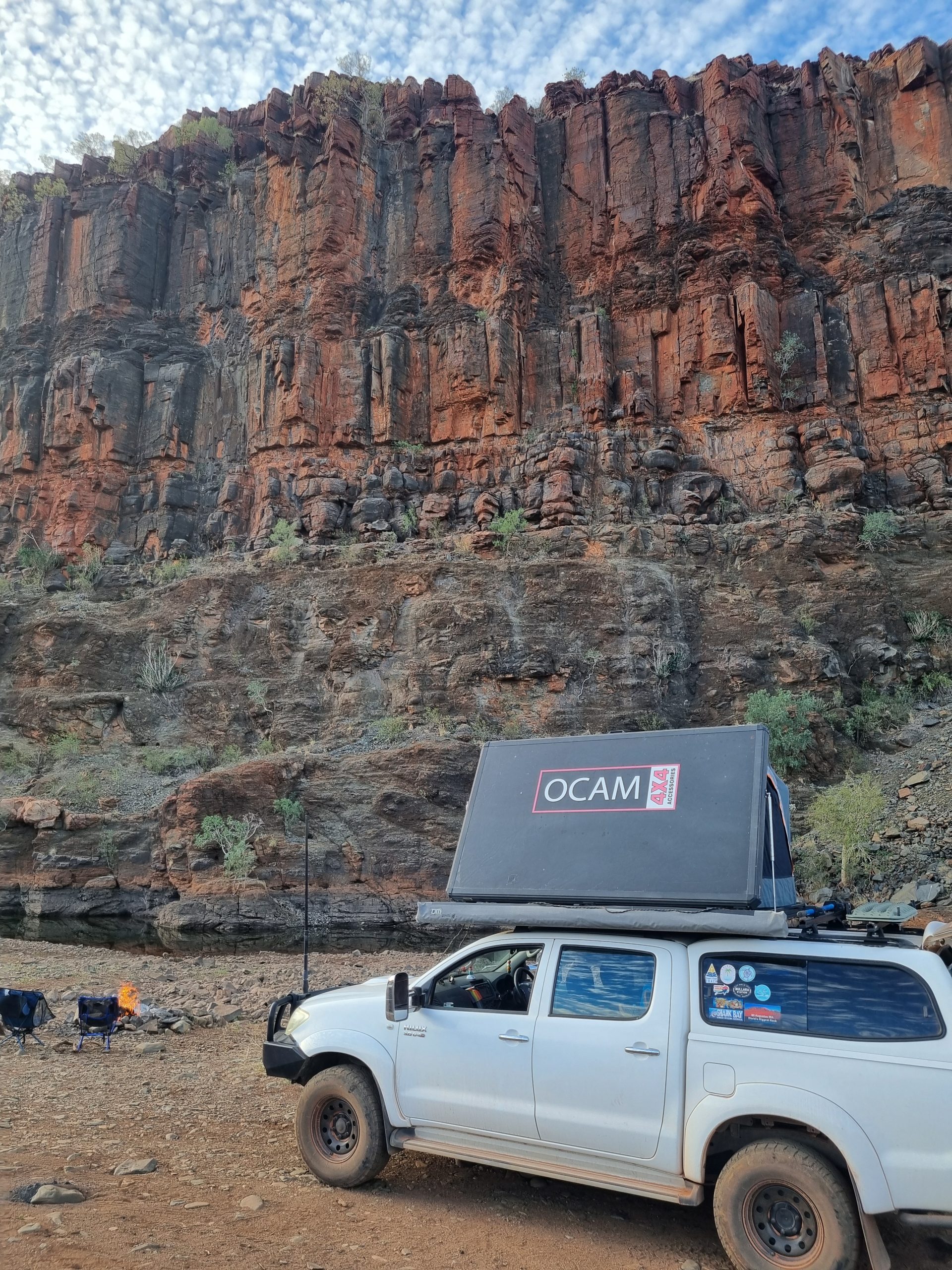
For our second lap, we wanted to reach the stunning and hard-to-access places, so we swapped our HiAce campervan for a Hilux and small off-road caravan.
We camped on incredible beaches like Perlubie Beach and South Lefroy on the West Coast, and dragged our rig across the iconic Gibb River Road.
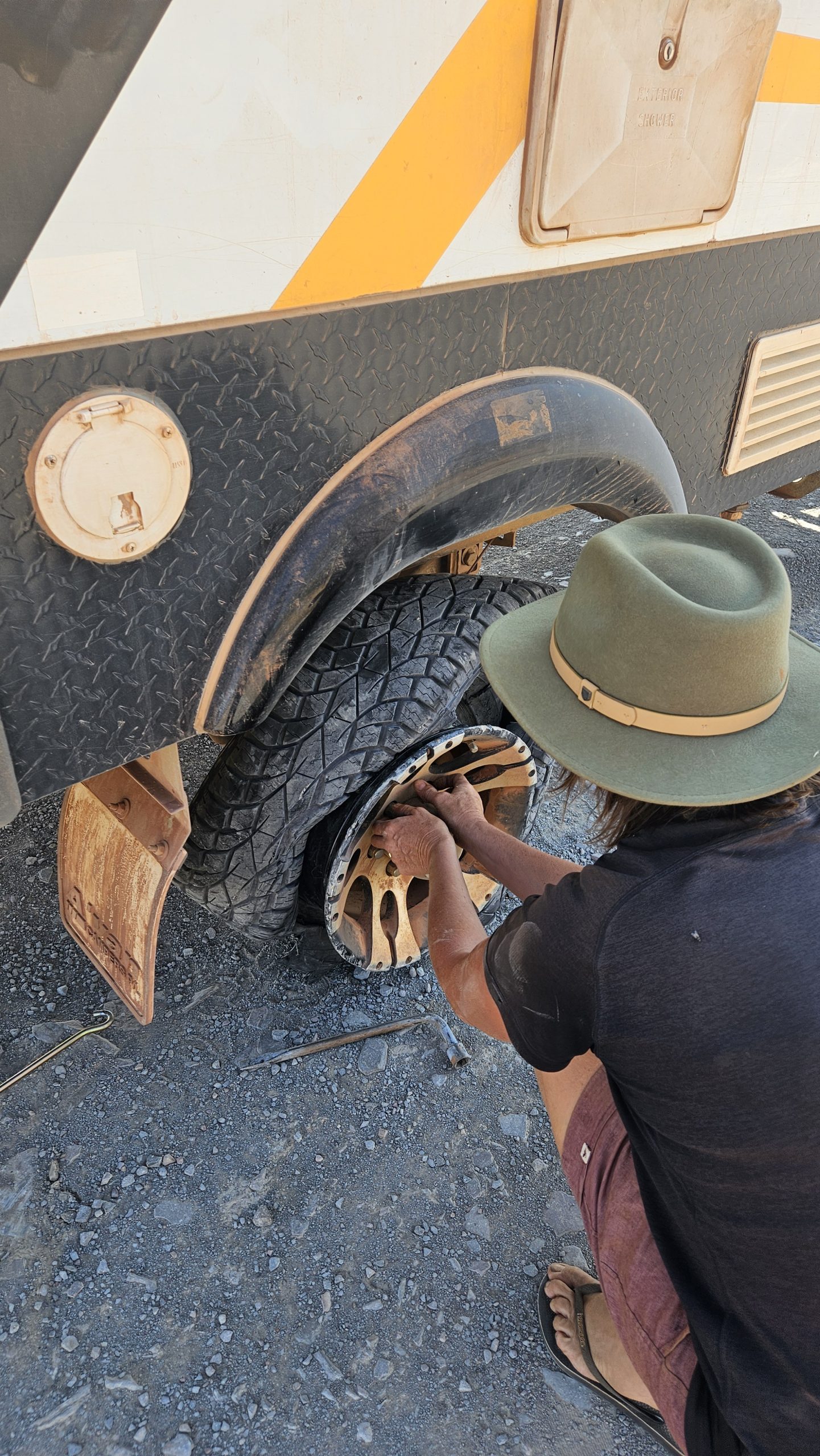
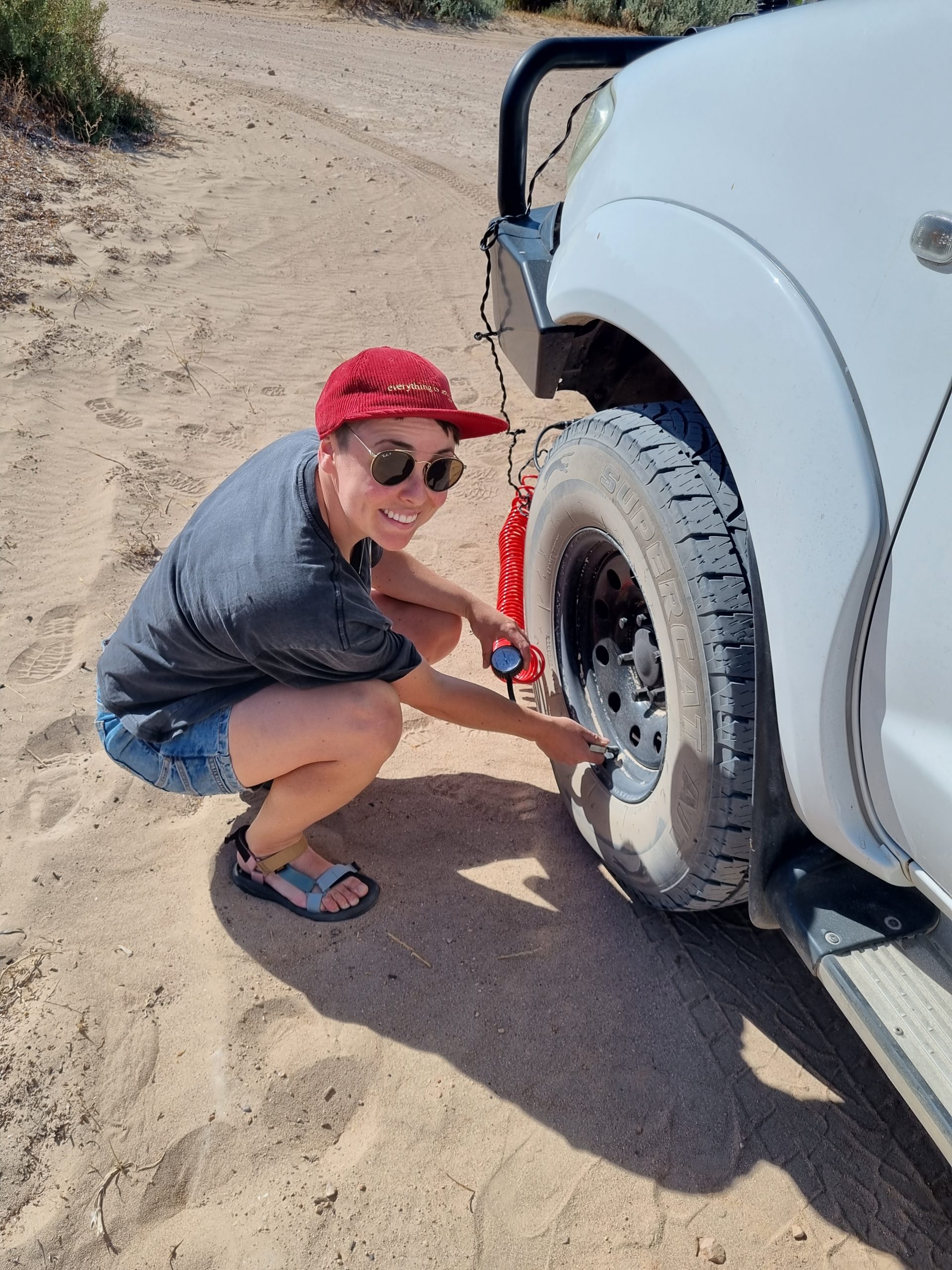
To prepare for these off-road missions, we invested in proper recovery gear — recovery tracks, an air compressor, quick tyre deflator, snatch straps, handheld UHF, puncture repair kit, shovel and jump starter.
If the remote outback is calling your name, make sure you’re geared up and can rescue yourself if needed. There isn’t always someone around. And using someone else’s gear kind of goes against the bush code of conduct.
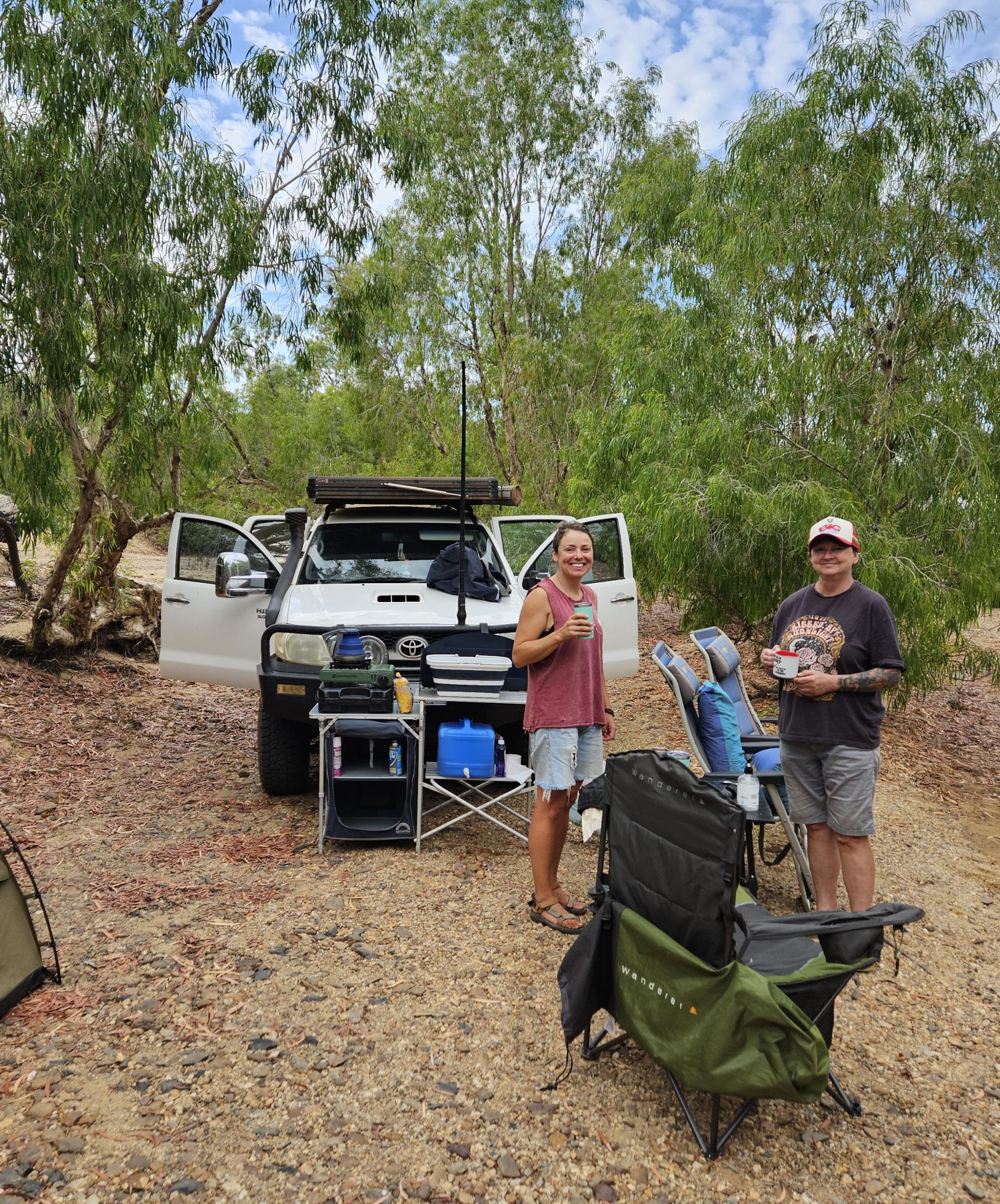
We bought a stack of outdoor camping furniture off Facebook Marketplace before hitting the road. It’s incredible how much gear ends up on there — and a lot of it is unused or in great condition.
Camping and off-road travel seem to be dreams many people gear up for with the best intentions… but never quite get around to. As a result, secondhand platforms are flooded with quality touring gear.
If you’re starting out, this is one of the easiest ways to stretch your budget without sacrificing your setup.
The amount of water you can carry will dictate how long you can camp off-grid in areas without easy access to supply. It’s the first thing you’ll leave camp to try and find when you run low.
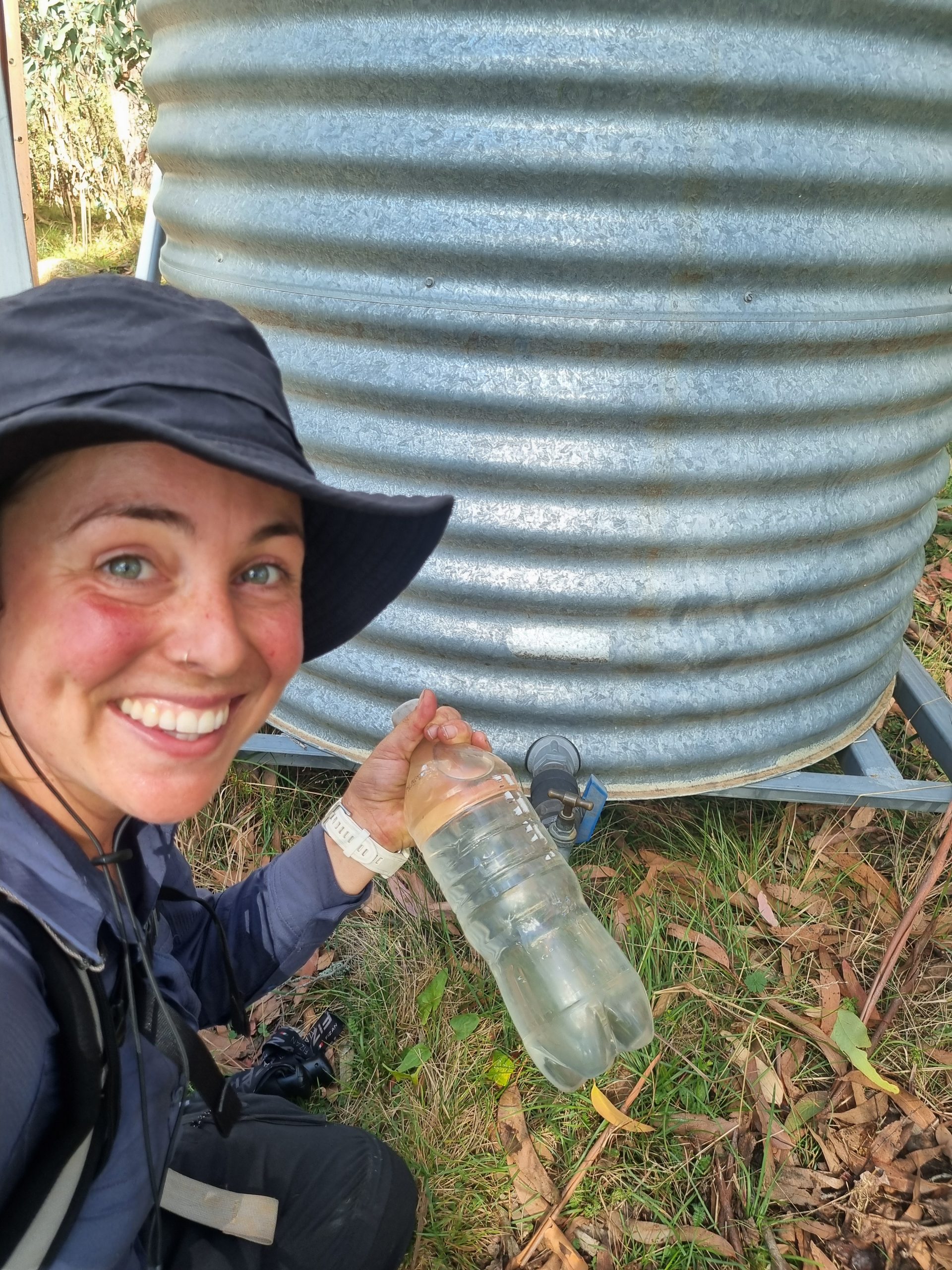
We use a mix of plastic jerry cans and collapsible water containers to increase storage capacity. Carrying a water filter for emergency use is also smart — it allows you to treat and drink water from almost any source, even shallow, murky pools. If you don’t have a filter, boiling is a solid backup.
Having the WikiCamps app installed also helps you plan ahead and locate water sources.
Our caravan had a 70-litre below-floor tank, which we supplemented with two 20-litre water carriers for long, dry stretches. When travelling in our Hilux with the rooftop tent, we carry up to 70 litres using jerries and collapsible containers.
The longest we’ve gone without water access? Two weeks.
The amount of power you need for vanlife varies wildly. It depends on your gear choices, lifestyle and energy habits.
We run a pretty light setup, relying mostly on 12-volt gear and old-school methods. Instead of a powered 240v kettle, we boil water in a collapsible kettle on the gas stove. Instead of a toaster, we brown bread slowly in a pan.
Microwave? Dishwasher? Forget it.
The only 240-volt appliances we carry are a laptop, plus a rechargeable chainsaw and drill. We charge them using a small inverter while we drive, drawing power from the alternator so we’re not draining the auxiliary (house) battery.
Simple setup. Less to go wrong.
Outdoor Connection 12v fan
When the heat bites, a solid 12-volt fan is the difference between sleep and misery.
Head net
There’s nothing worse than eating flies and constantly swatting your own face. Some of the most beautiful places in Australia come with relentless flies — be prepared.
JBL Flip
What’s life without music? Great sound, rugged build, water- and drop-resistant. It’s survived plenty with us.
Campmaster butane camping stove
Cheap, compact and easy to stow. Perfect for quick meals and a great backup when a town runs out of LPG (which has happened to us — twice).
Air compressor
We’ve had stacks of use out of ours. Being able to deflate and reinflate tyres on the go has taken us across some of Australia’s most beautiful beaches.
YETI Rambler 10 oz Tumbler
Spill-resistant, keeps drinks cold and coffee hot while packing up or rolling on. Also doubles as a camp wine glass. If one thing serves multiple purposes on the road, it’s a winner.
Engel 350w inverter
Lets us charge the laptop while driving. Movie nights when the weather turns chilly? Elite. It also makes remote work possible.
Nitecore headlamp
We use a headlamp more than a torch — hands-free for cooking, collecting firewood, or setting up in the dark. Essential backup lighting.
KickAss MPPT solar charge controller
The link between solar and your battery bank. An MPPT maximises solar output to charge your battery efficiently. We love ours because the digital screen gives real-time, at-a-glance data — battery voltage, amps, the lot.
A decent compressor fridge
We’ve run both a Dometic chest fridge and a Bushman’s upright. Both were brilliant — and miles better than a three-way fridge. Compressor (12v/240v) fridges hold temperature better and cool faster than three-way (12v/240v/gas) units.
Because we’re not weekend campers. This is our life.
We’ve driven corrugations that shake weak gear to bits. We’ve crossed remote tracks where help isn’t coming. We’ve plugged tyres in the dirt, repaired leaking pipes in the bush, and troubleshot 12V systems by headlamp when the battery died overnight.
We’ve travelled through some of Australia’s most demanding regions — from the Tip of Australia to deep into the Kimberley.
And we’ve lived in multiple setups:
Want to check out our full list of vanlife gear we use and love? Check out ‘Our vanlife essentials’ page.
These vanlife essentials aren’t just practical. They’re the systems, comforts and small rituals that we’ve been honing since we began our vanlife adventure in late 2023.
If it’s on this list, it’s because it’s earned its place the hard way.
Gear either proves itself out here — or it gets ditched at the next town.

When travel savings run low, working on the road can keep the adventure rolling — and give you time to truly explore places like a local.

We road-tripped from Adelaide to Melbourne for $1 a day. Here’s how campervan car relocations work — and the catches.
Developed and tested on some of Australia’s toughest trails and in extreme weather, these 15 hiking gear hacks will elevate your hiking experience.
From herding goats to cuddling cats, we’ve discovered the magic of house and pet sitting—here’s our guide to living like a local while on the road.
Sign up to receive our latest travel stories, tips, tricks and destination guides.
We honour the ancient cultures of the First Nations peoples whose land we travel.
Copyright © Franky Roams | 2026 | All Rights Reserved