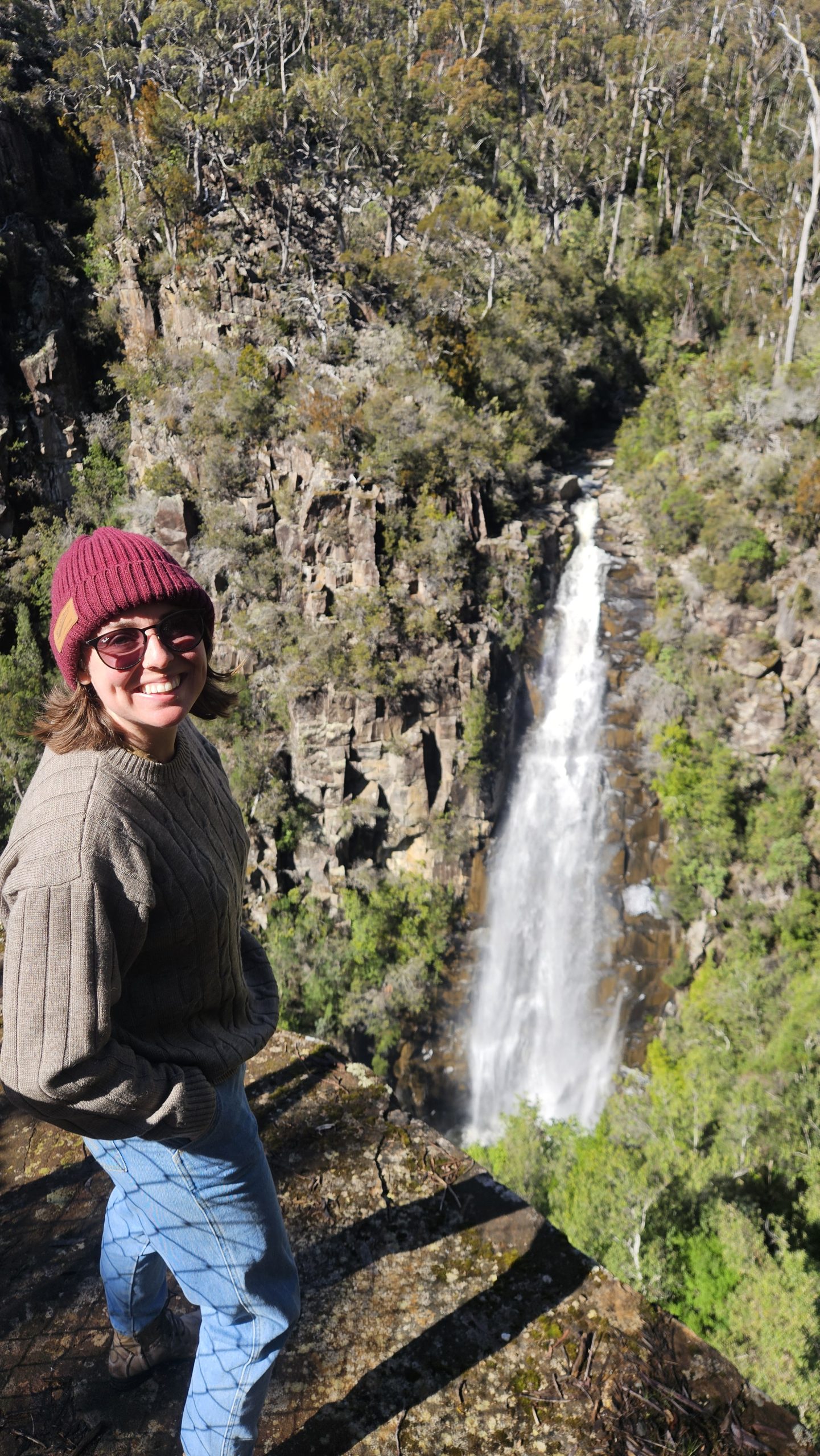
Tasmanian waterfalls you don’t want to miss

Six months chasing waterfalls across Tasmania — from hidden alpine cascades to iconic rainforest giants. Here are 12 worth adding to your Tassie road trip.

As part of an epic six-month adventure around Tasmania, we went searching for the island state’s most spectacular waterfalls — and wow did we find some beauties.

From a hidden alpine cascade on the Central Plateau to Tassie’s most photographed waterfall, these are the falls that stopped us in our tracks.

If you’re planning a Tassie road trip, these 12 waterfalls absolutely deserve a spot on your itinerary.

1. Meander Falls

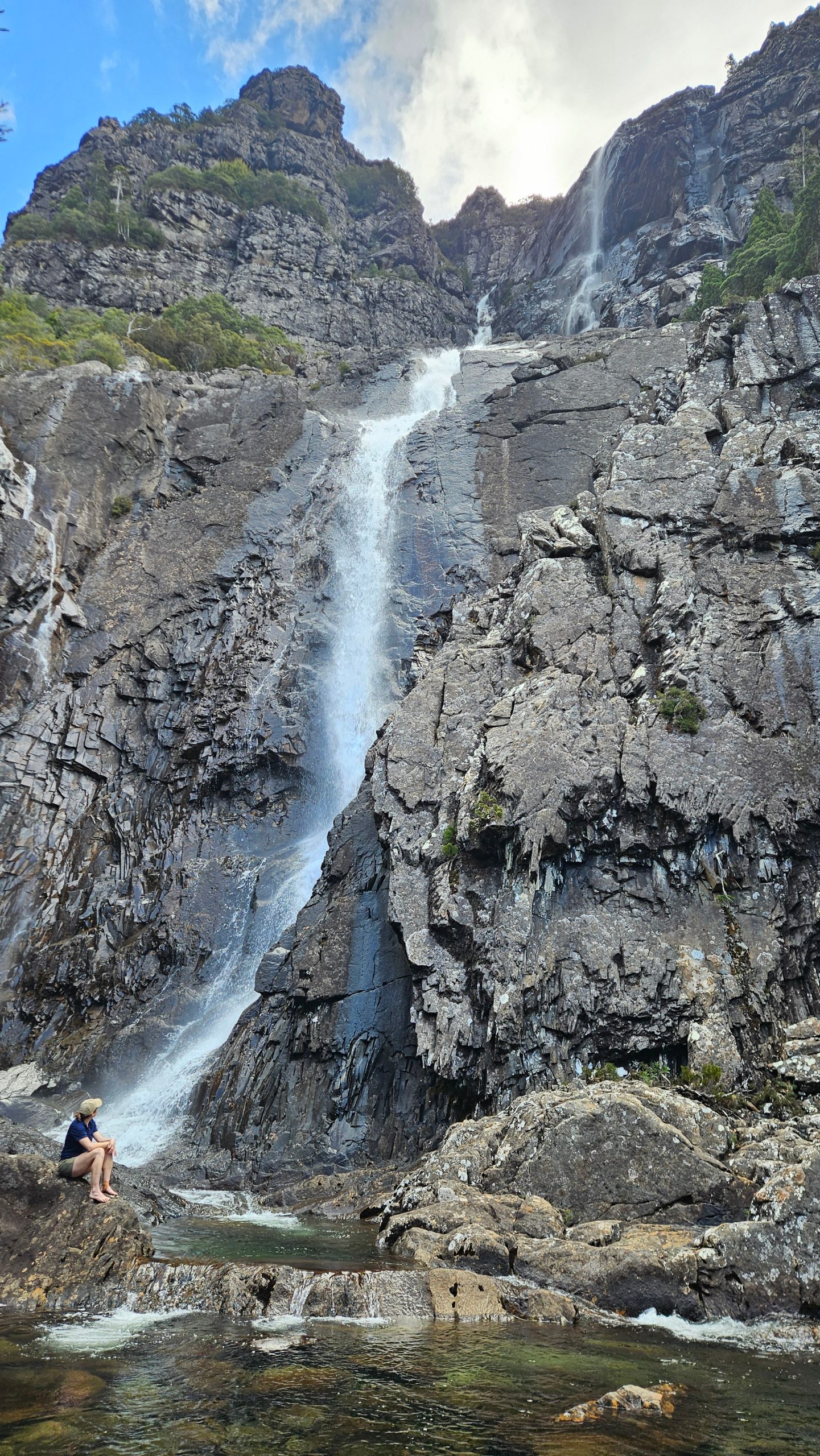
Standing beneath the 130m thunder of Meander Falls felt truly wild.

Located in Meander Forest Reserve, a 10km return trail climbs steeply through beautiful wet forest to one of Tasmania’s most spectacular waterfalls.

Plunging through a cleft in the Great Western Tiers, Meander Falls sits within the Tasmanian Wilderness World Heritage Area.

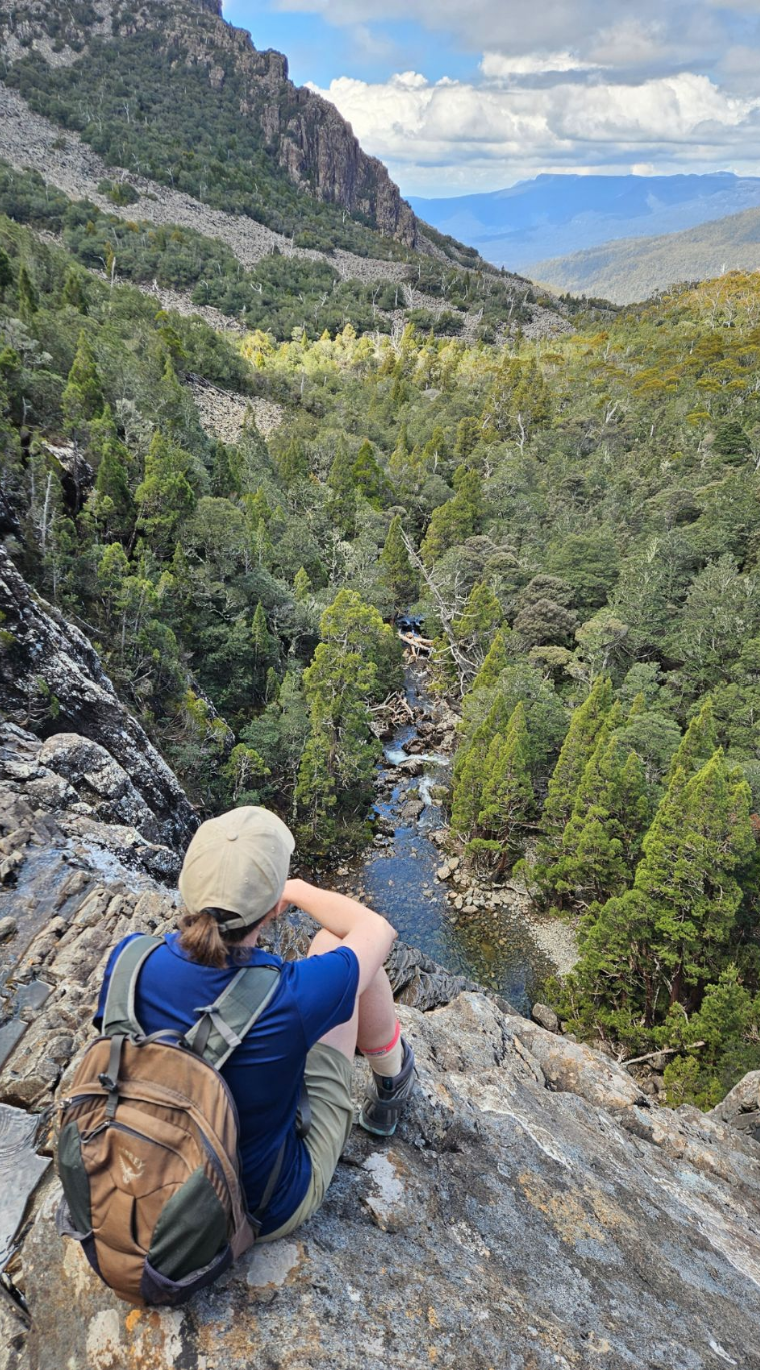
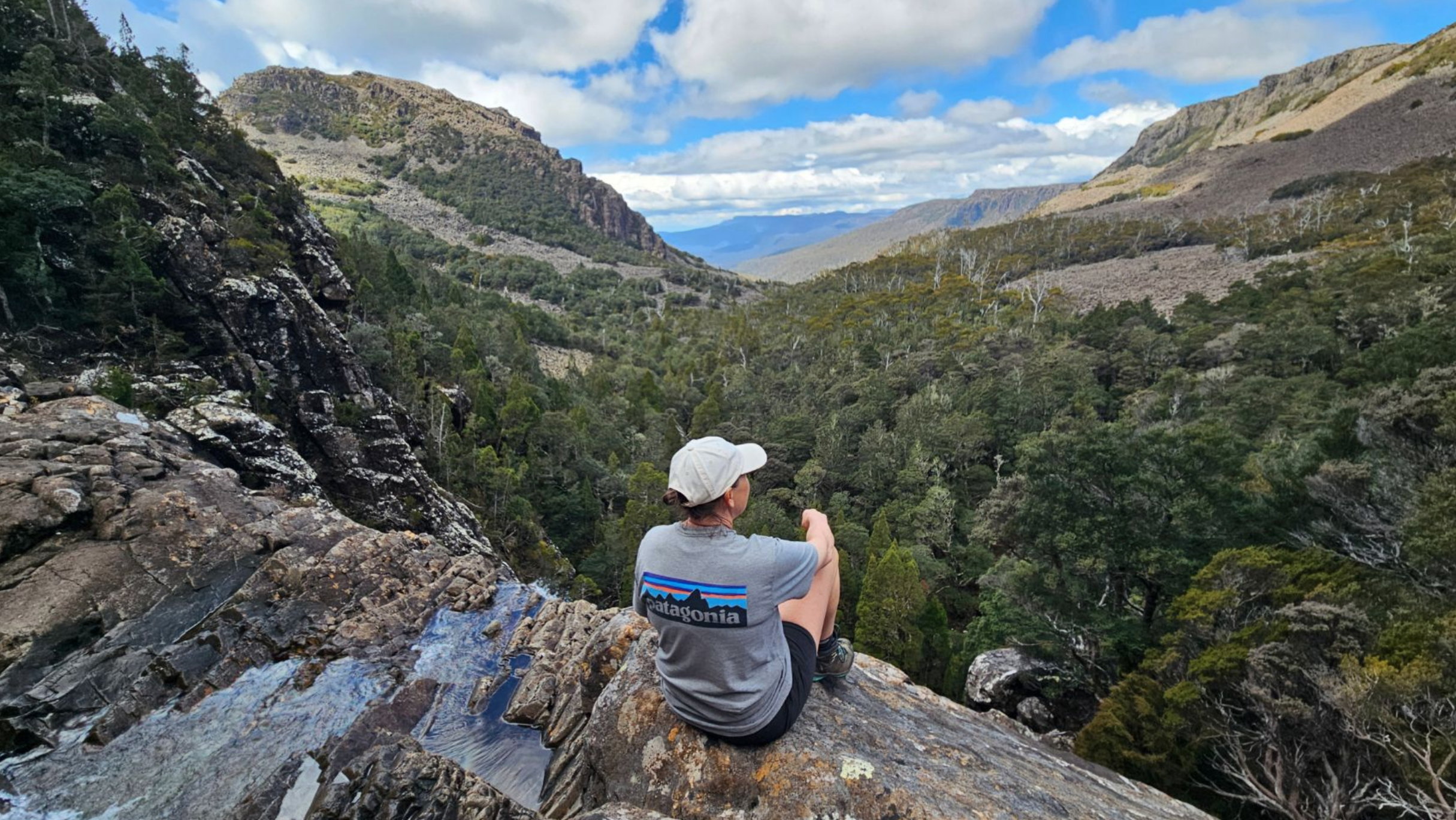
We followed the flow higher, cascade by cascade, until the valley and its winding river stretched out beneath us. The view from the top tier was absolutely incredible.

The deets:

  • Distance: 10km return
  • Time: 4.5 to 6 hrs
  • Grade: 4 (bushwalking experience recommended)
  • Location: Near Meander (30km south of Deloraine)

Listed among Tasmania’s 60 Great Short Walks, the track hugs the banks of the spectacular Meander River, where several small cascades plunge into sparkling pools. It’s a quiet path that feels far from anywhere else.

 2. Russell Falls

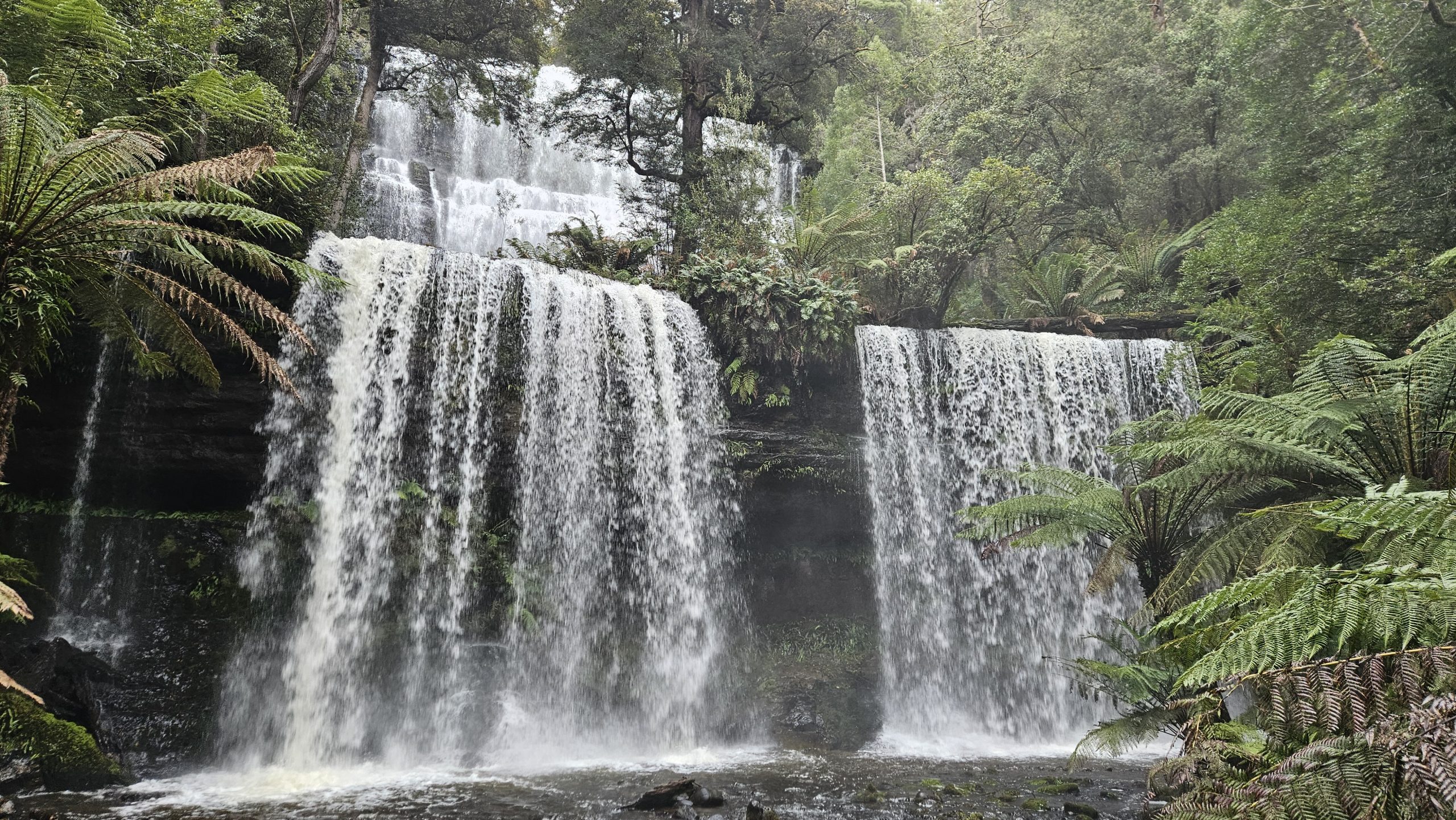
Russell Falls is Tasmania’s most photographed waterfall — and we can see why.

Located in the heart of Mt Field National Park, this 50m cascade is not just stunning, it’s also incredibly accessible.

As we stood in the mossy, deep green forest and watched the water spill down over multiple tiers, we couldn’t help but just stand there in awe. It’s the kind of place where you want to linger.

The deets:

  • Distance: 1.4km return
  • Time: 25 mins
  • Grade: 1 (wheelchair accessible)
  • Location: Near the Mt Field Visitor Centre (70 mins from Hobart)

Up for more of a challenge? Tackle the 6km (2.5hr) Three Falls Circuit like we did. This also takes in Lady Barron Falls and Horseshoe Falls.

Tip: If you’re camping overnight at Mount Field, check out the glow worms along the track to Russell Falls after dark.

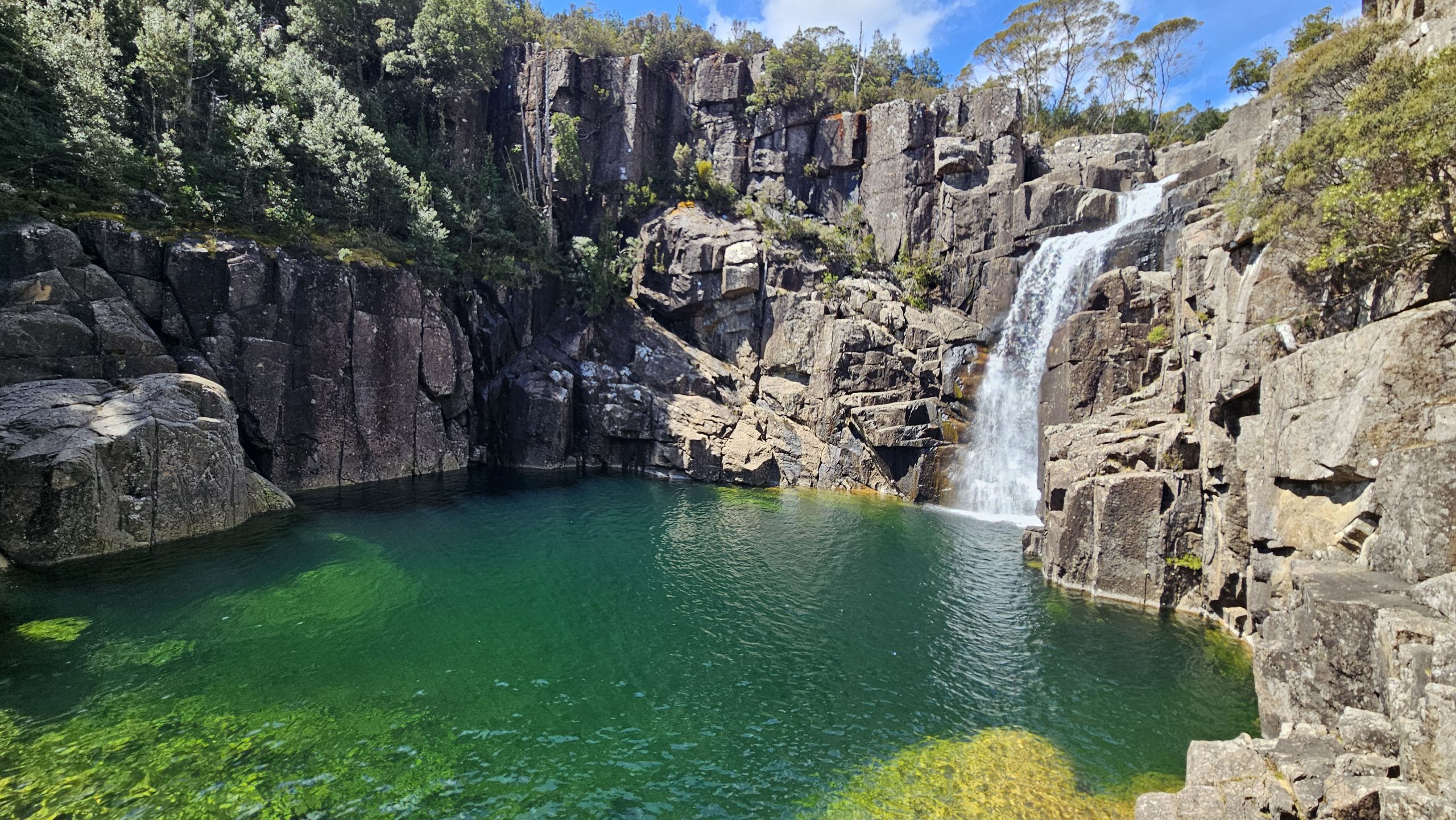
3. Parsons Falls

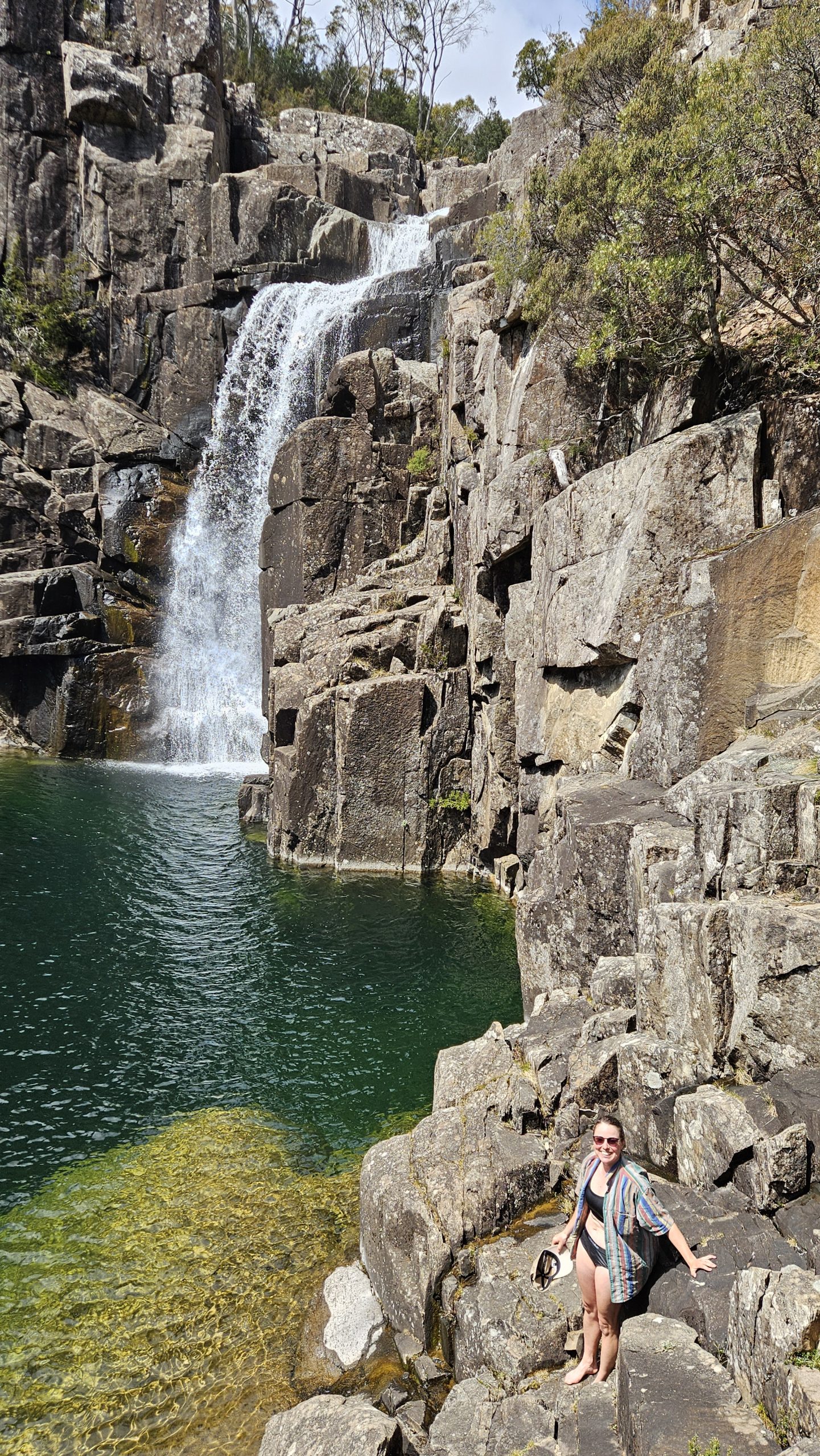
Looks like something from WA’s iconic Gibb River Road, right? Think again.

Introducing Parsons Falls — where the wild west meets alpine Tasmania.

This hidden gem could easily be mistaken for one of the Kimberley’s rugged gorge swimming holes — the kind you find after miles of dusty track.

But perched at 1,030m on Tasmania’s Central Plateau, this crystal-clear cascade transforms into a snow-covered icy wonderland in winter.

A short but steep unsigned trail leads you in, and when the sun hits the water, it feels like you could be anywhere.

The deets:

  • Distance: 3.5km return
  • Time: 1 hr
  • Grade: 4 (bushwalking experience recommended)
  • Location: Devils Gullet State Reserve (2 hr from Launceston)

Directions: From Lake Mackenzie Rd, 150m from the lake, turn right onto a vehicle track and drive to the gate. Walk 2km to the water channels, turn right toward the Fisher River pipelines, then descend to the river. Follow it downstream to the top of Parsons Falls. The route to the base is steep and unmarked.

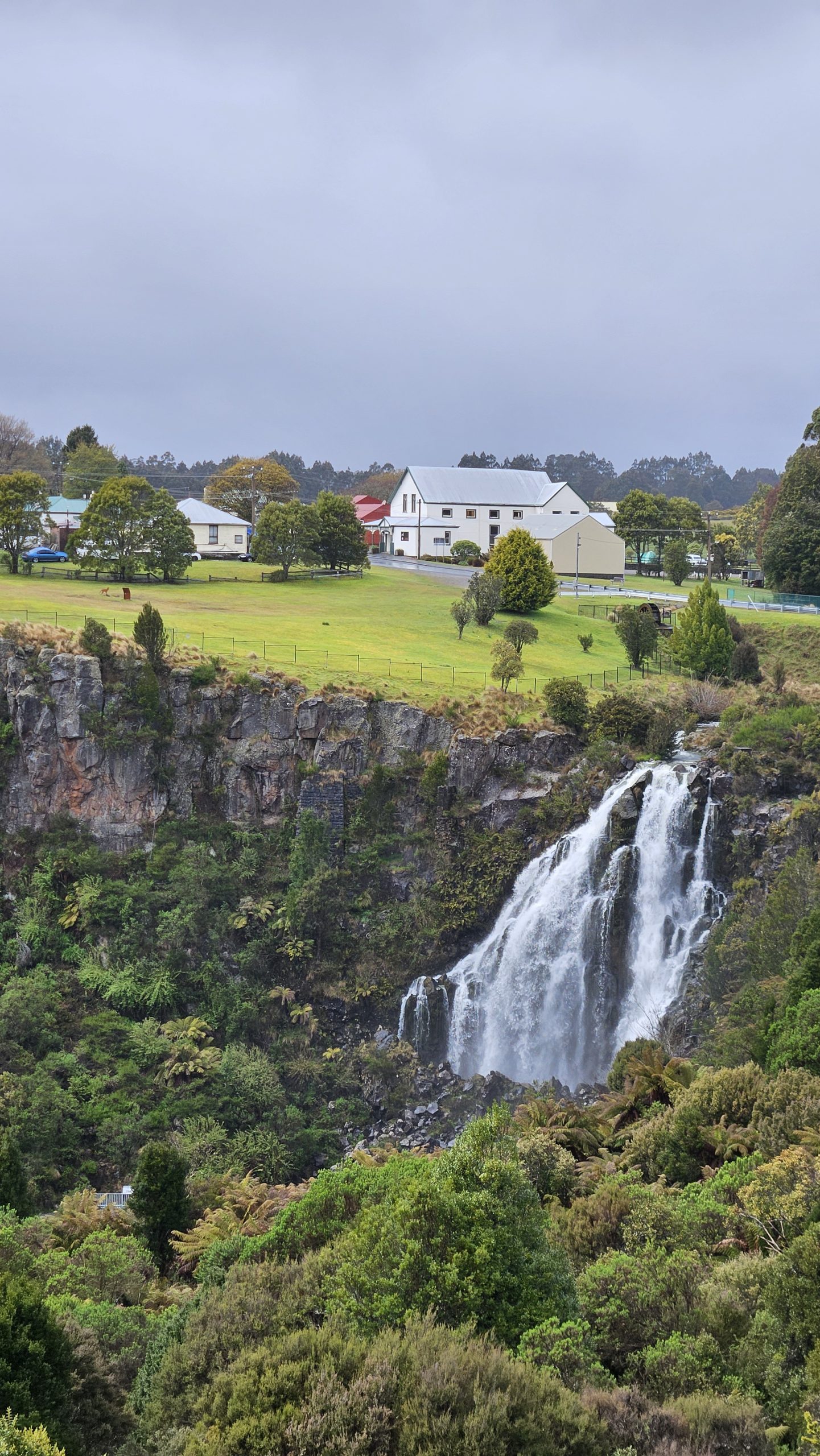
4. Waratah Falls

In the tiny Tassie village of Waratah, a waterfall plunges into a rocky gorge — its spray visible right from the main street.

It wasn’t the height or power of Waratah Falls that had us staring. It’s the fact that it sits right in the middle of town.

Take the short trail to the base, or soak up the view from Kings Park or the grand old Bischoff Hotel.

The deets:

  • Distance: 250m return
  • Time: 5 minutes
  • Grade: 1 (wheelchair accessible)
  • Location: Waratah, North West Tasmania

Just 62km south of Burnie, Waratah Falls is an easy addition to any North West Tassie road trip.

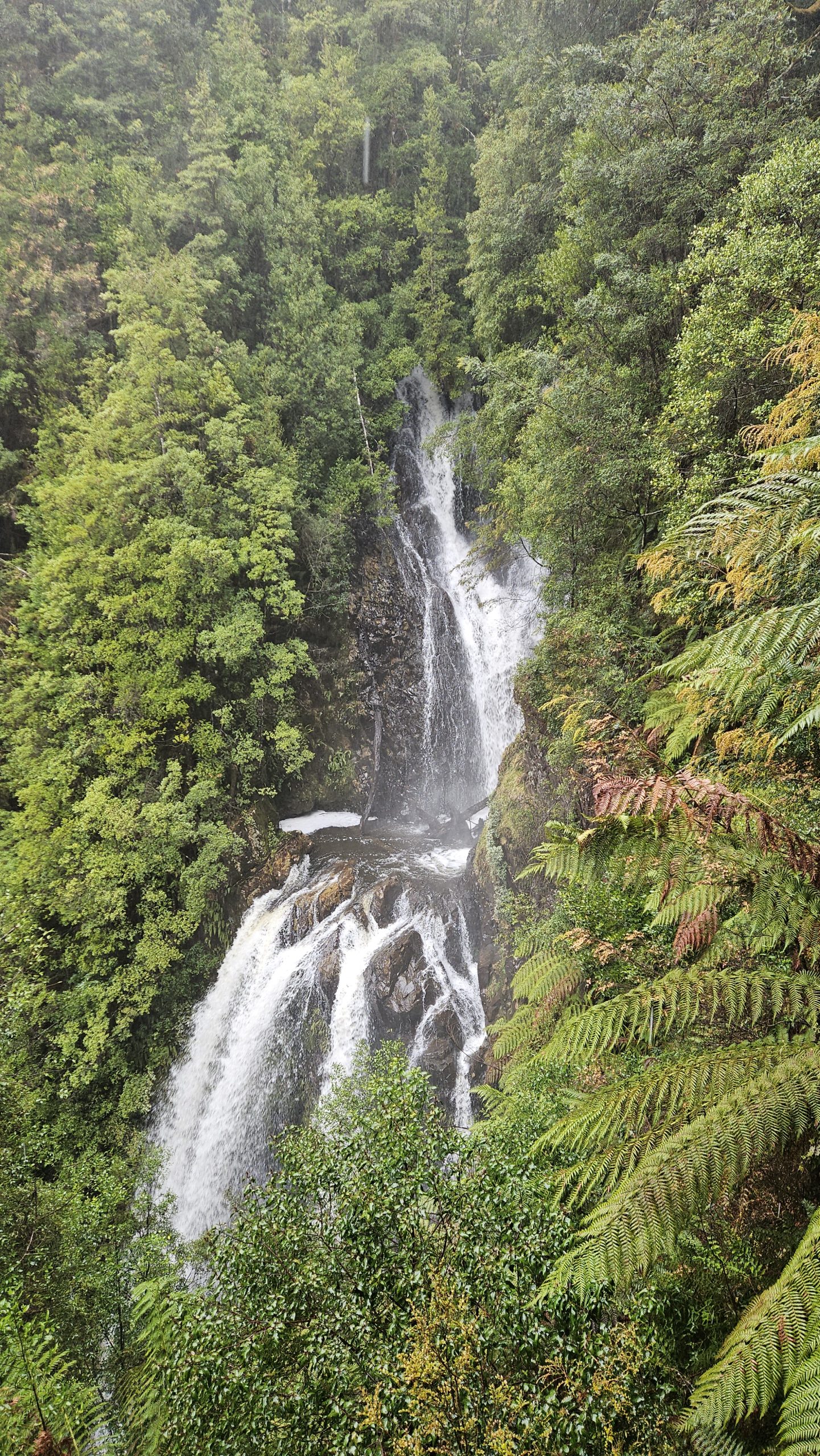
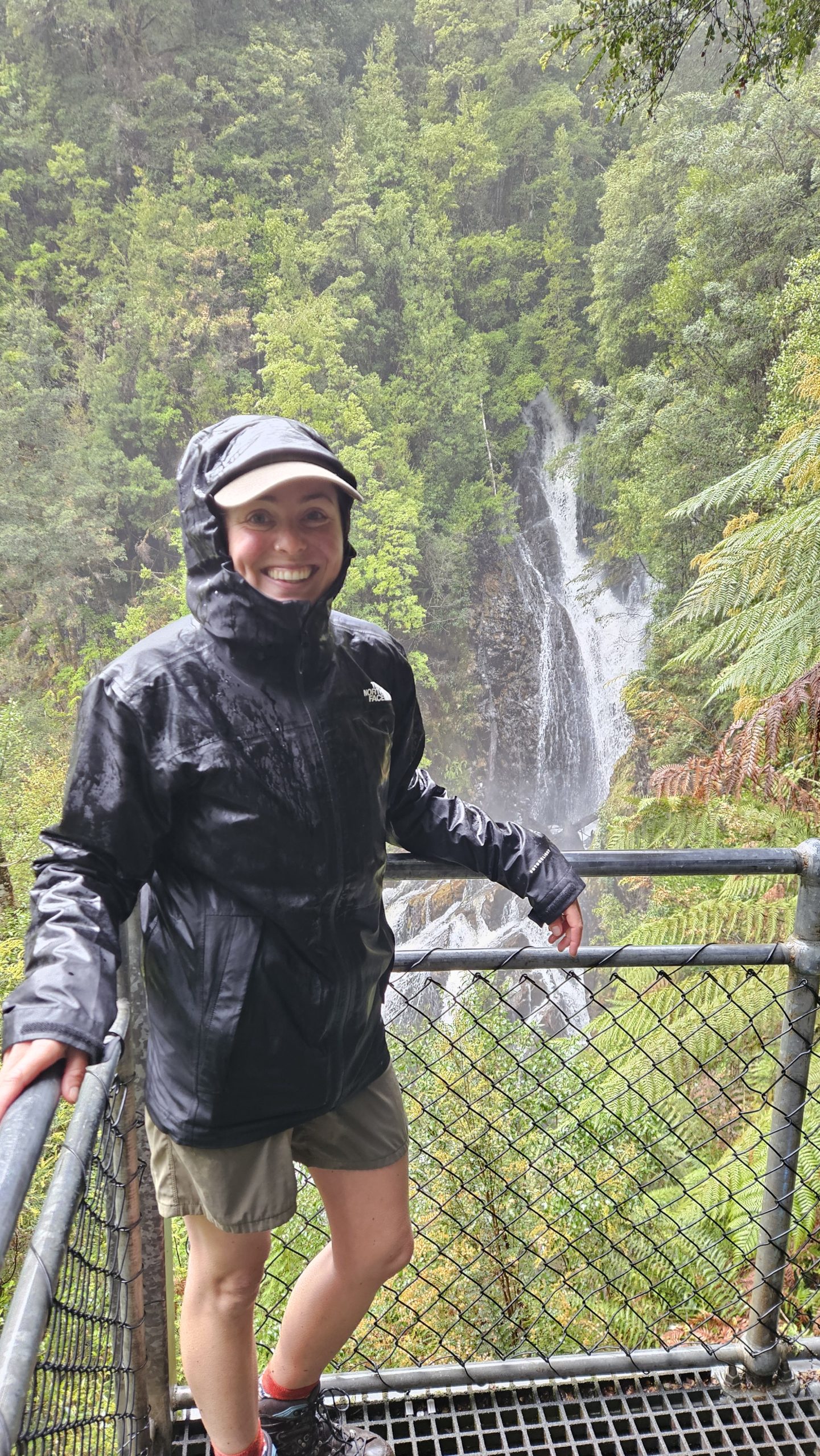
5. Philosopher Falls

Philosopher Falls was our first glimpse of Tasmania’s Tarkine Wilderness, and it felt like stepping into another world.

A multi-tier waterfall pours from a thick wall of greenery — pure rainforest magic.

The walk itself is just as beautiful, winding through ancient rainforest that feels endlessly green and impossibly alive.

This place is seriously special.

The deets:

  • Distance: 3.9km return
  • Time: 1–1.5 hours
  • Grade: 3 (some bushwalking experience recommended)
  • Location: 10km out of Waratah, North West Tasmania

The Tarkine (Takayna) is Australia’s largest cool temperate rainforest — and the second largest in the world. Check out the work of the Bob Brown Foundation in protecting this wild place.

6. D'Alton & Fergusson Falls

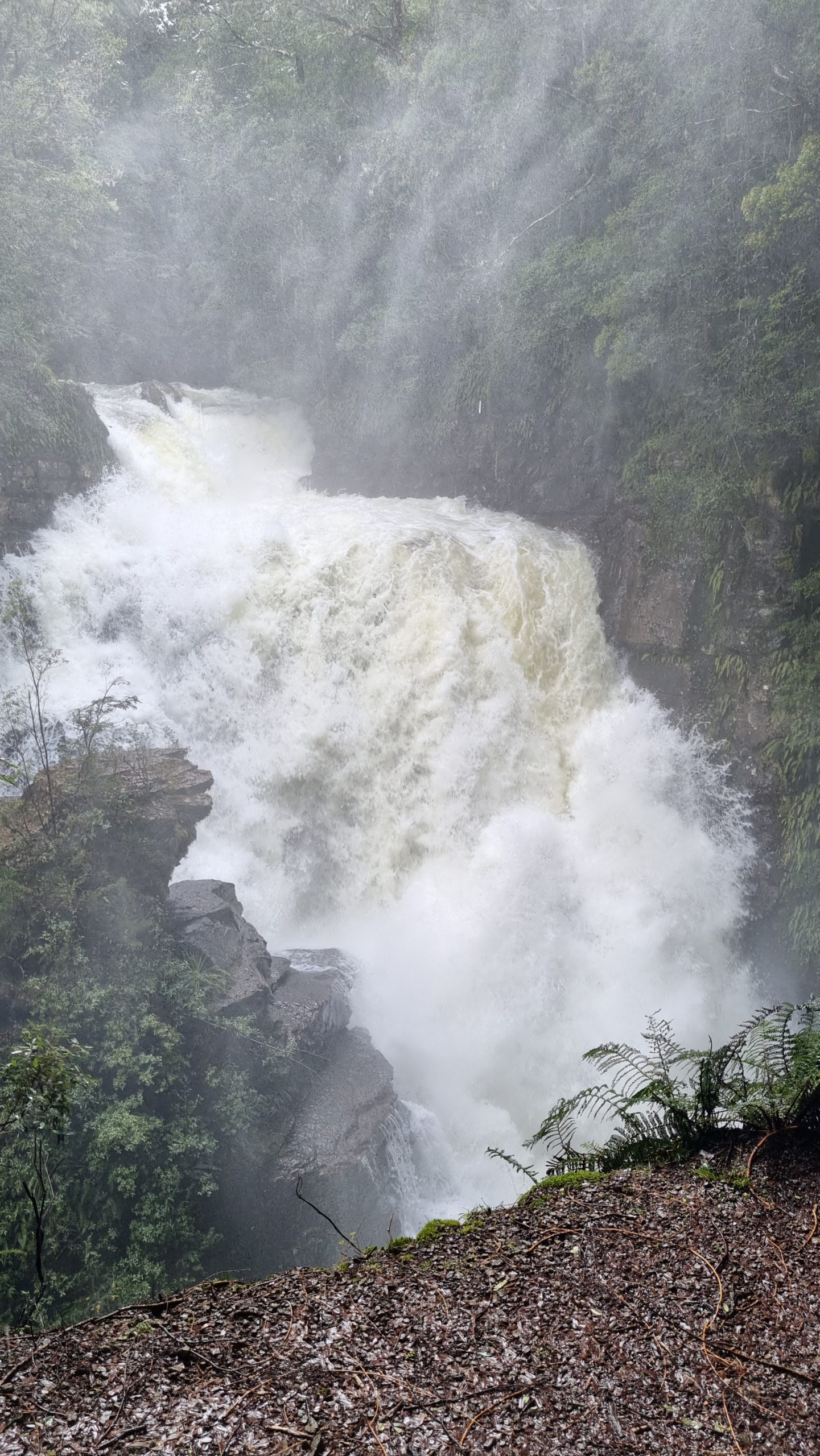
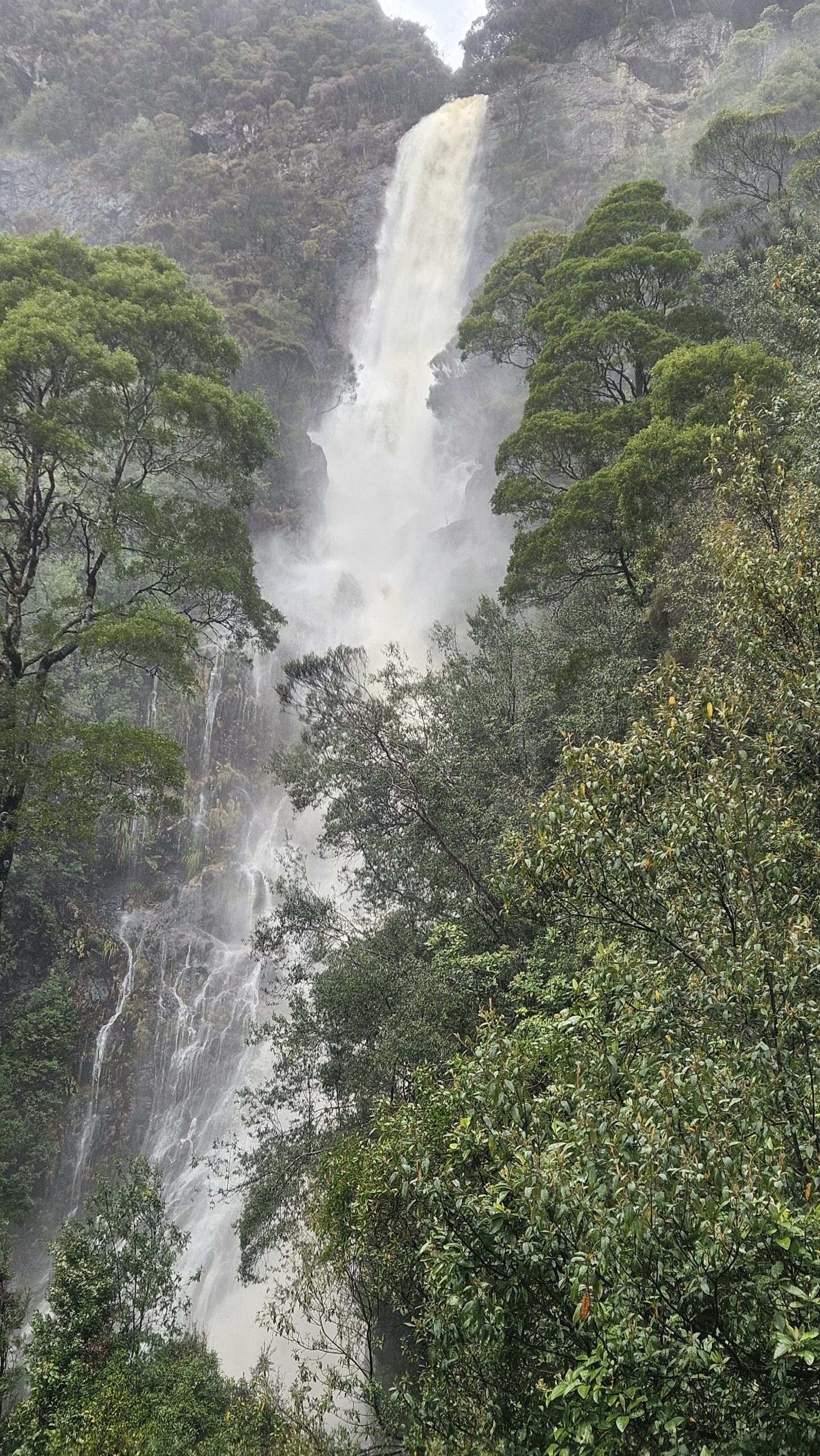
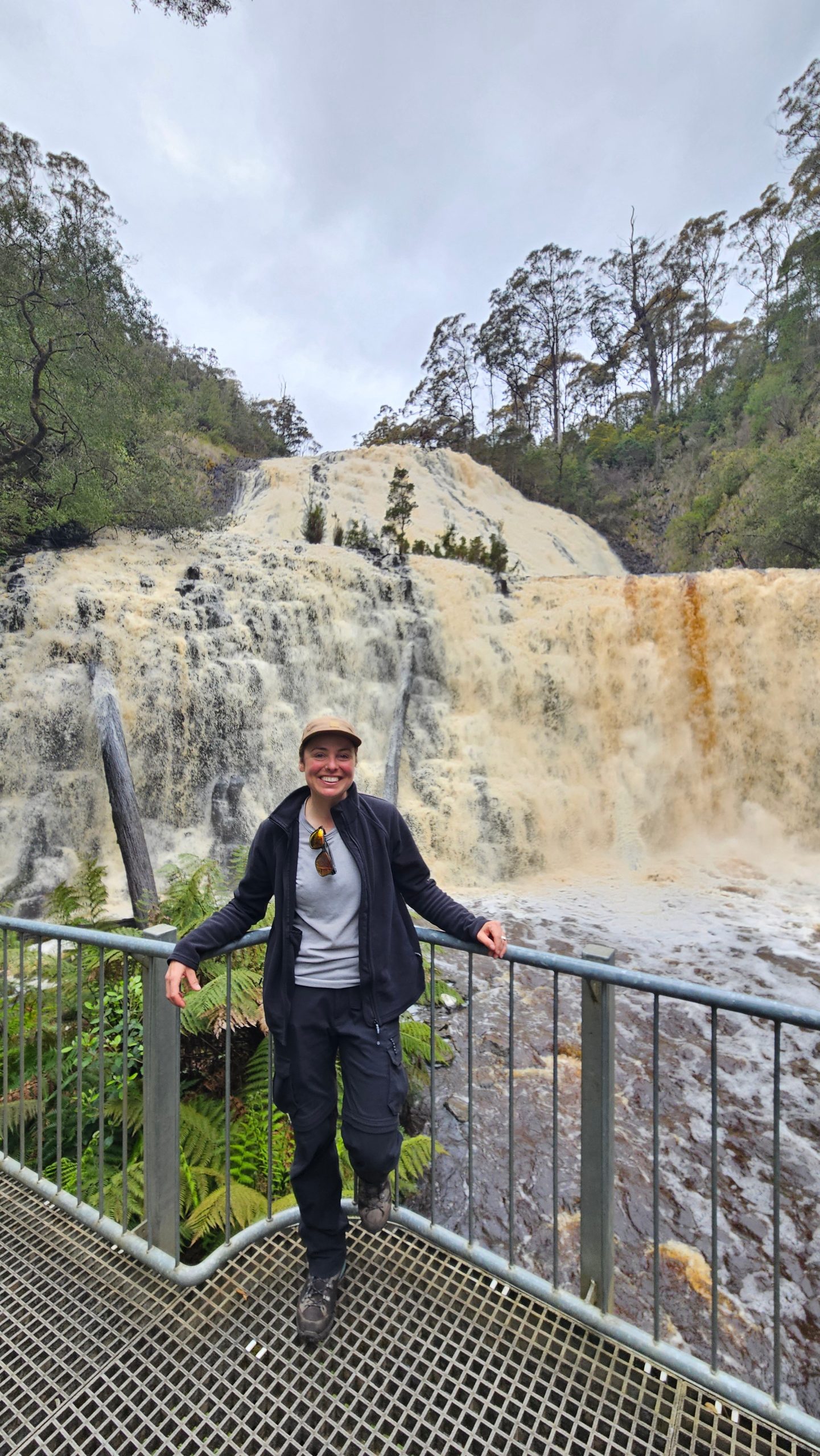
D’Alton Falls and nearby Fergusson Falls were raging when we visited during our Overland Track crossing in September 2025.

The falls are typically reached around day five when walking the Overland Track from Cradle Mountain.

Located on the Mersey River, what impressed us most about D’Alton and Fergusson Falls was the sheer volume of water surging over them.

They shine brightest during the wetter months of winter and spring.

The detour to D’Alton and Fergusson Falls begins about 2 kilometres past Du Cane Hut, roughly two hours’ walk from Kia Ora Hut.

The rainforest around the turn-off is some of the most beautiful anywhere on the Overland Track — a mossy green wonderland.

7. Westmorland Falls

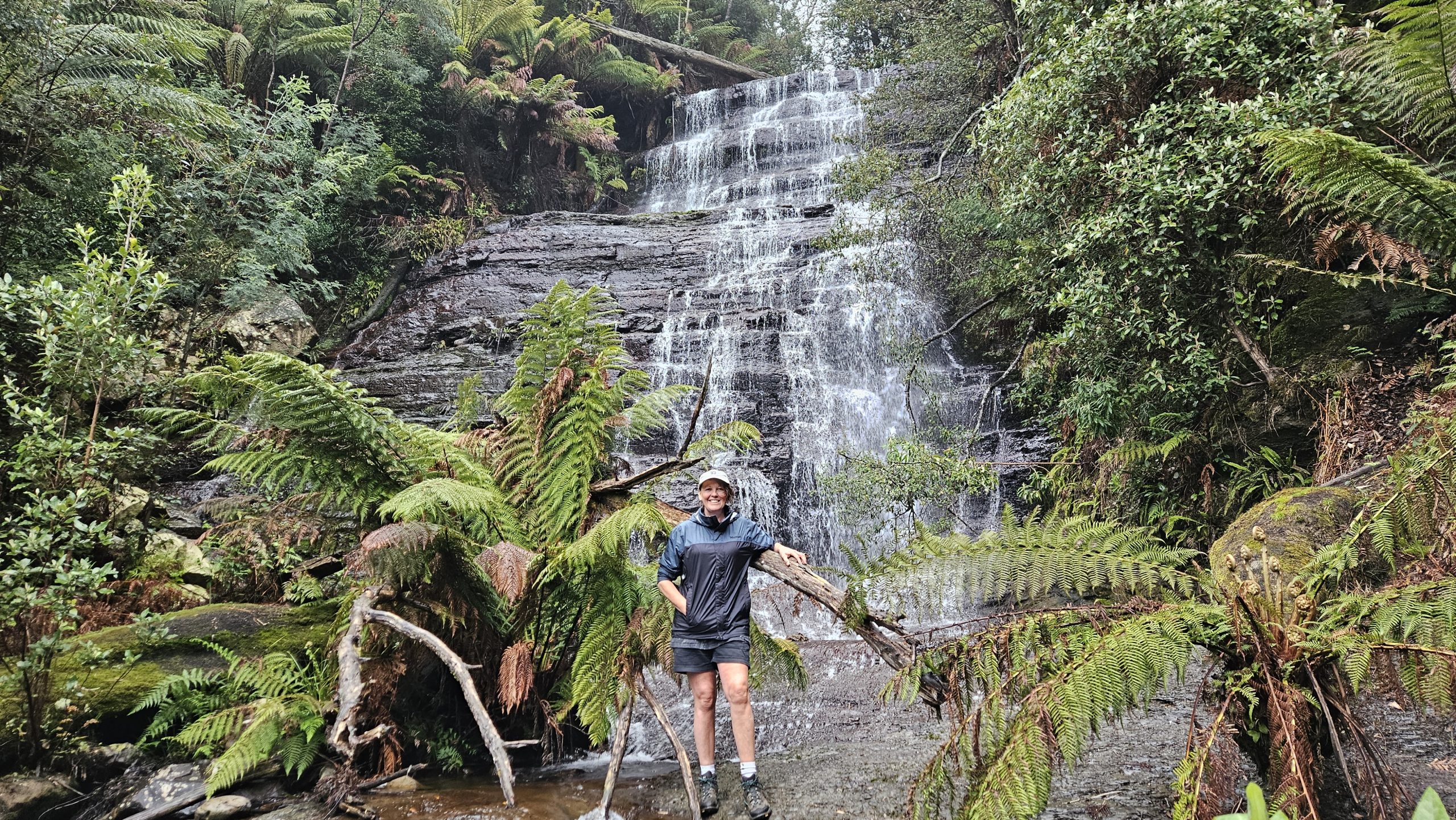
Westmorland Falls is a magnificent hidden gem tucked away in lush rainforest within Mole Creek Karst National Park.

The trail winds through some of the most beautiful rainforest we’ve ever walked through before reaching the base of the falls, where fossilised shells can be spotted in the rock.

The deets:

  • Distance: 4km return
  • Time: 2 hrs
  • Grade: 2 (suitable for most ages)
  • Location: 15 minutes from Mole Creek (follow Wet Cave Rd past the campground entrance to the small car park)

We spent a couple of beautiful wintry days roaming Mole Creek Karst National Park — a landscape carved by water and time.

Home to more than 300 caves, the park is best known for Marakoopa and King Solomons Caves. But we skipped the guided tours and explored a few spots a little off the beaten track instead.

We based ourselves at the free NP campsite, with both Westmorland Falls and Honeycomb Caves within walking distance.

Looking for a place to stay? Mole Creek Karst NP Campground is a highlight in itself, with rolling green farmland and the Great Western Tiers — including Mother Cummings Peak — stealing the show.

8. Liffey Falls

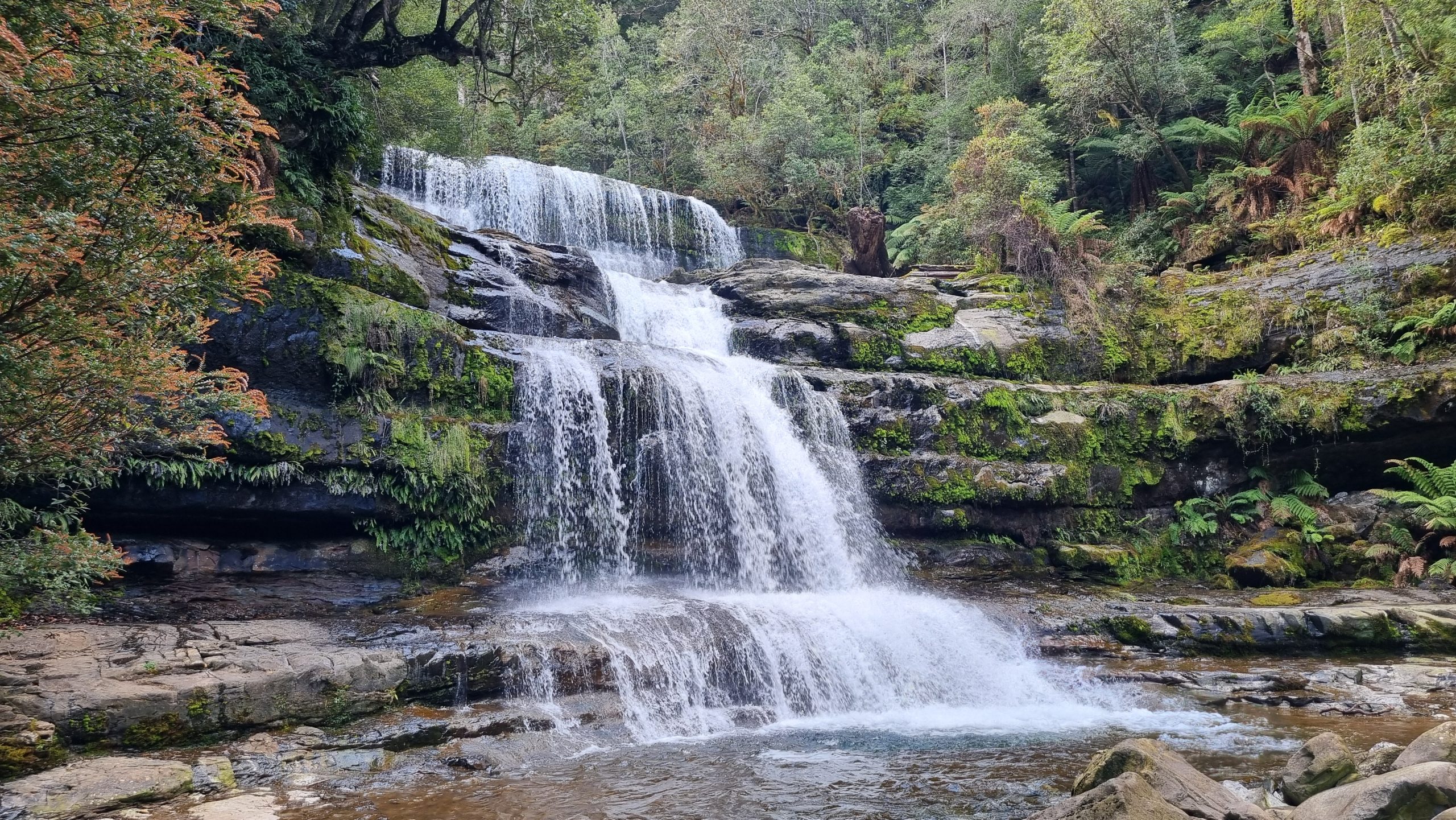
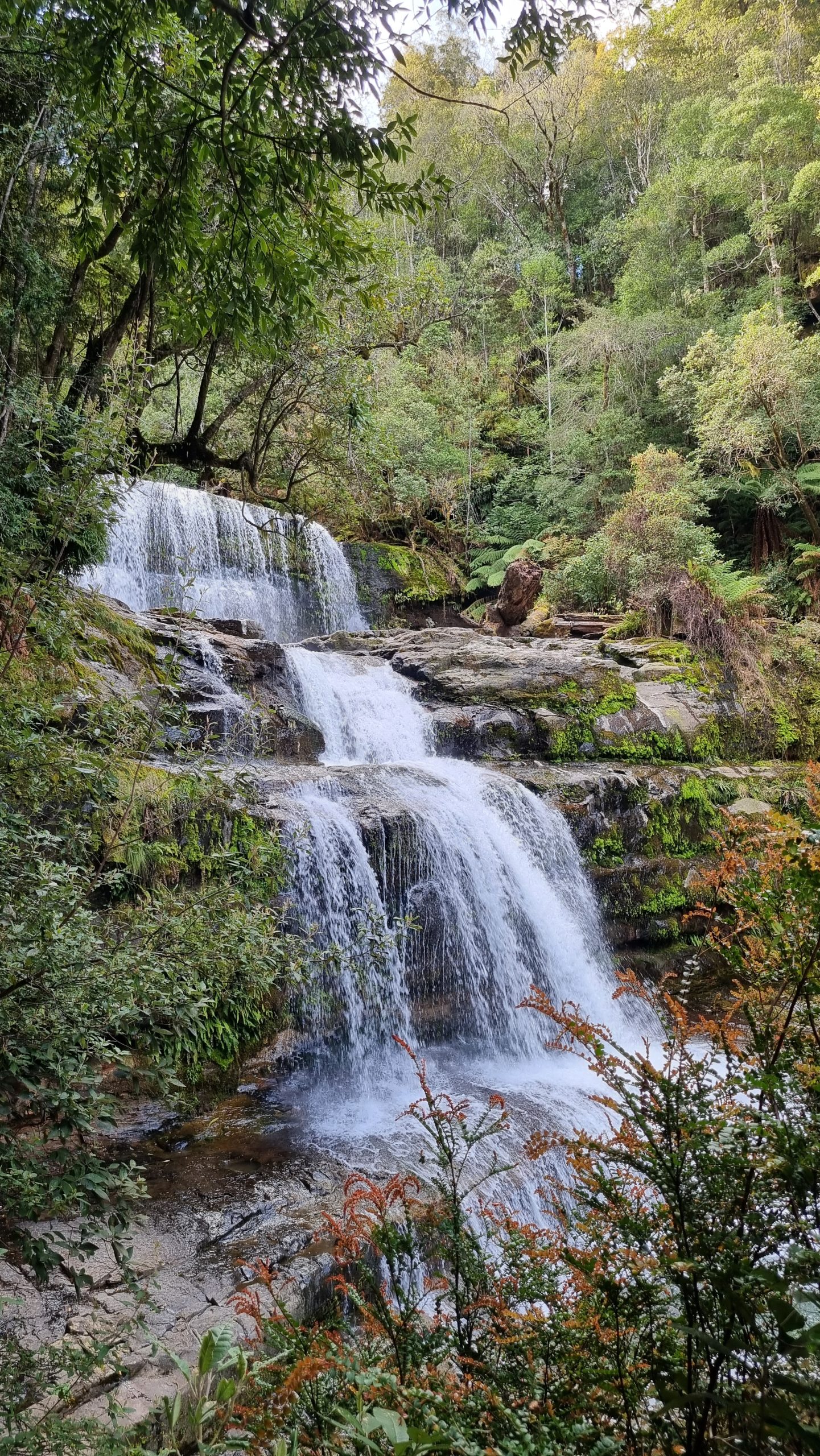
These beautiful multi-level falls are nestled deep in mossy forest beneath the spectacular Great Western Tiers. It’s the kind of place that feels slow, cool and ancient.

The major attraction of Liffey Falls State Reserve, there are two walking tracks that lead to the falls.

The track from the upper car park is shorter and well-formed, while the lower car park route is longer and a little rougher. Both trails pass through stunning rainforest and past four main cascades — Alexandra Falls, Hopetoun Falls, Albert Falls and finally Victoria Falls (commonly known as Liffey Falls).

We took the longer trail, following the Liffey River through myrtle forest and under towering ferns — and didn’t come across another soul. It was magic.

The deets:

  • Distance: Shorter track – 2km return  |  Longer track – 8km return
  • Time: Shorter track – 42 mins  |  Longer track – 3 hrs
  • Grade: 2 (shorter)  |  3 (longer)
  • Location: Southeast of Deloraine (53km from Launceston)

9. Meetus Falls

We love following dusty, bumpy roads to beautiful places like this.

Watching water thunder down the 50m face of Meetus Falls with no one else around felt incredibly special.

Meetus Falls sits on the Cygnet River and is the centrepiece of Meetus Falls Forest Reserve.

A short walk from the picnic area leads downhill to a viewing platform overlooking the falls and the valley beyond.

From the main track, another trail branches off to the river and the base of the cascades that make up Meetus Falls.

The deets:

  • Distance: Shorter track – 500m return  |  Longer track – 1.4km return
  • Time: Shorter track – 20 mins  |  Longer track – 30 mins to 1 hr
  • Location: Near Lake Leake (about 1 hour south of Bicheno)

If you’re keen to visit Meetus Falls, you’d better be prepared to get some mud on your tyres.

Tip: The falls are located on Mackay’s Rd, about 10km from the information stand. If you’re in a 2WD, it’s best to walk the last kilometre as the road gets pretty rough.

Looking for vanlife accommodation? Lake Leake Inn is about 25 minutes away and offers free camping for self-contained rigs.

Tip: Nearby Lost Falls pretty much runs dry all year.

10. Montezuma Falls

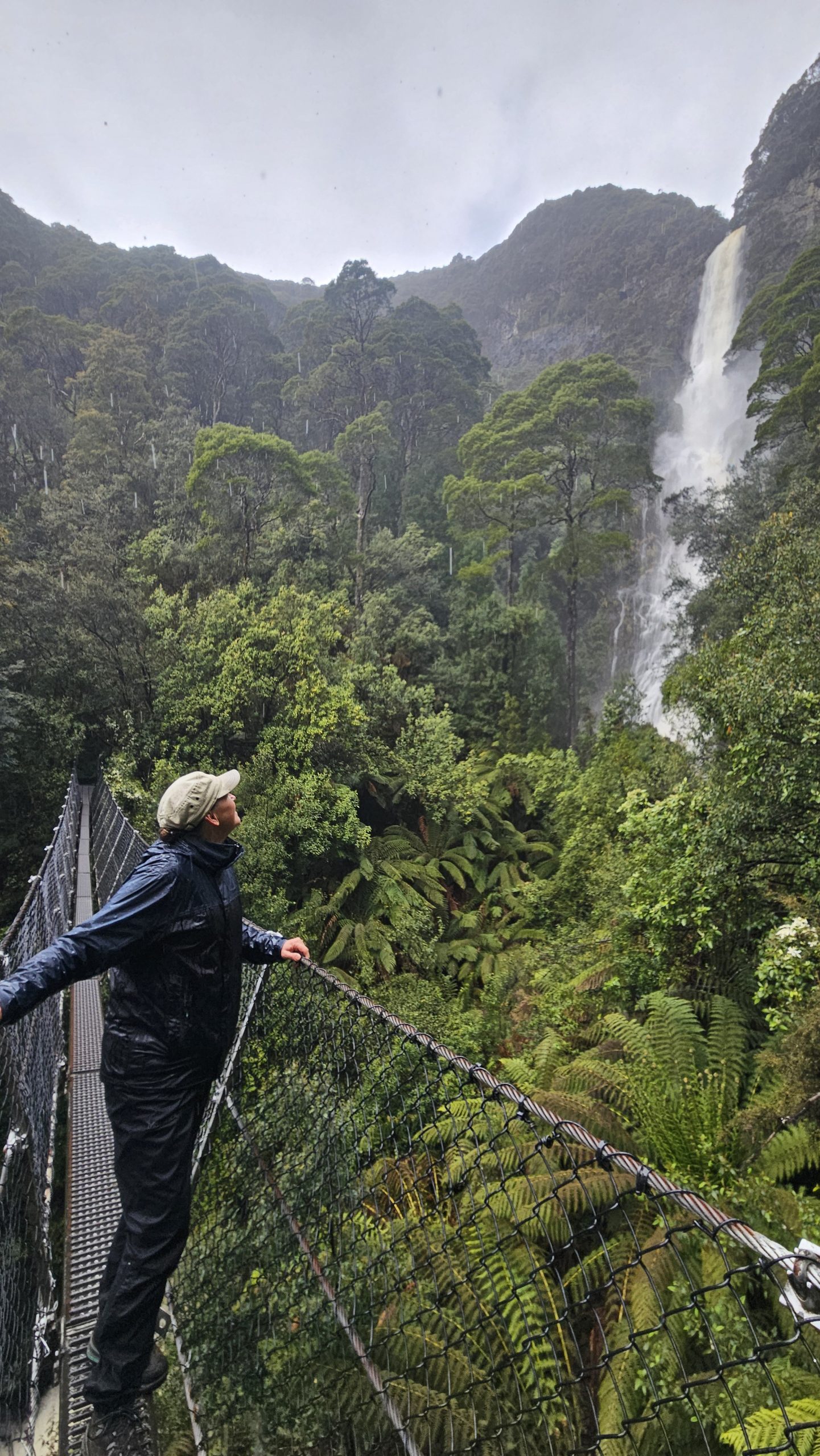
One of Tasmania’s largest waterfalls, this 104m single-drop giant is an absolute ripper.

Visiting the mighty Montezuma Falls was a humbling experience.

A suspension bridge spanning the gorge offers a thrilling perspective of the falls, while a viewing platform takes you right to the base.

The return walk follows the historic route of the former North East Dundas Tramway, leading through some of the most lush, moss-covered rainforest on Tasmania’s West Coast.

We walked in bone-soaking rain, but in true Tassie fashion the sun came out just as we were swaying on the suspension bridge.

Make sure you head to the base of the falls too — but be ready to get absolutely drenched.

The deets:

  • Distance: 11.5km return
  • Time: 3 hrs
  • Grade: 2 (suitable for most ages)
  • Location: Near Rosebery (1.5 hours from Strahan via the Murchison Highway)

11. St Columba Falls

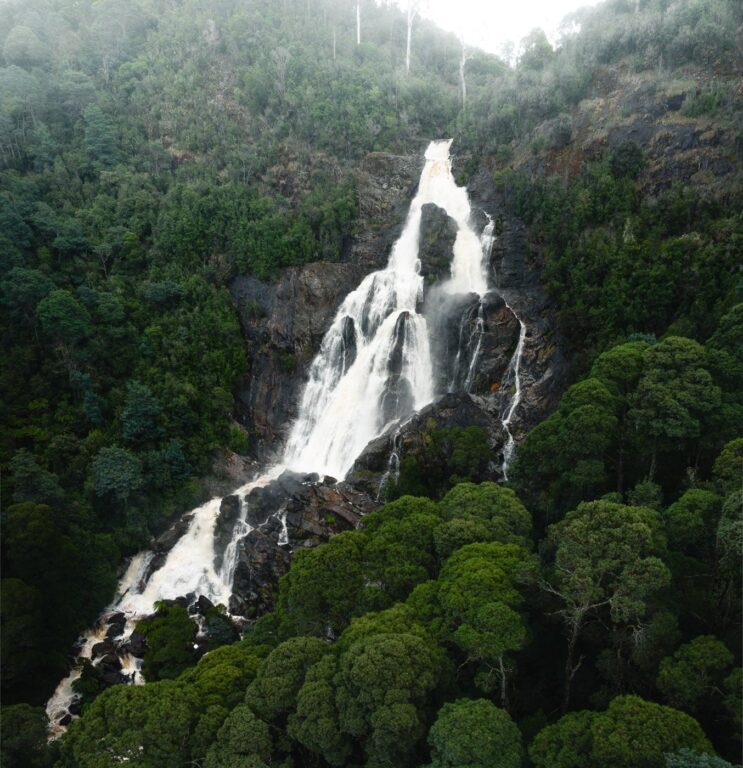
Good news for waterfall chasers — St Columba Falls has finally reopened after repair works due to  storm damage in 2024.

Tucked within lush rainforest near Pyengana, this 90-metre giant is one of Tasmania’s tallest and most spectacular waterfalls.

The short walk to the lookout winds through mossy rainforest, with towering tree ferns giving the whole place a wild, ancient feel.

The deets:

  • Distance: 1.2km return
  • Time: 20–30 mins
  • Grade: 2 (well-formed track with some steps)
  • Location: Near Pyengana (about 35 mins from St Helens)

Tip: Don’t miss the beer swilling pigs at Pyengana’s Pub in the Paddock.

Want somewhere to park up? The Pyengana Recreation Ground is a really nice donation campsite surrounded by green pastures, and offering toilets and hot showers (2 minutes for $2).

12. Dip Falls

Tucked deep in the spectacular Tarkine wilderness, you’ll find Dip Falls — one of Tasmania’s most unique waterfalls.

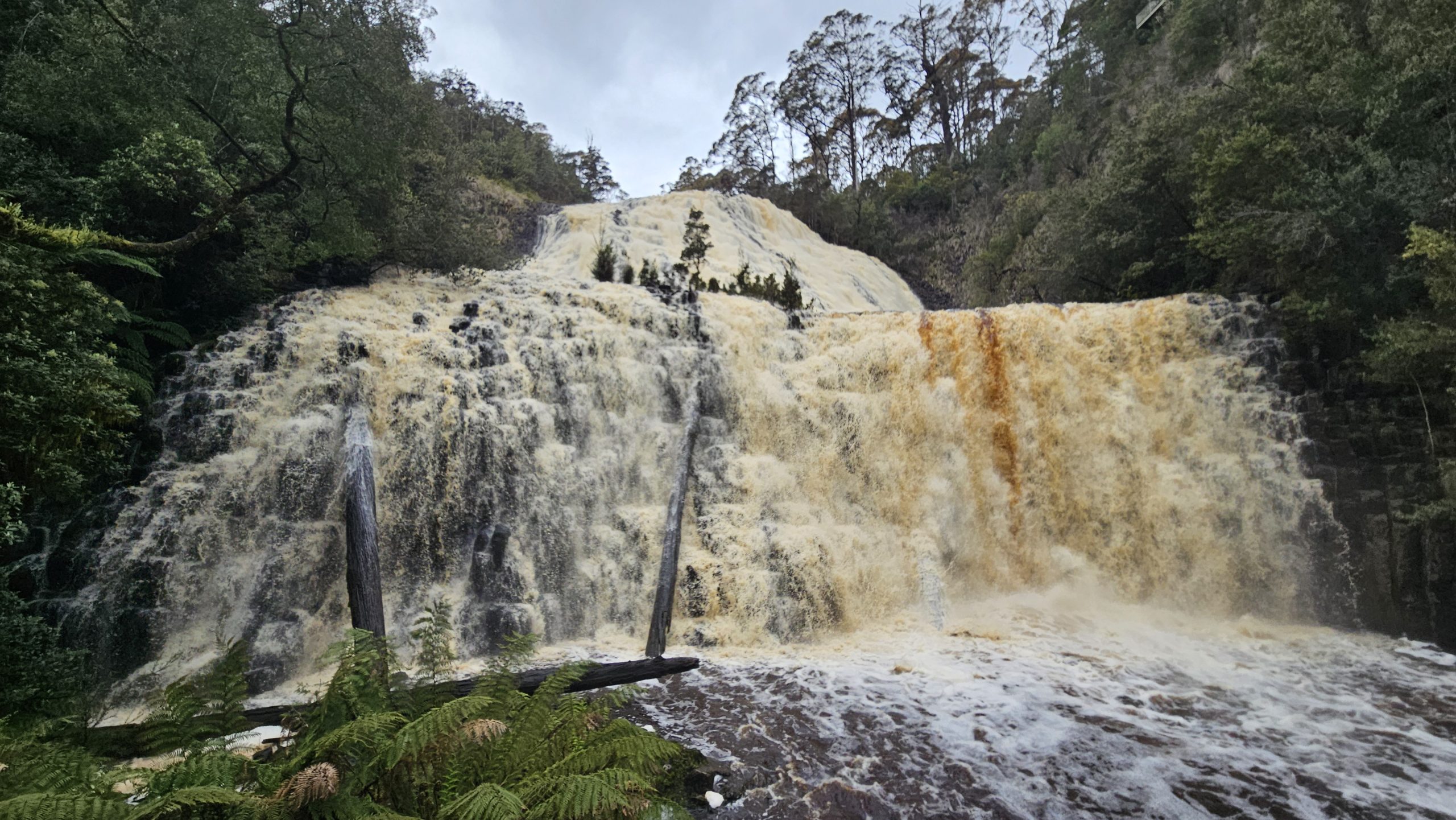
Instead of a single drop, the Dip River spills over a stack of basalt columns, creating a wide curtain of tumbling water.

The flow was pumping when we visited, turning the entire rock wall into a wild staircase of white water. It’s a seriously cool sight — and one of the most unusual waterfalls we came across in Tassie.

A viewing platform near the top gives you a great look, but a staircase also leads down to the base if you want to get up close to the basalt columns and the rushing water.

The deets:

  • Distance: 400m return
  • Time: 10–15 minutes
  • Grade: 2 (short walk with steep staircase)
  • Location: Dip Falls Forest Reserve (40 mins south of Stanley)

If you’re exploring Tasmania’s rugged north-west coast, Dip Falls makes a fantastic stop between Stanley and the Tarkine region.

Tip: Be sure to head down the road a little further to visit the Big Tree.

Final thoughts

Tasmania is absolutely loaded with waterfalls — from roadside cascades to wild falls hidden deep in rainforest and alpine valleys.

These ten were some of our favourites after six months exploring the island, but there are plenty more out there if you’re willing to chase them.

Pack your rain jacket, lace up your boots, and go waterfall hunting — Tassie does them better than almost anywhere.

Want to delve deeper?

Inspired? Here’s more